7 to 9 August 2026
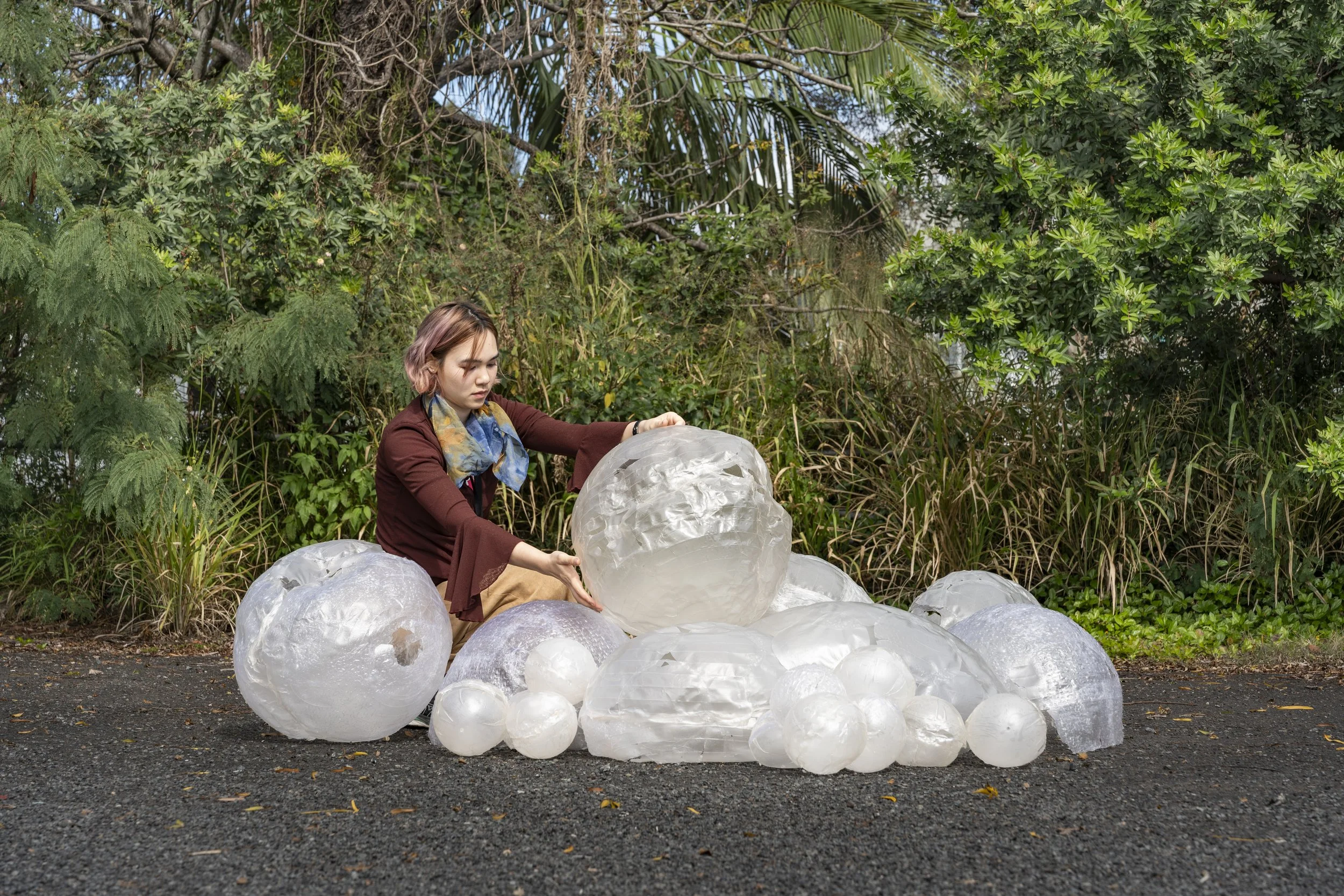
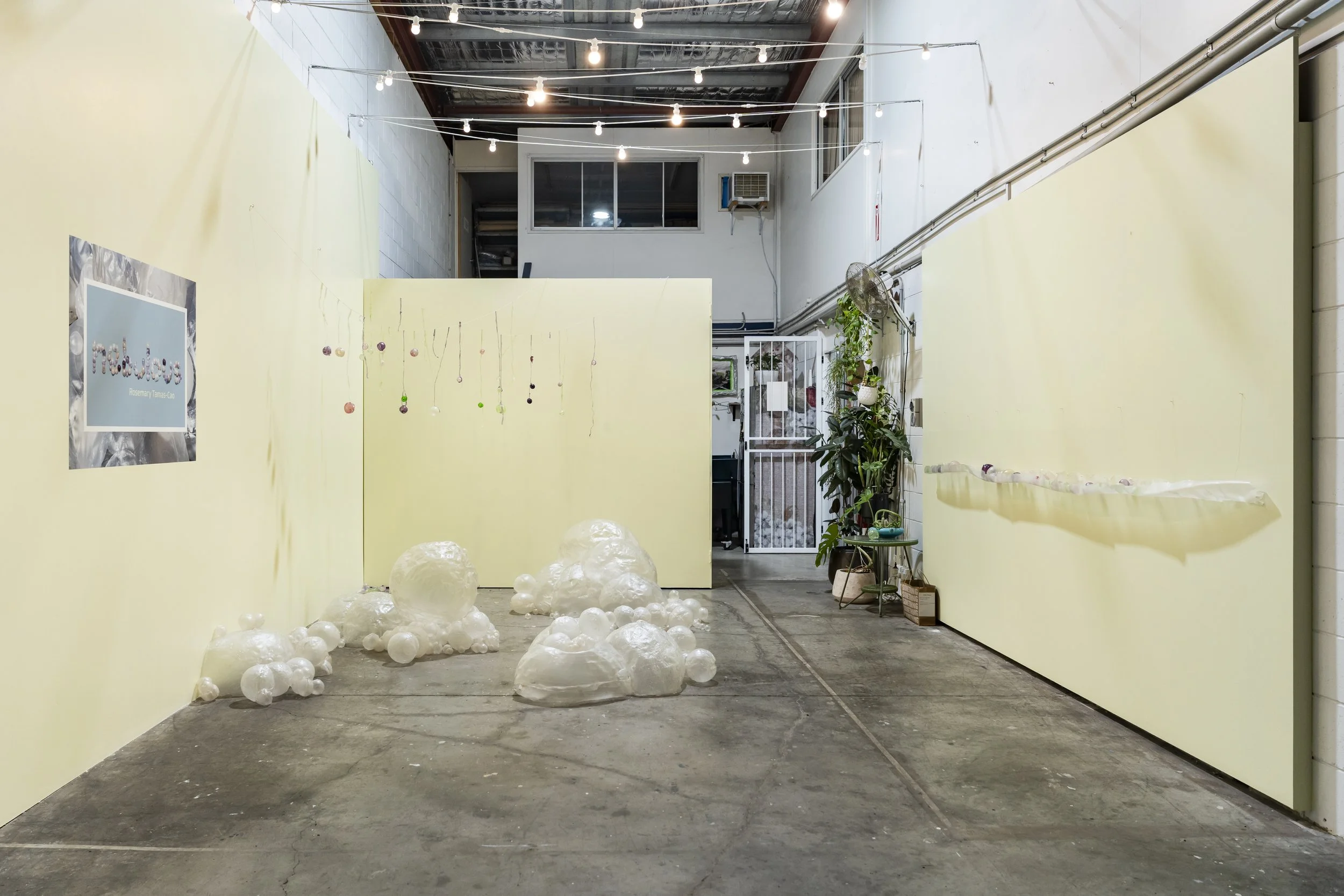
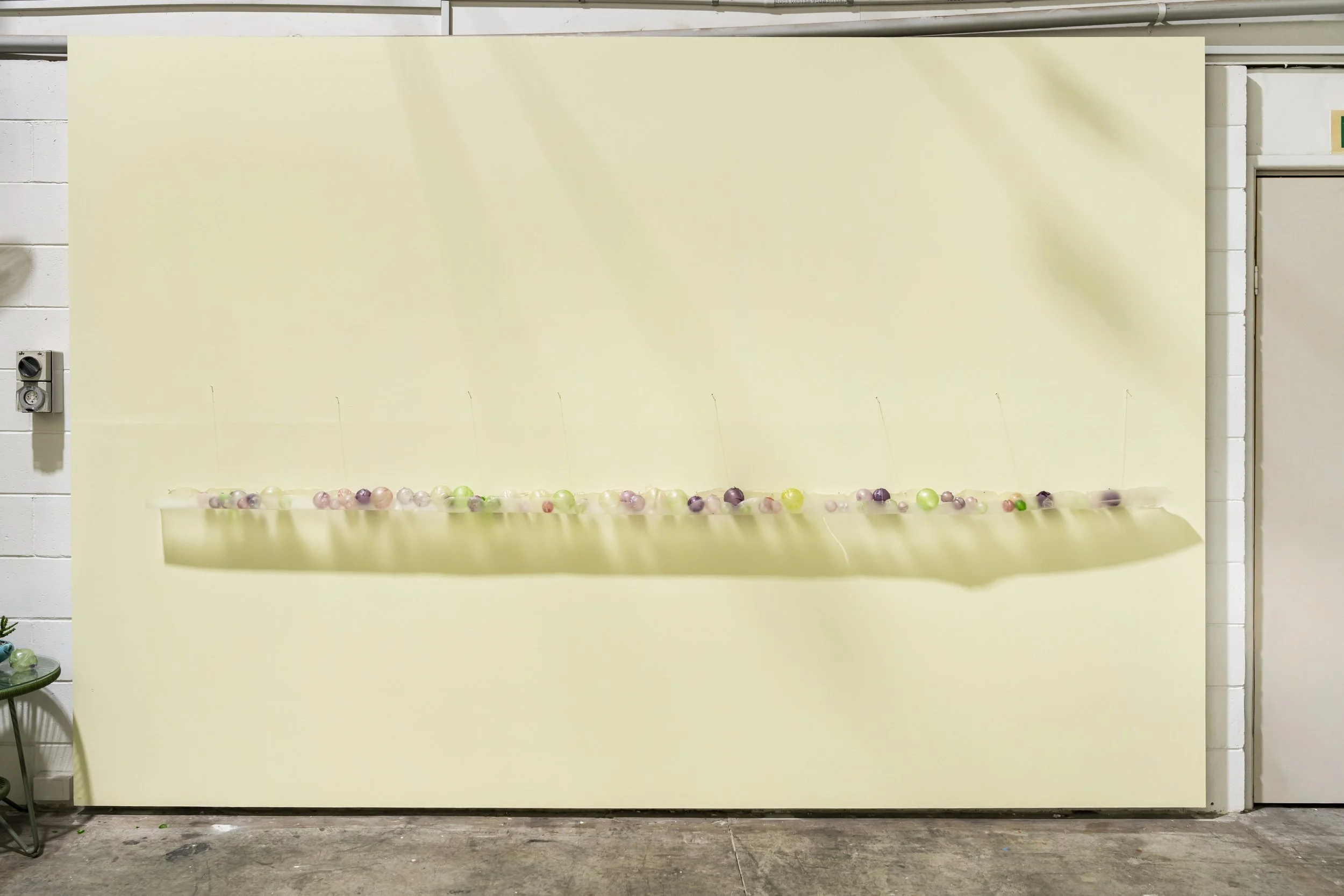
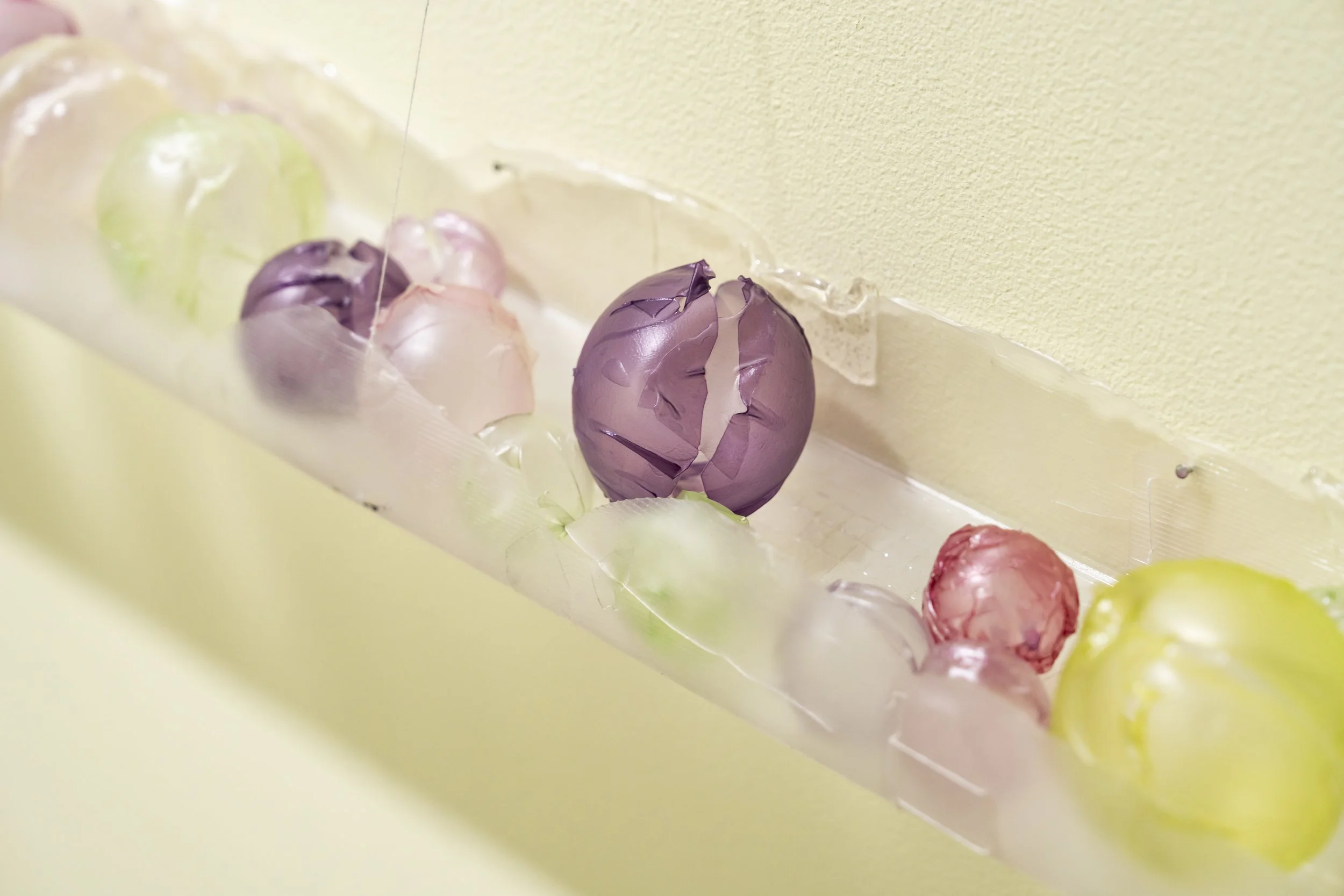
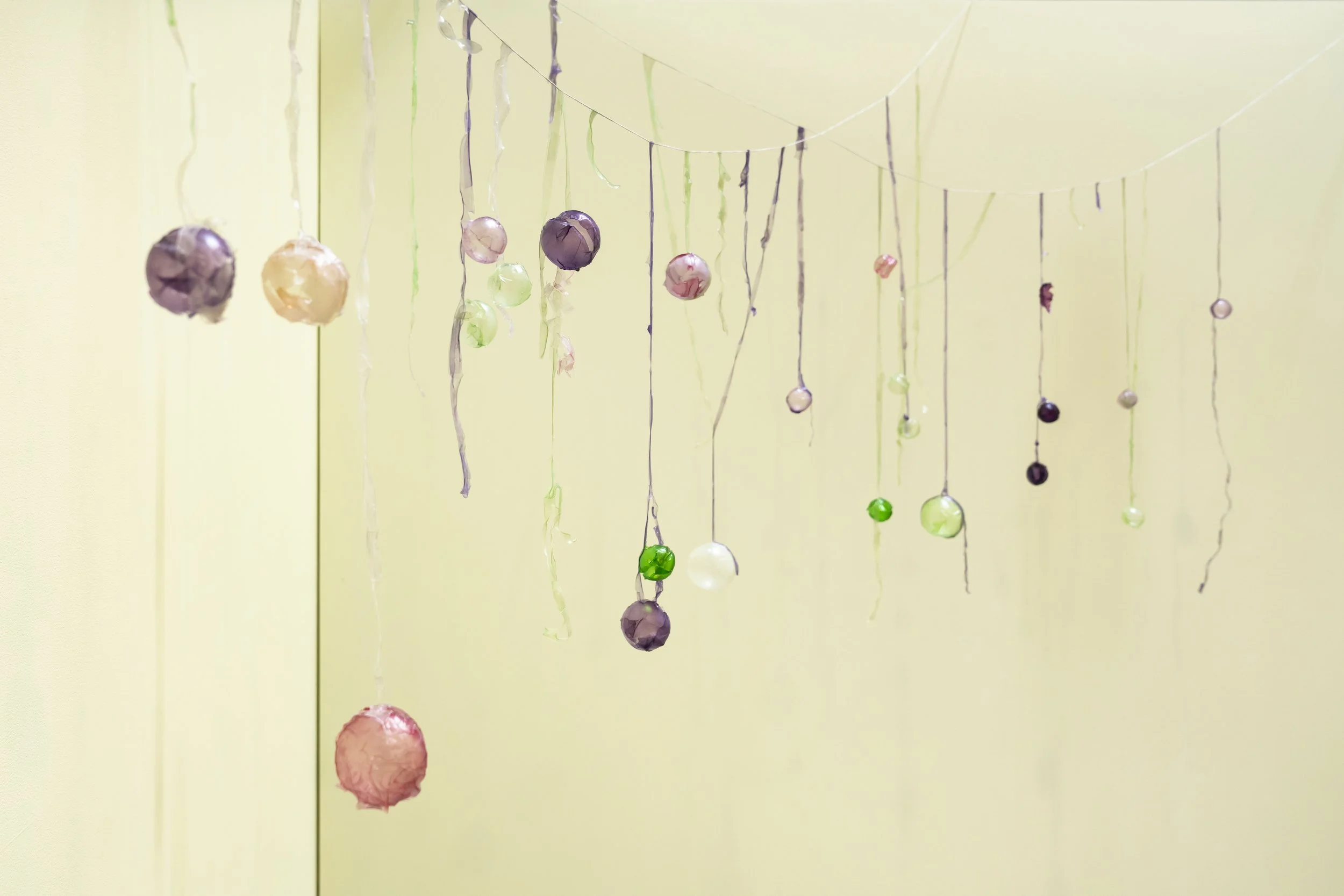
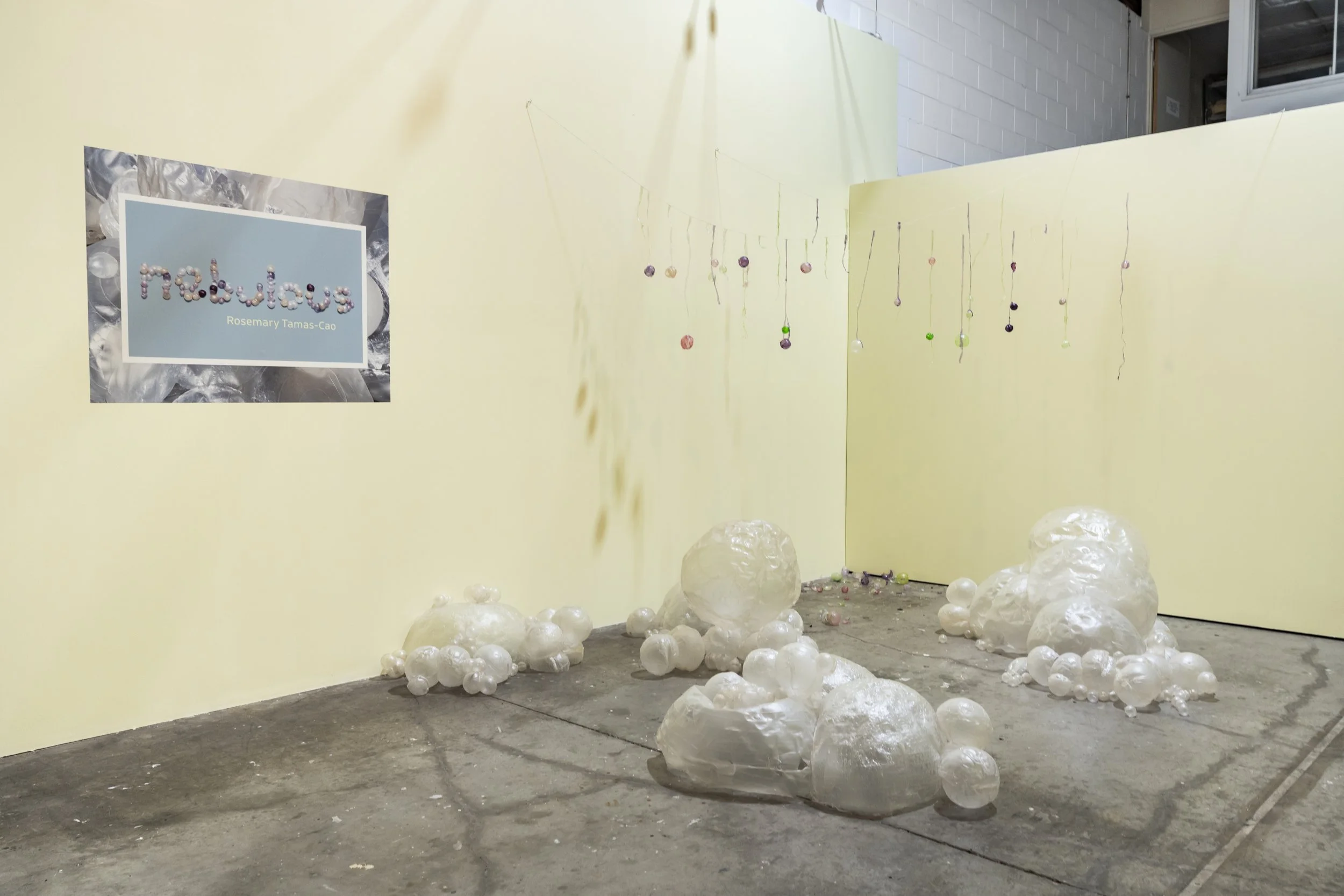
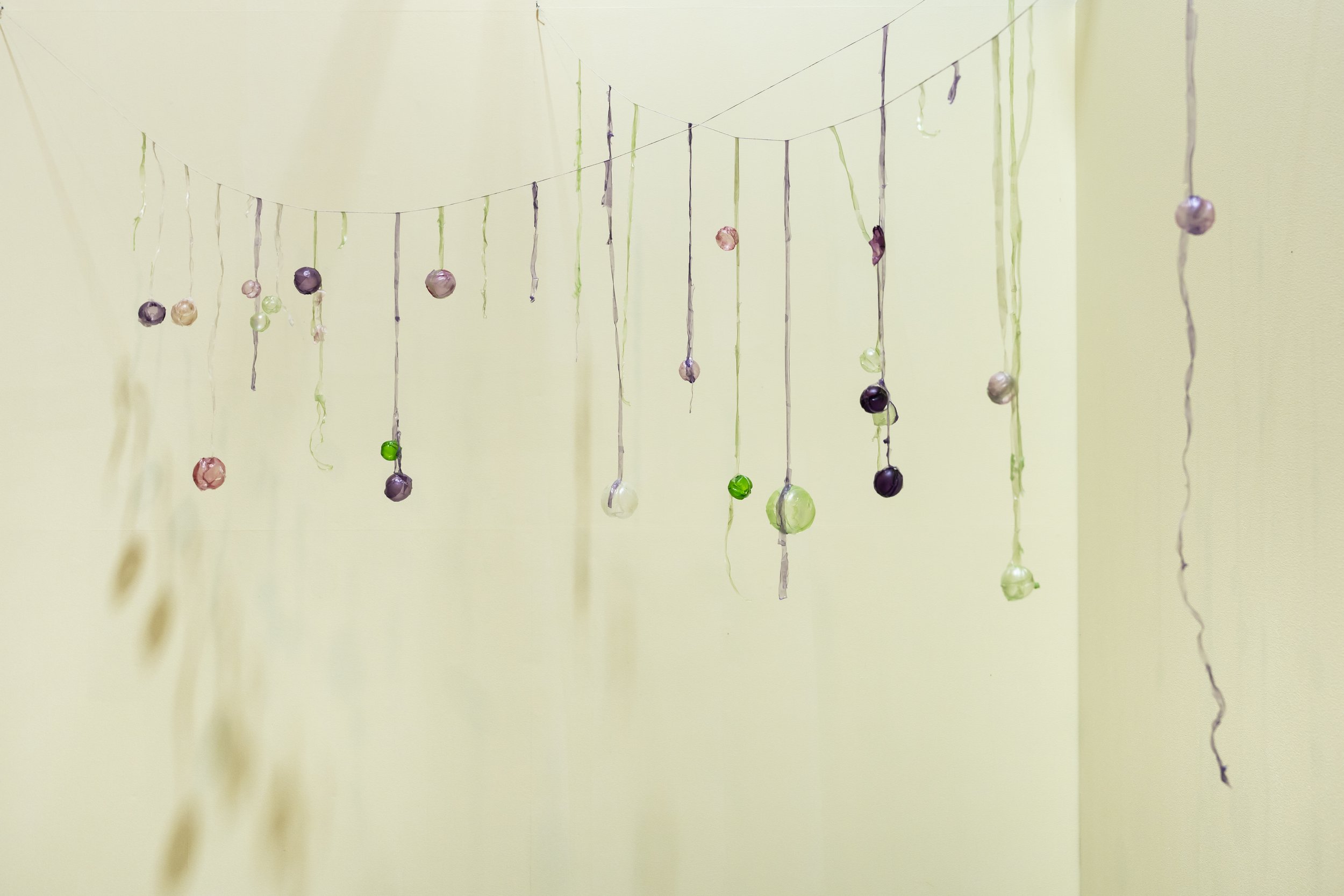
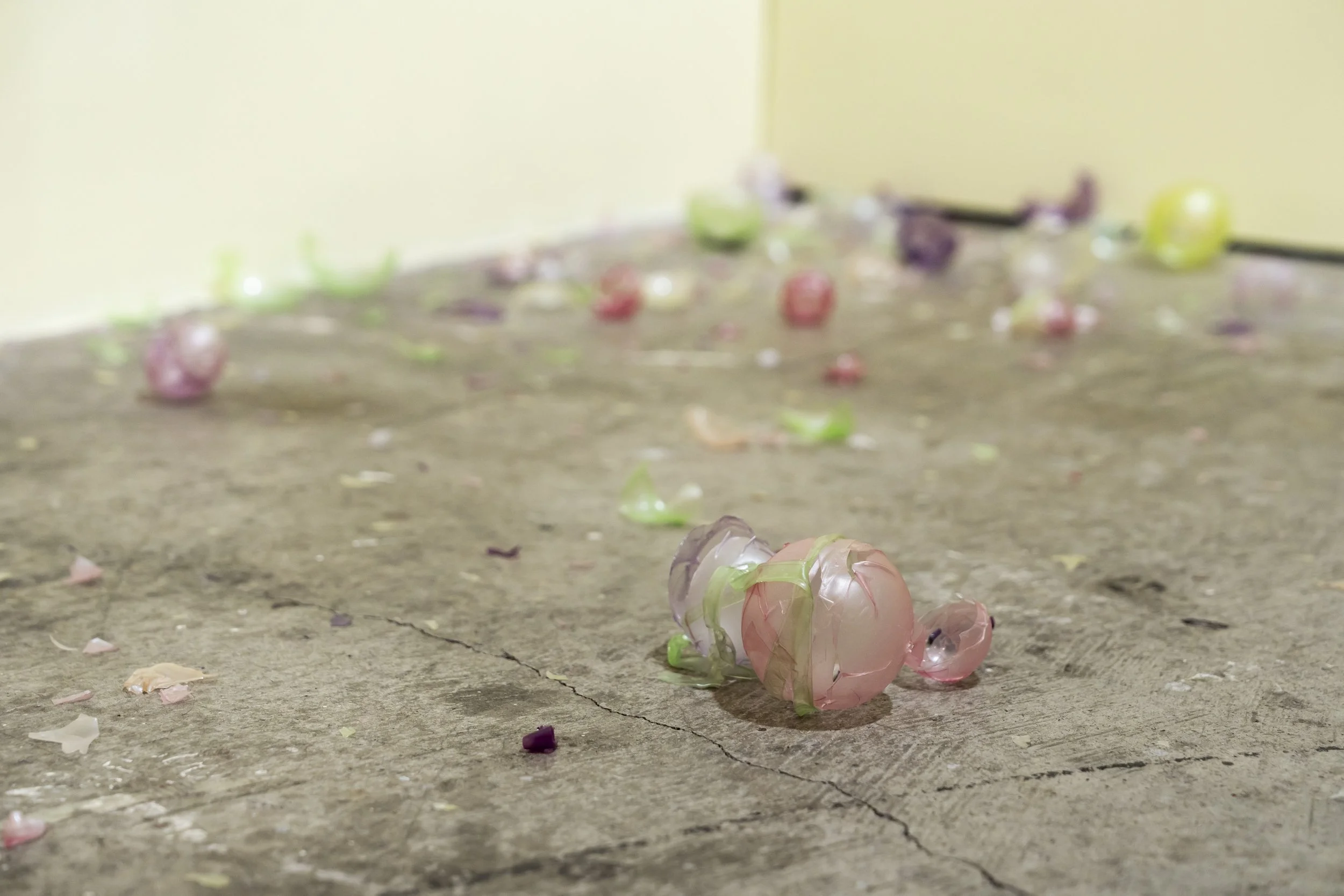
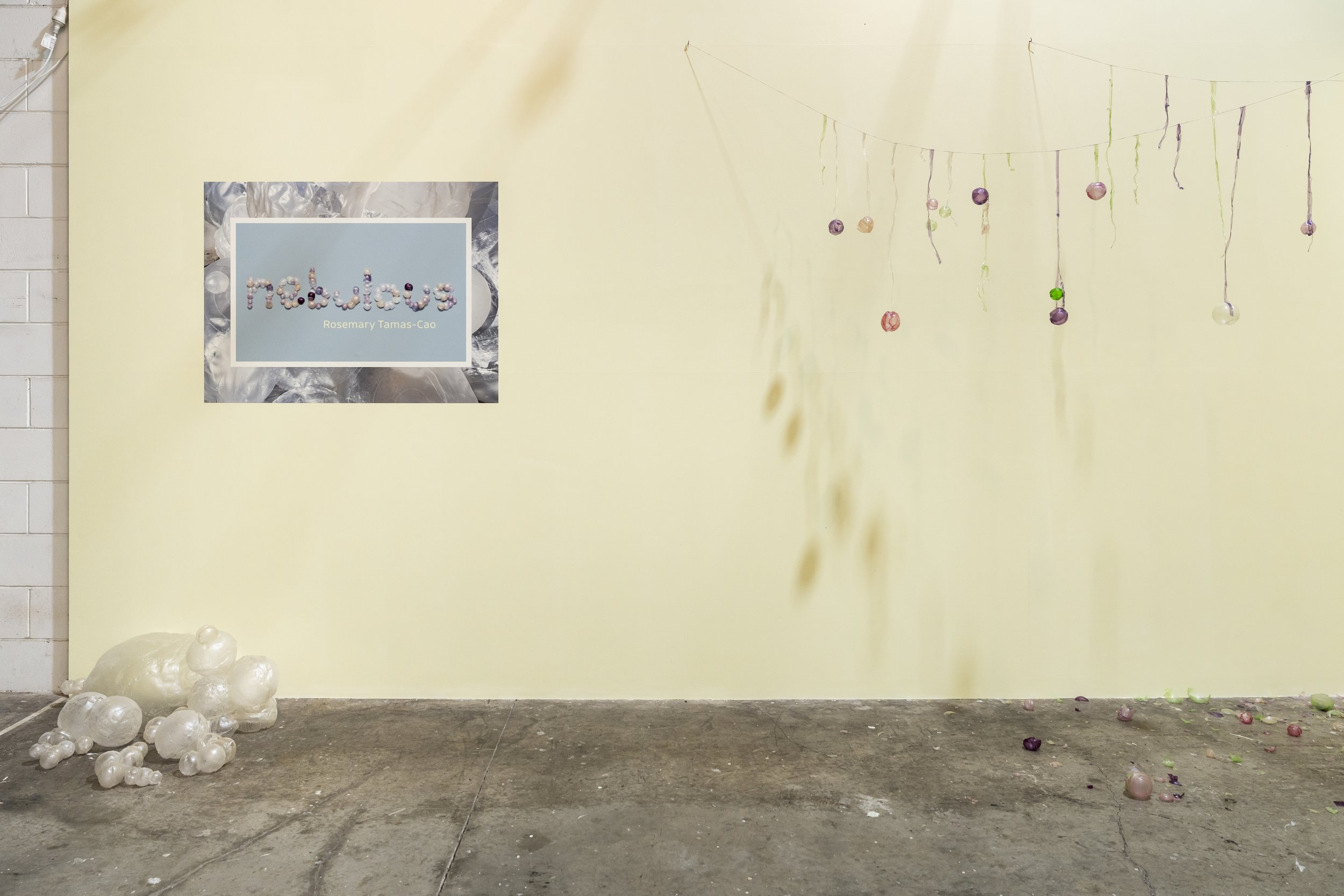
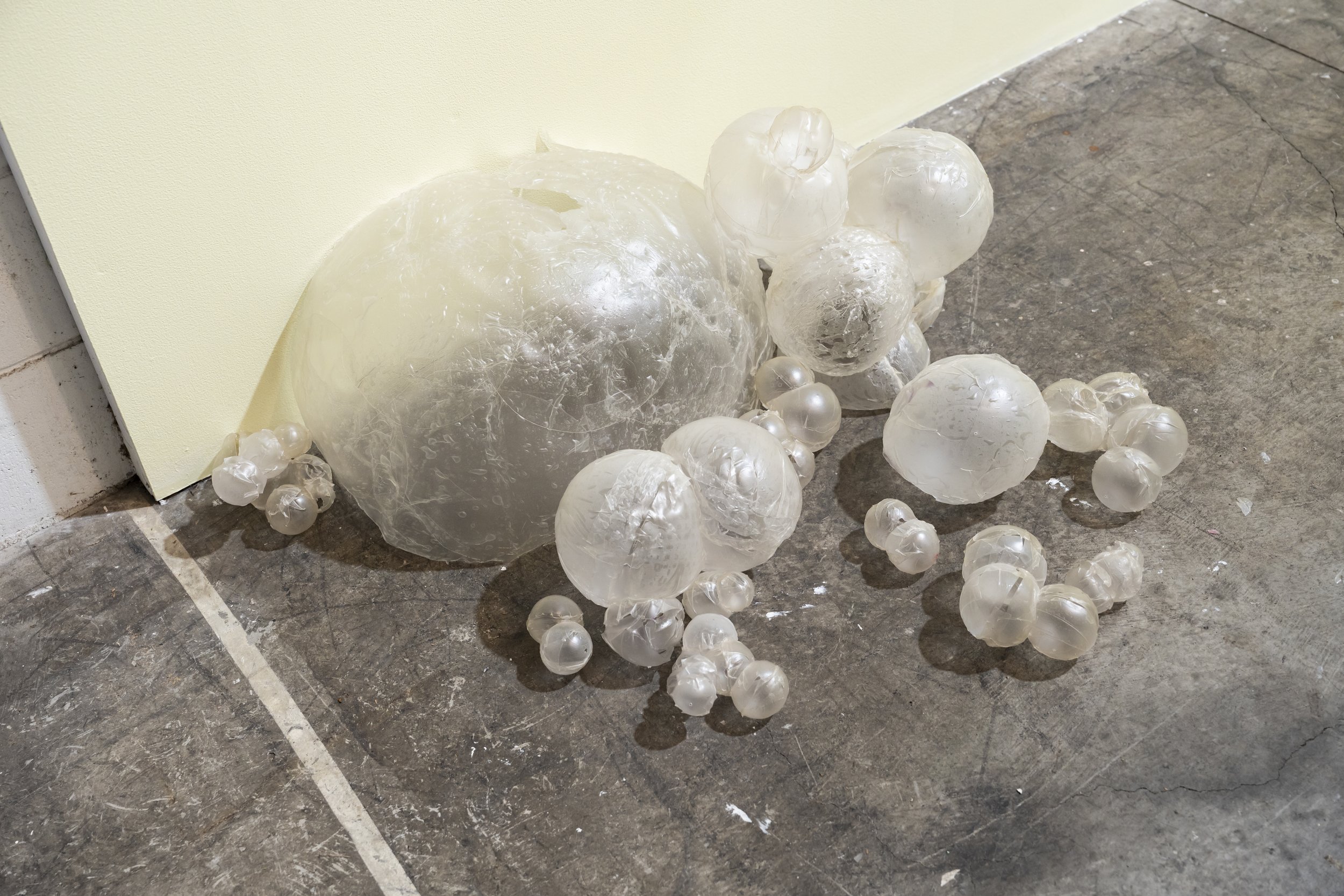
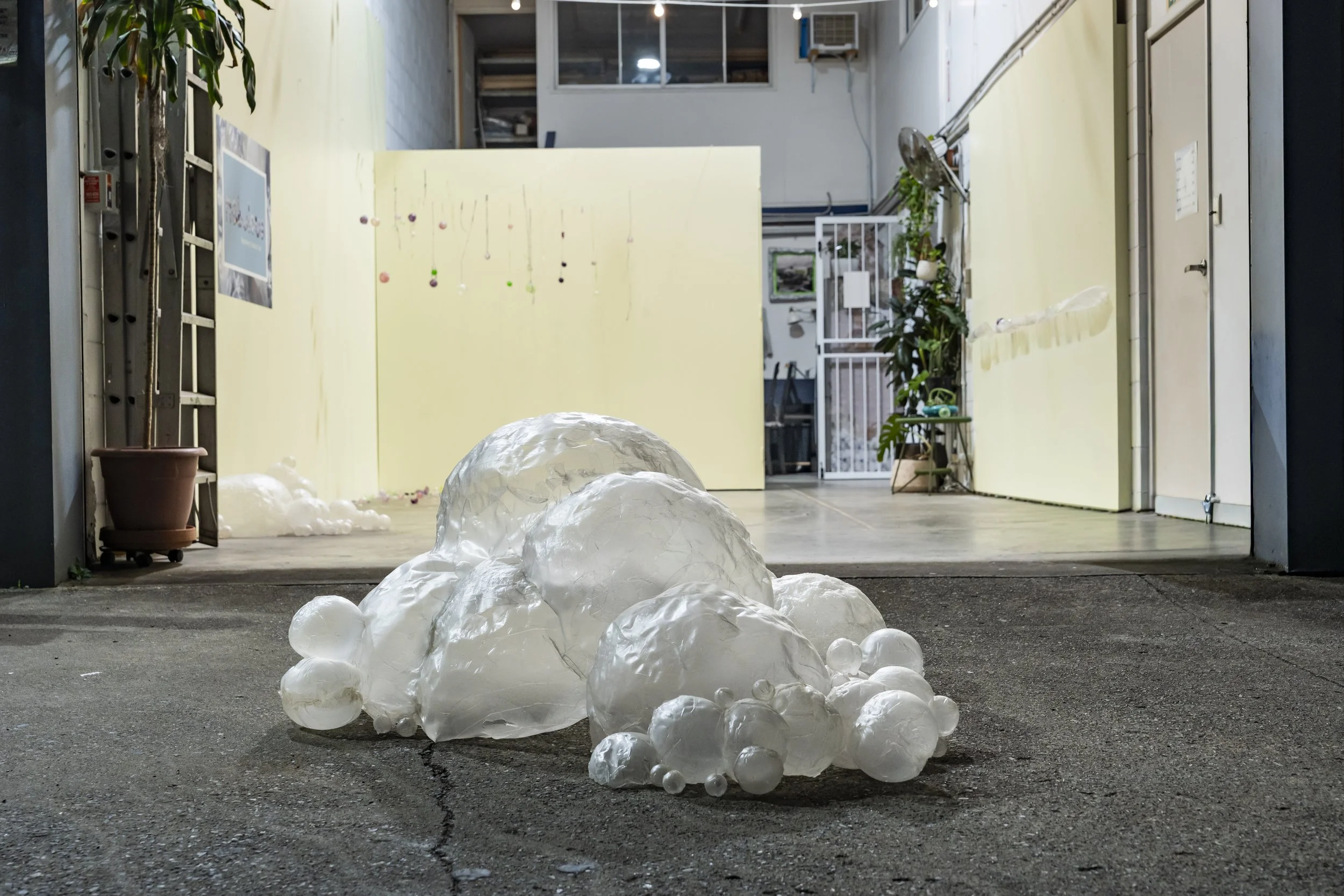
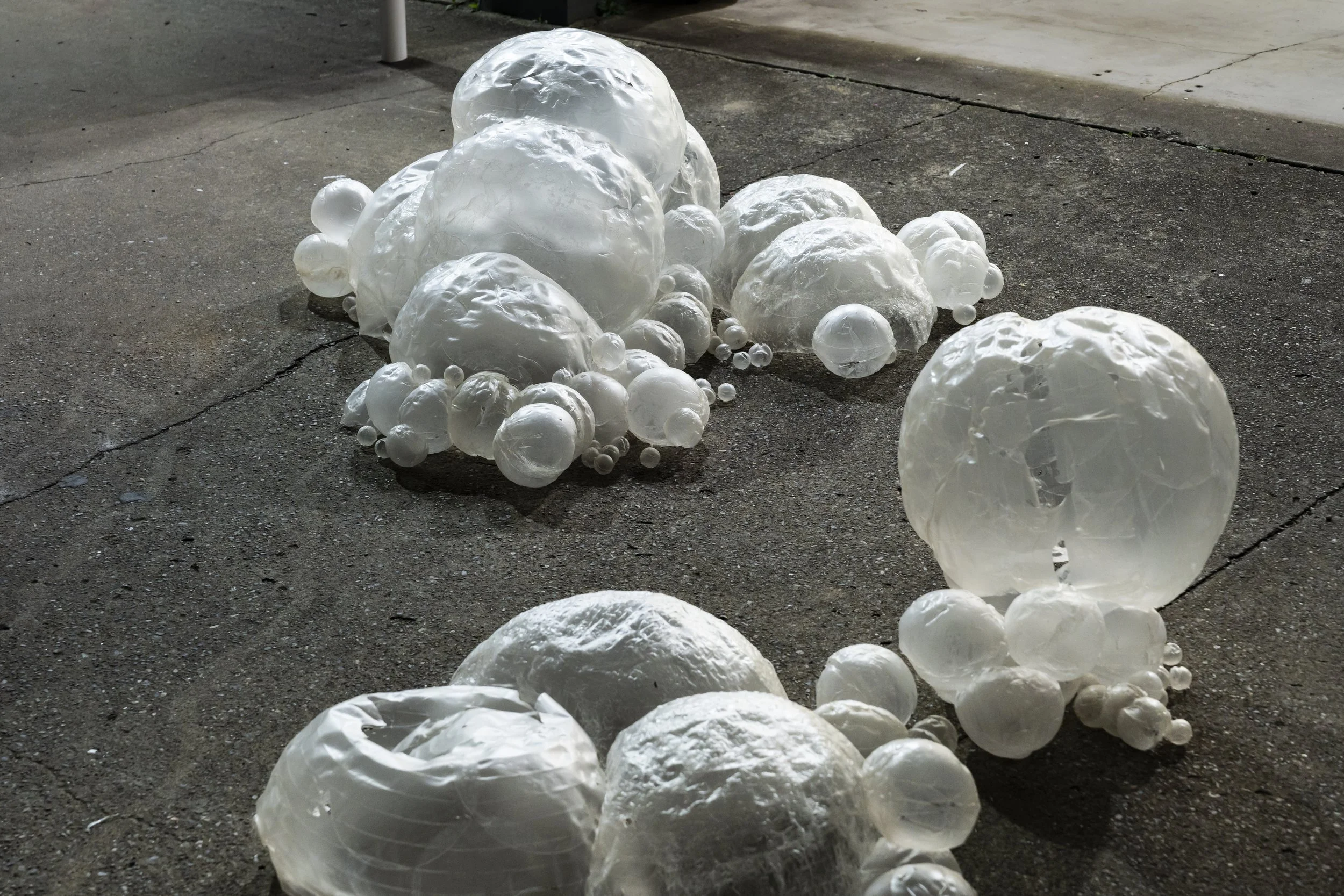
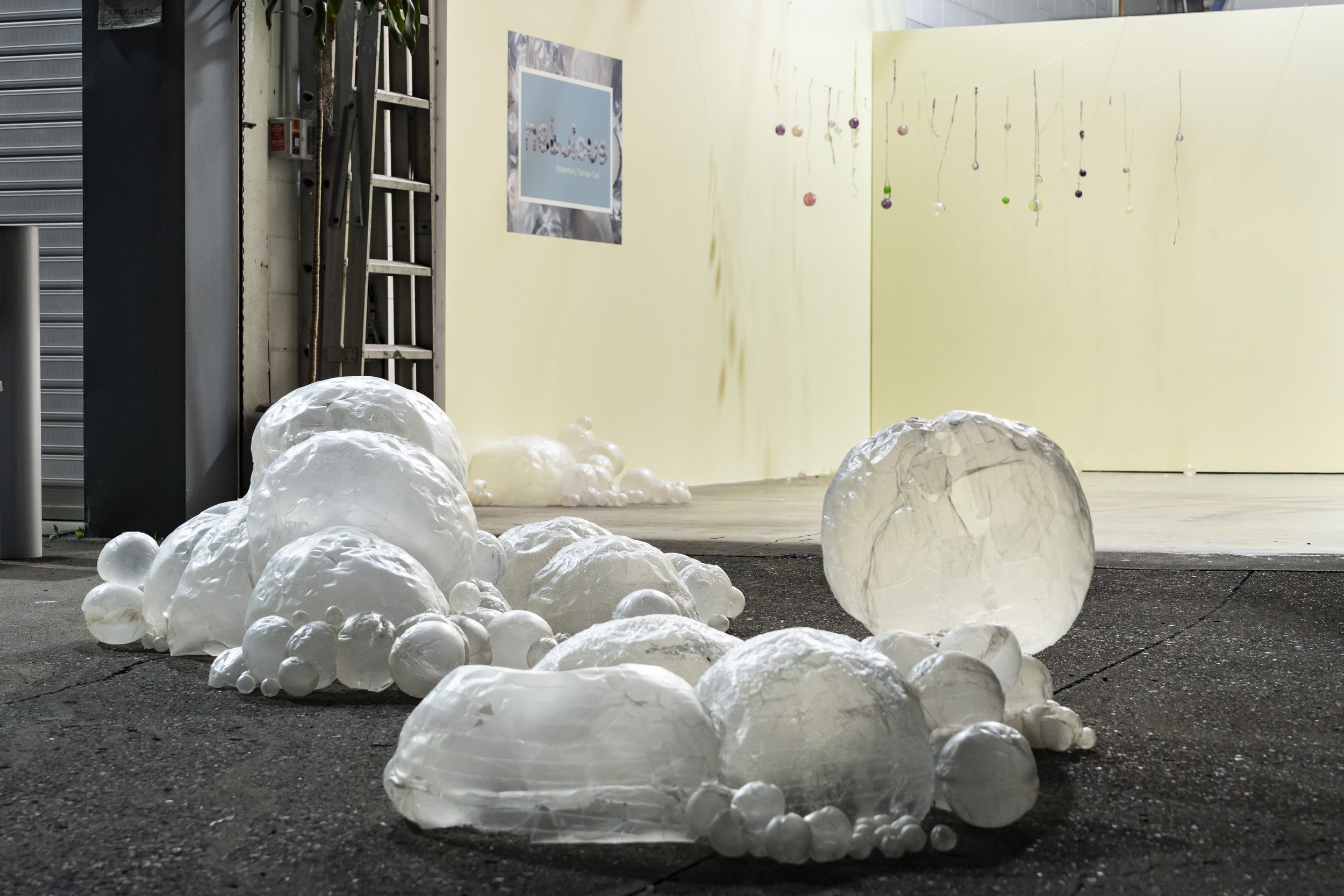
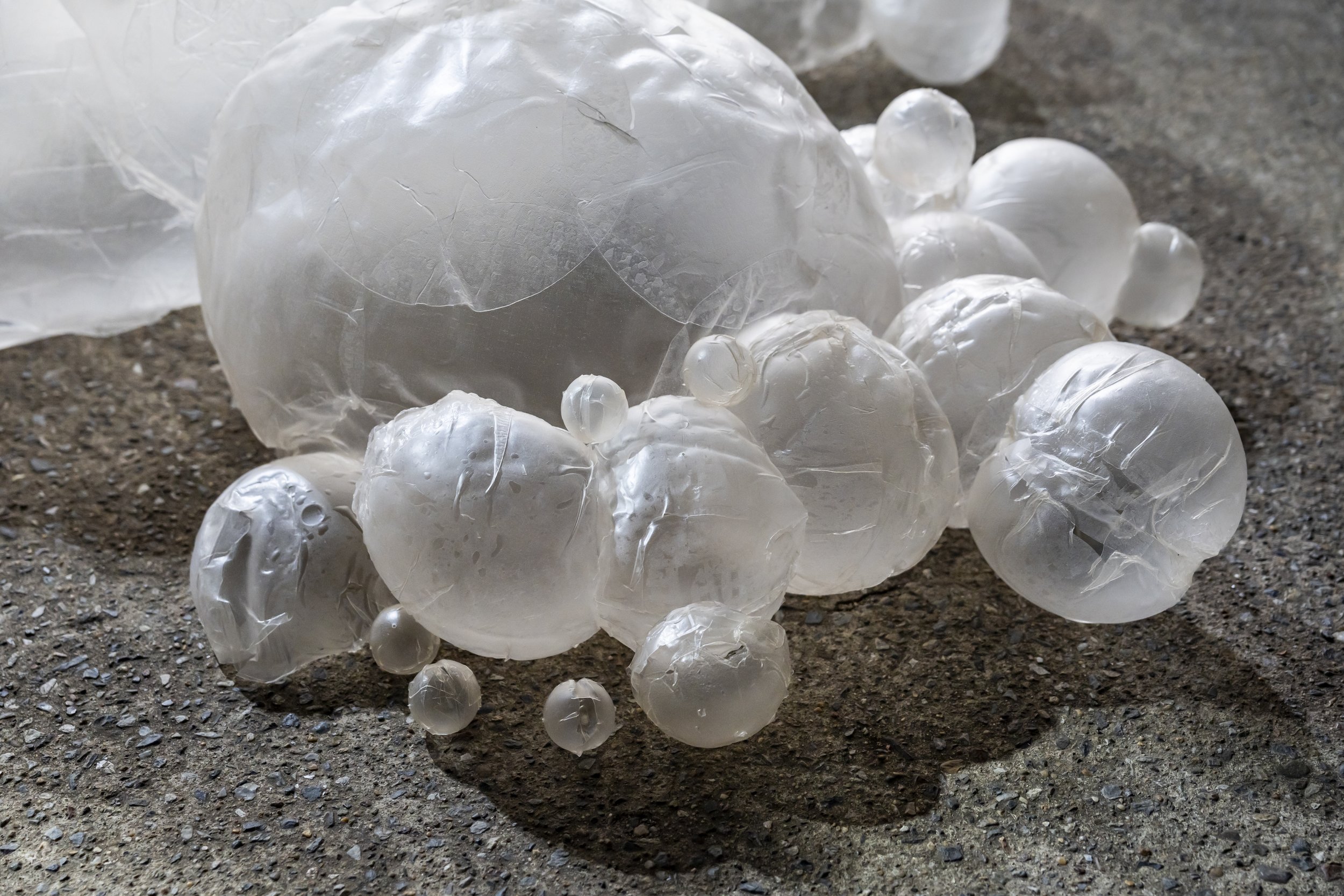
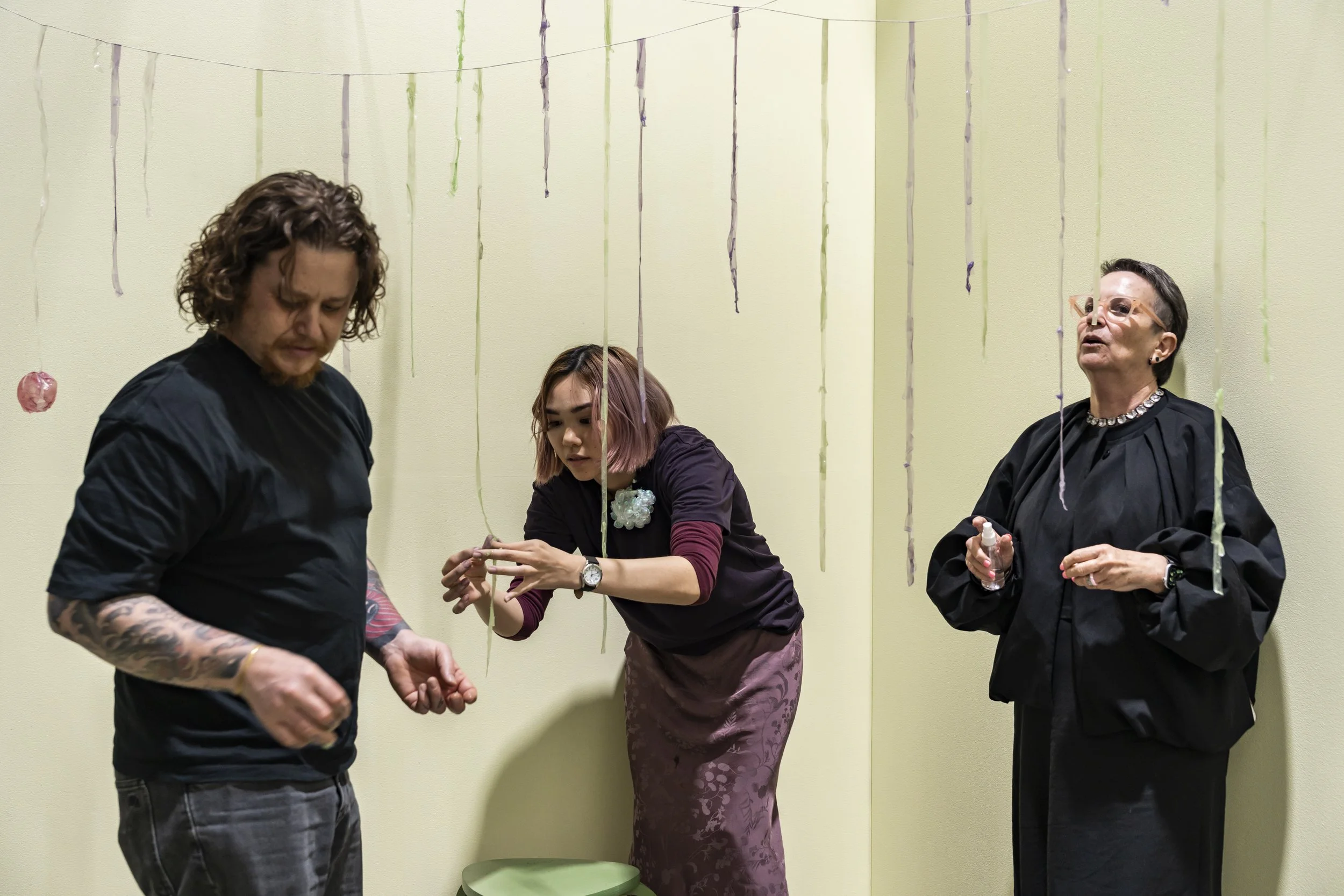
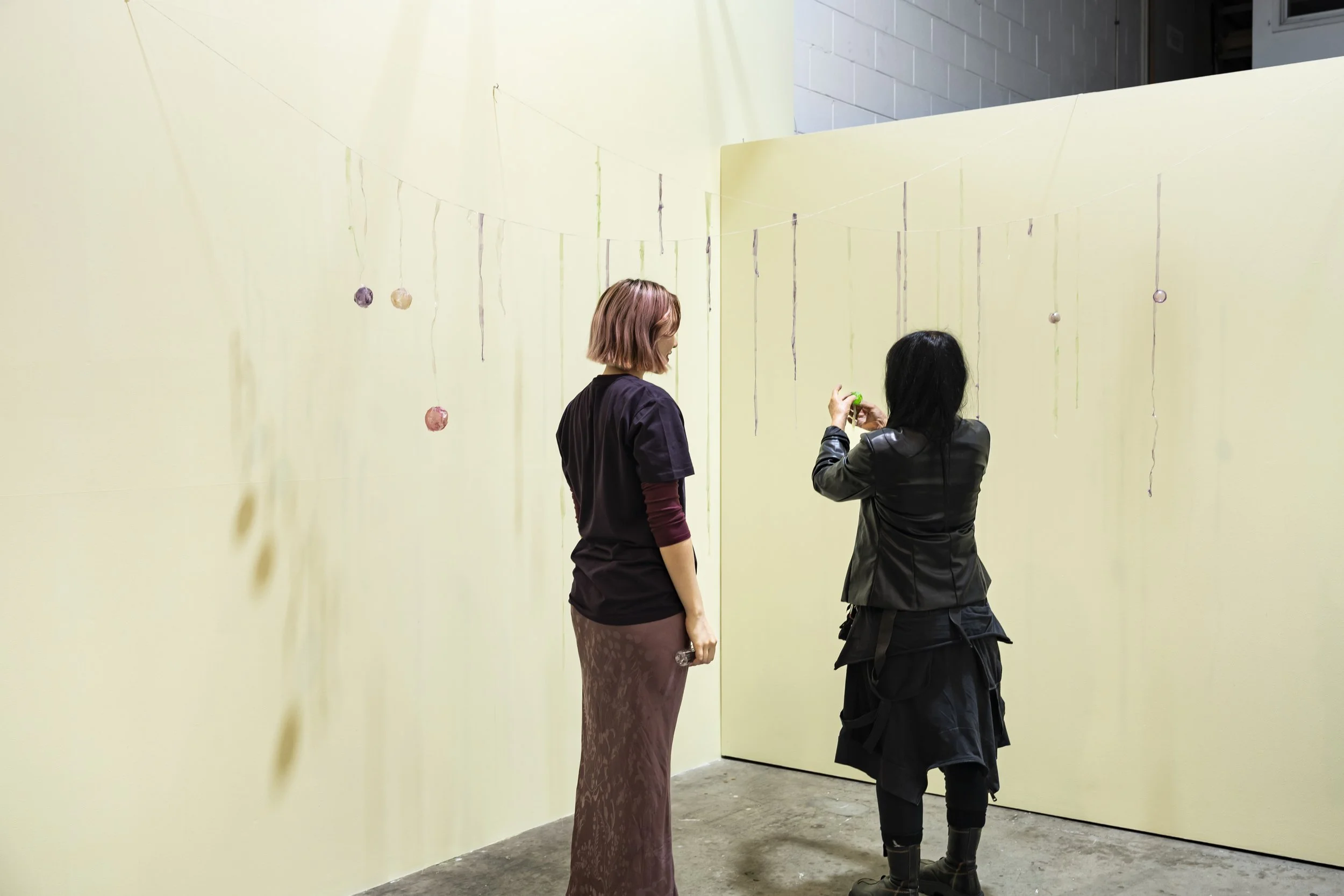
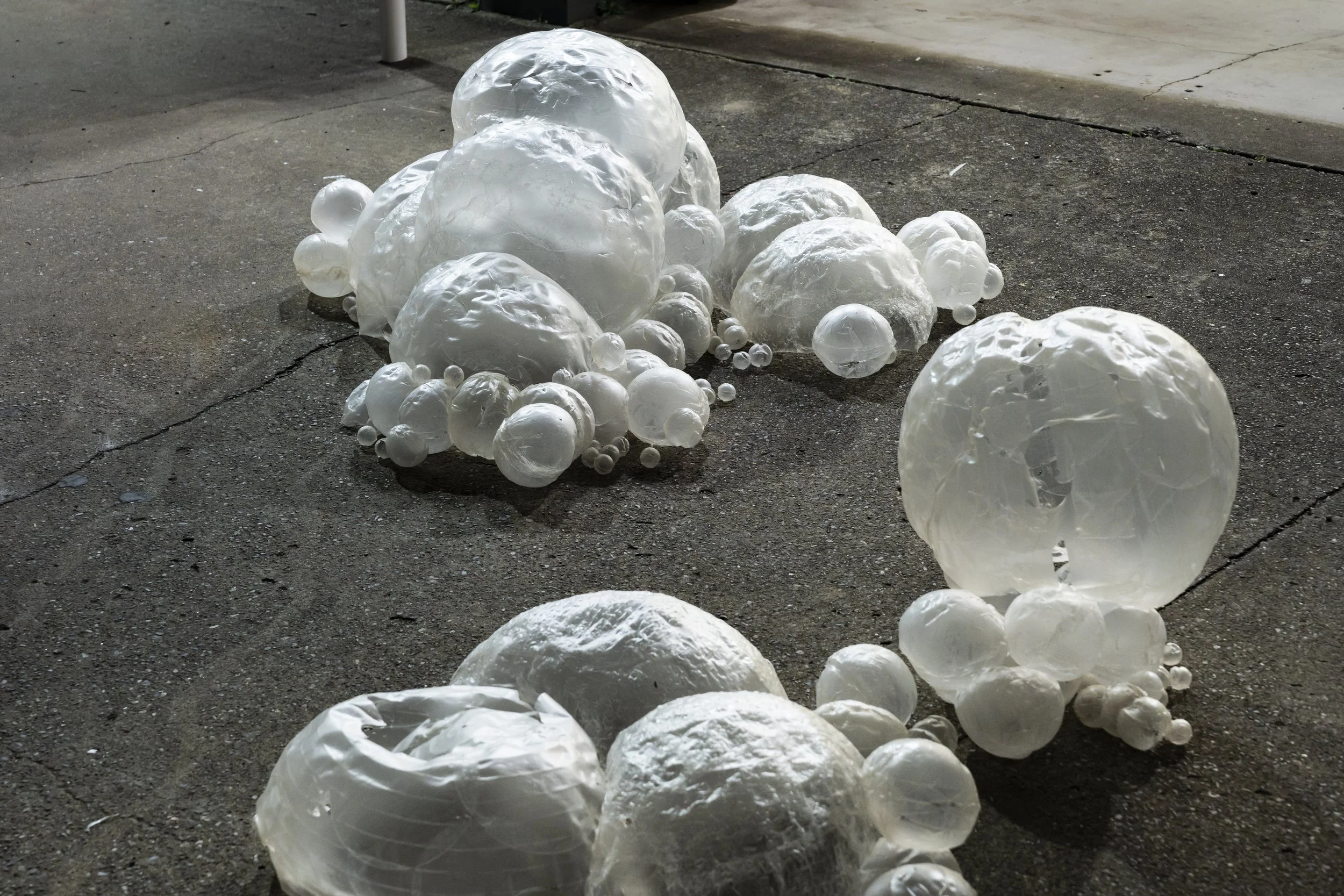
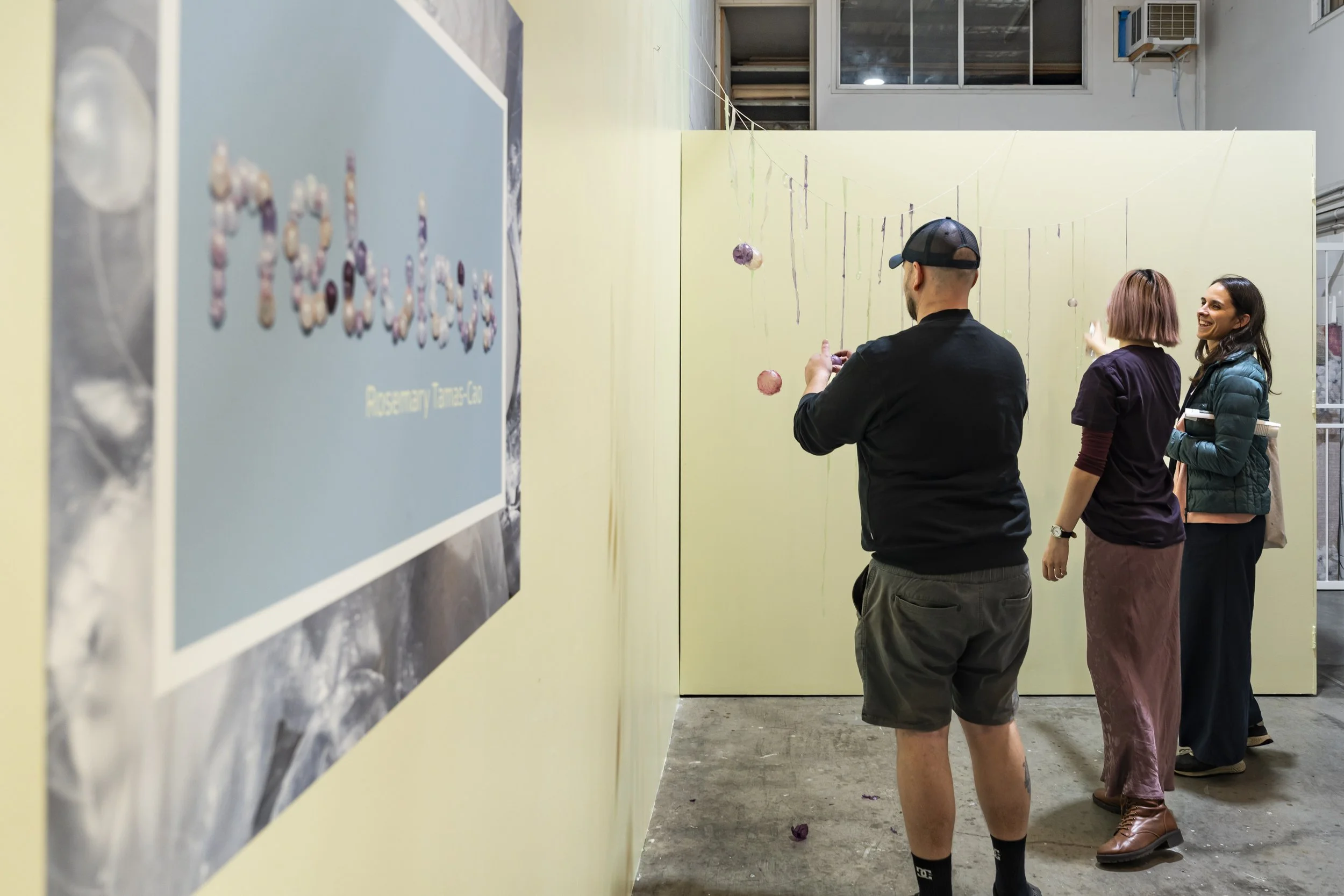
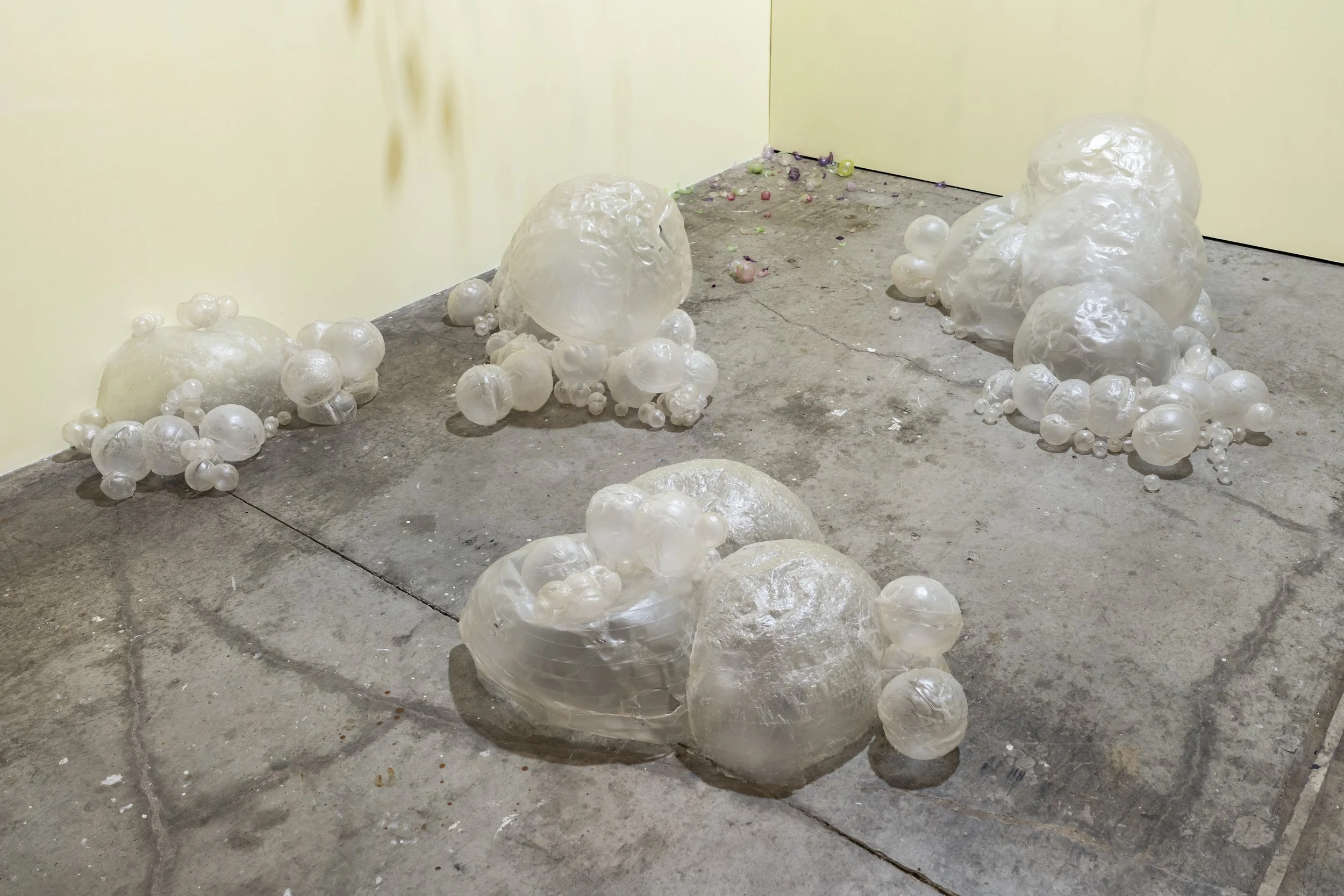
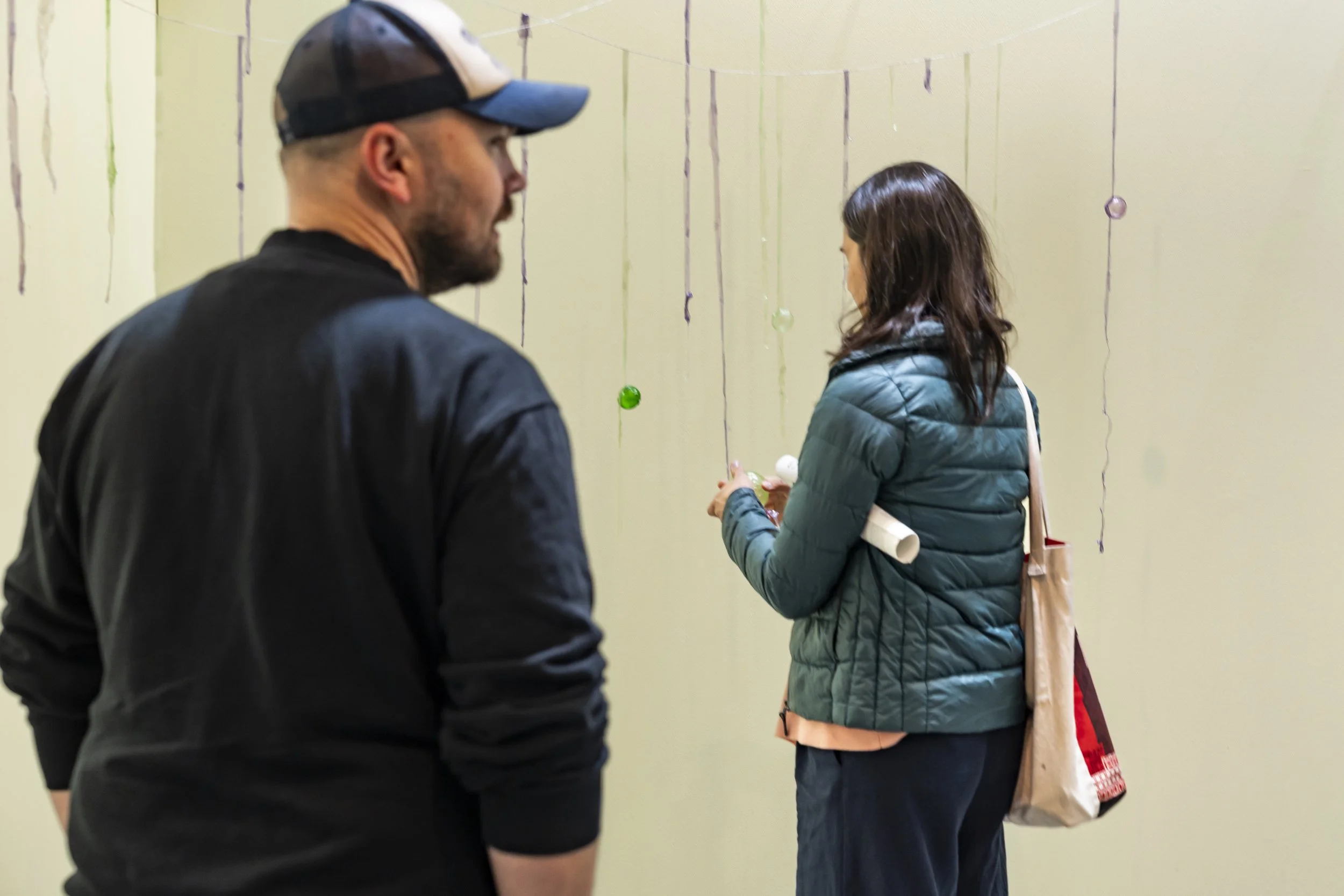
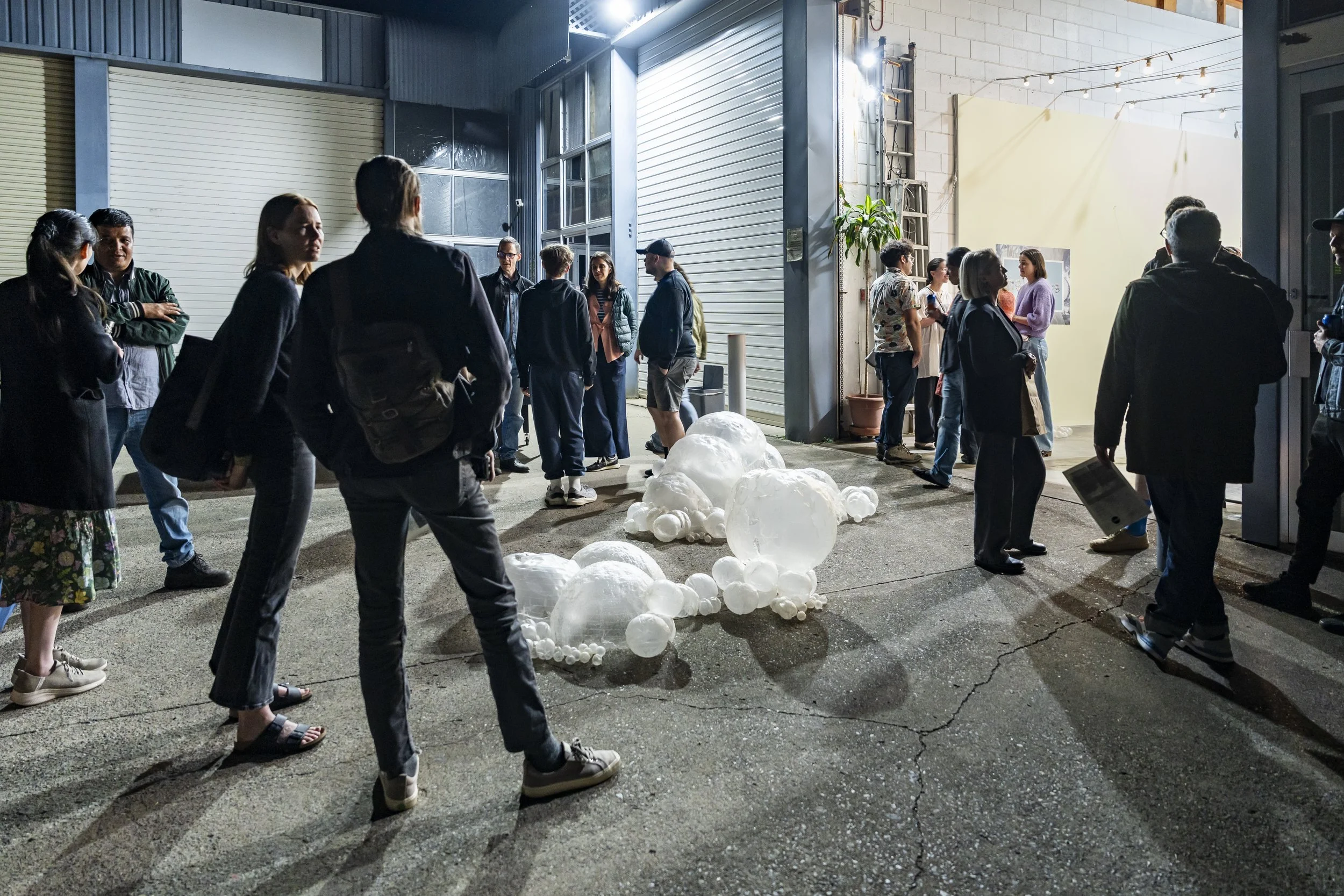
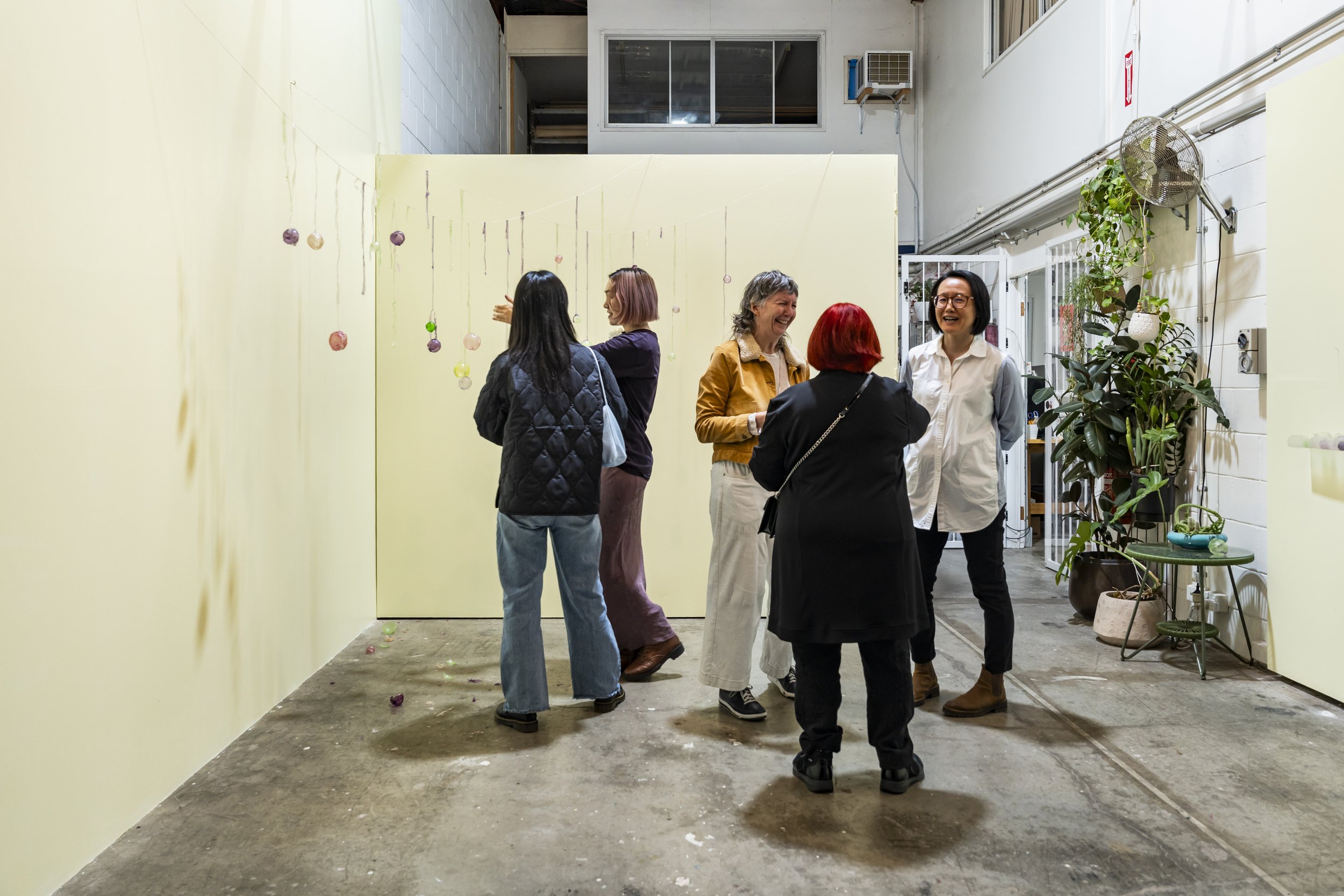
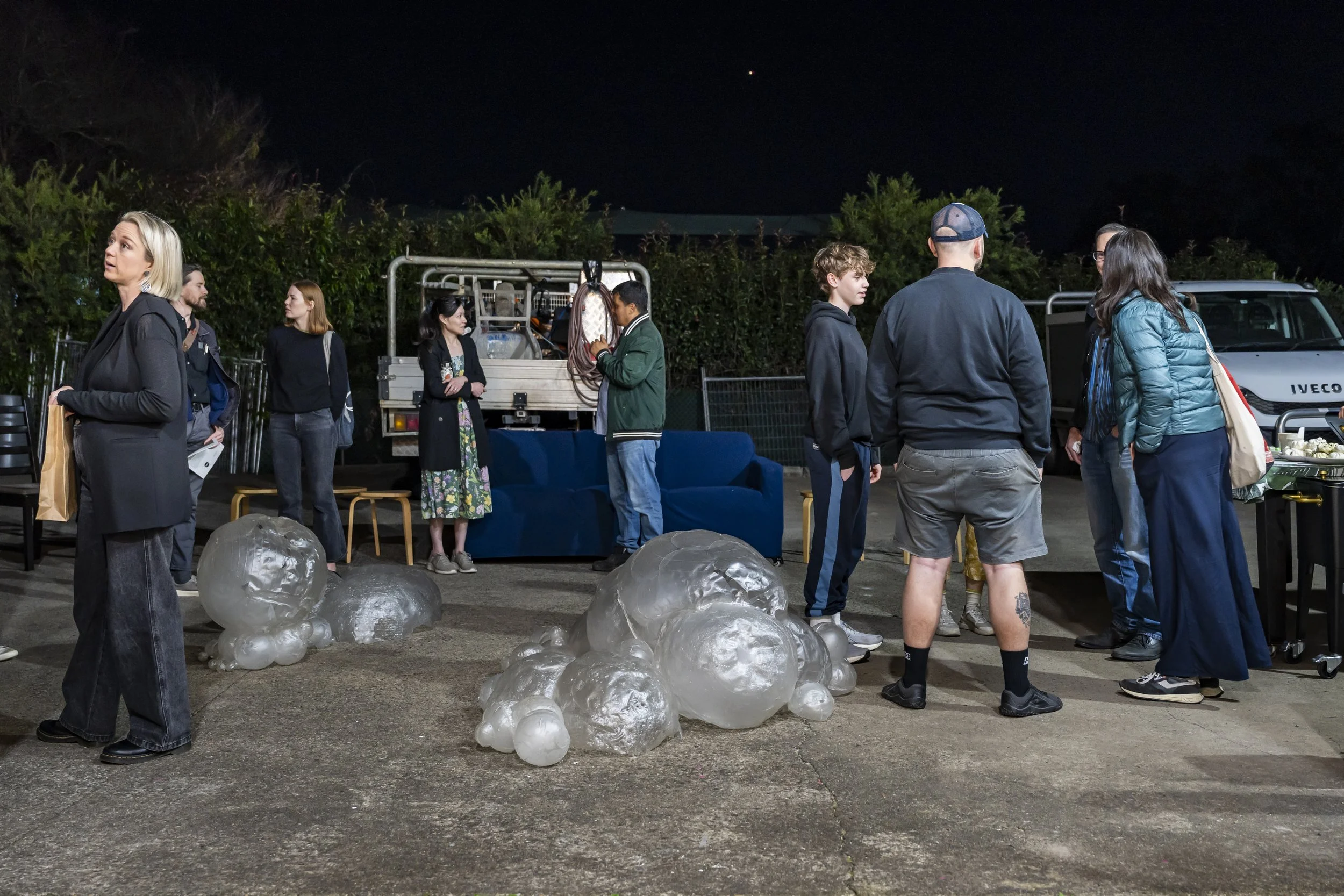
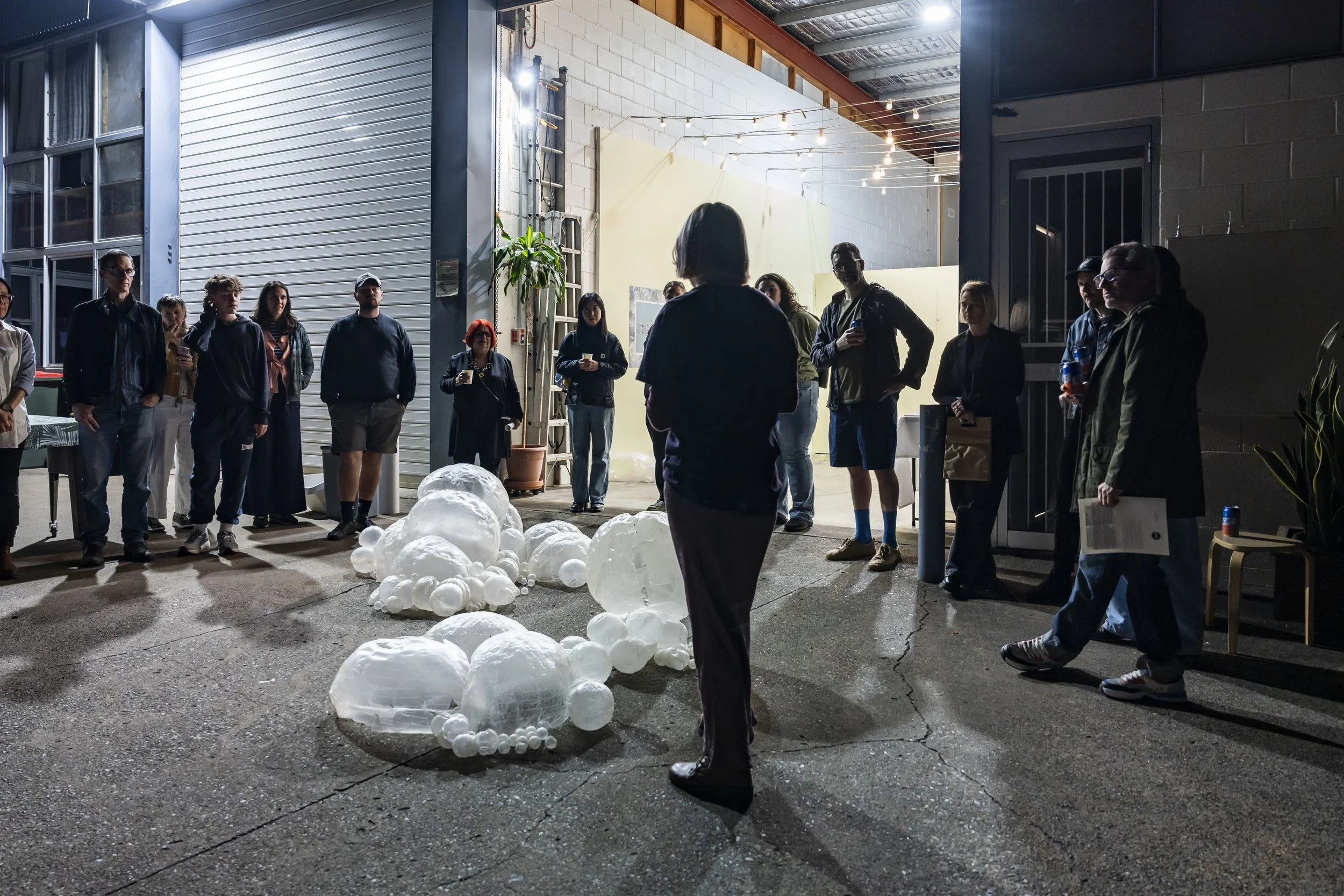
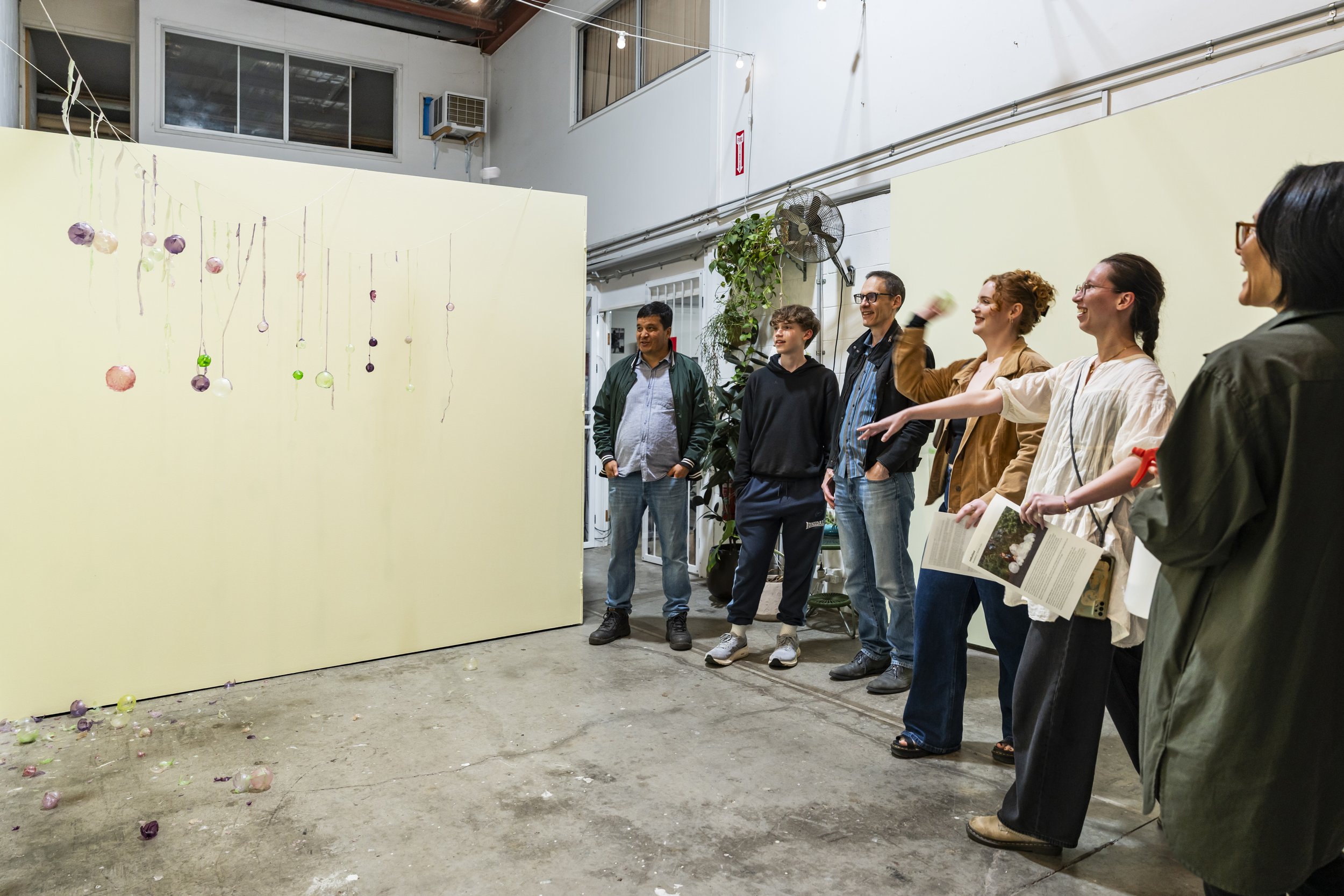
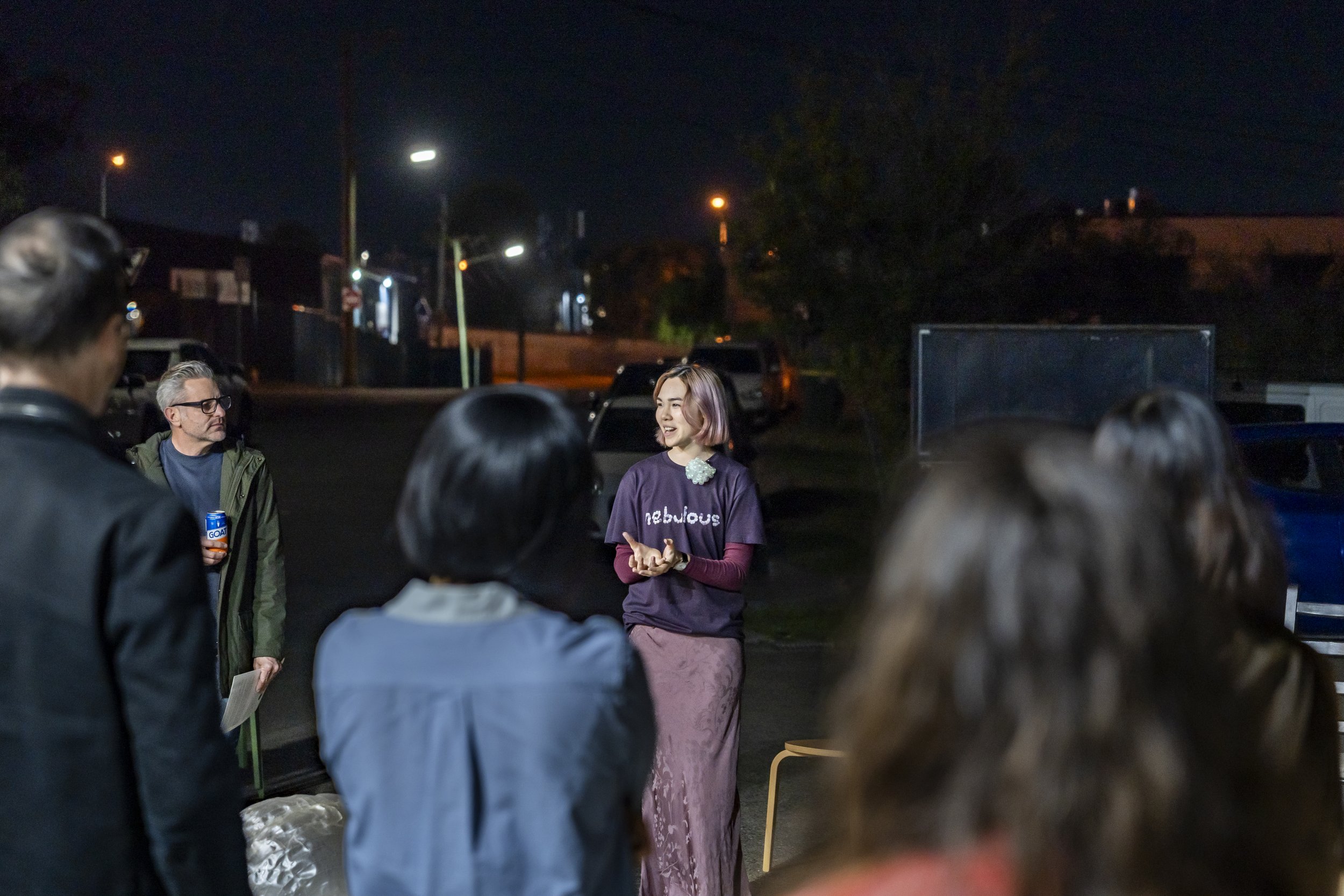
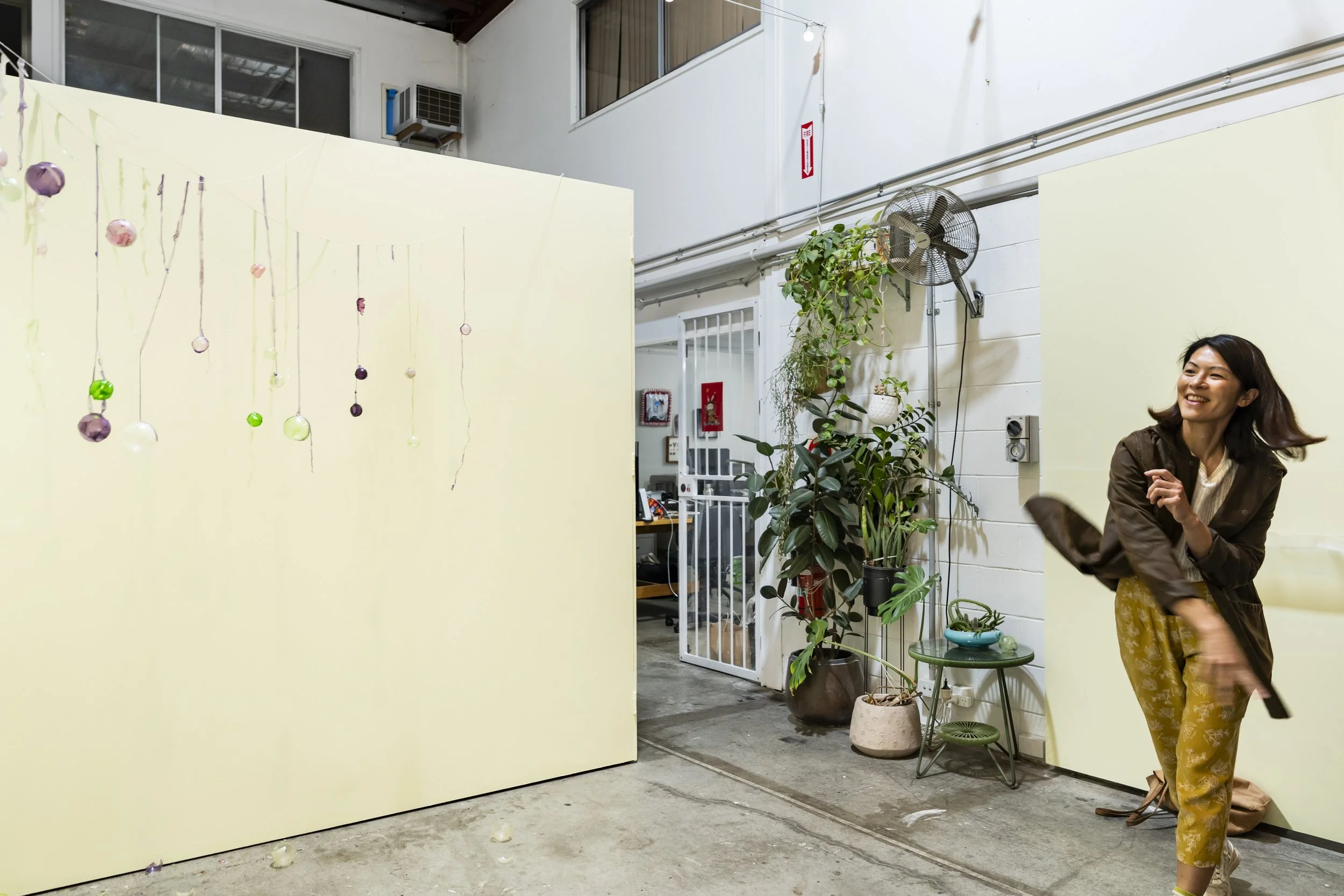
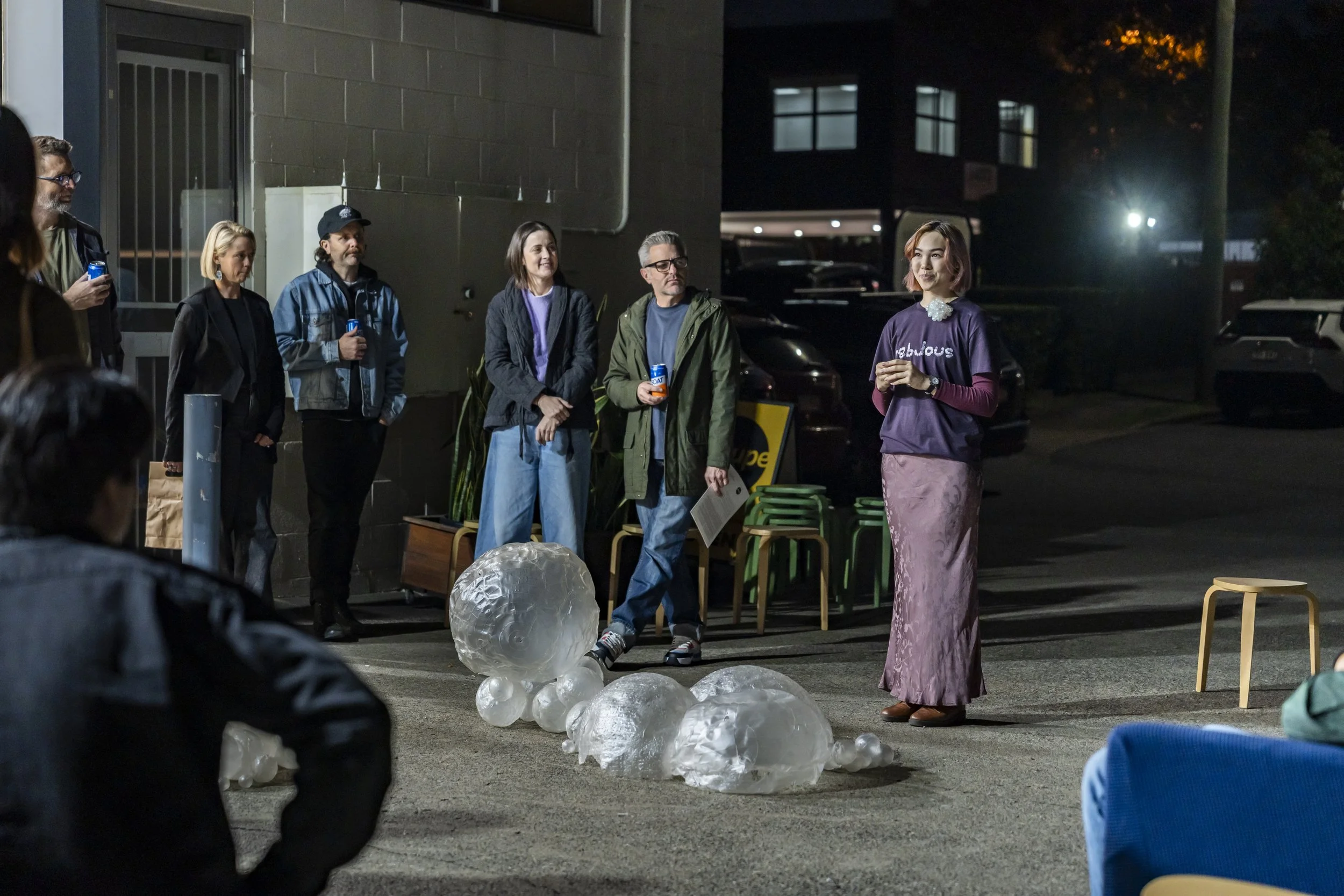
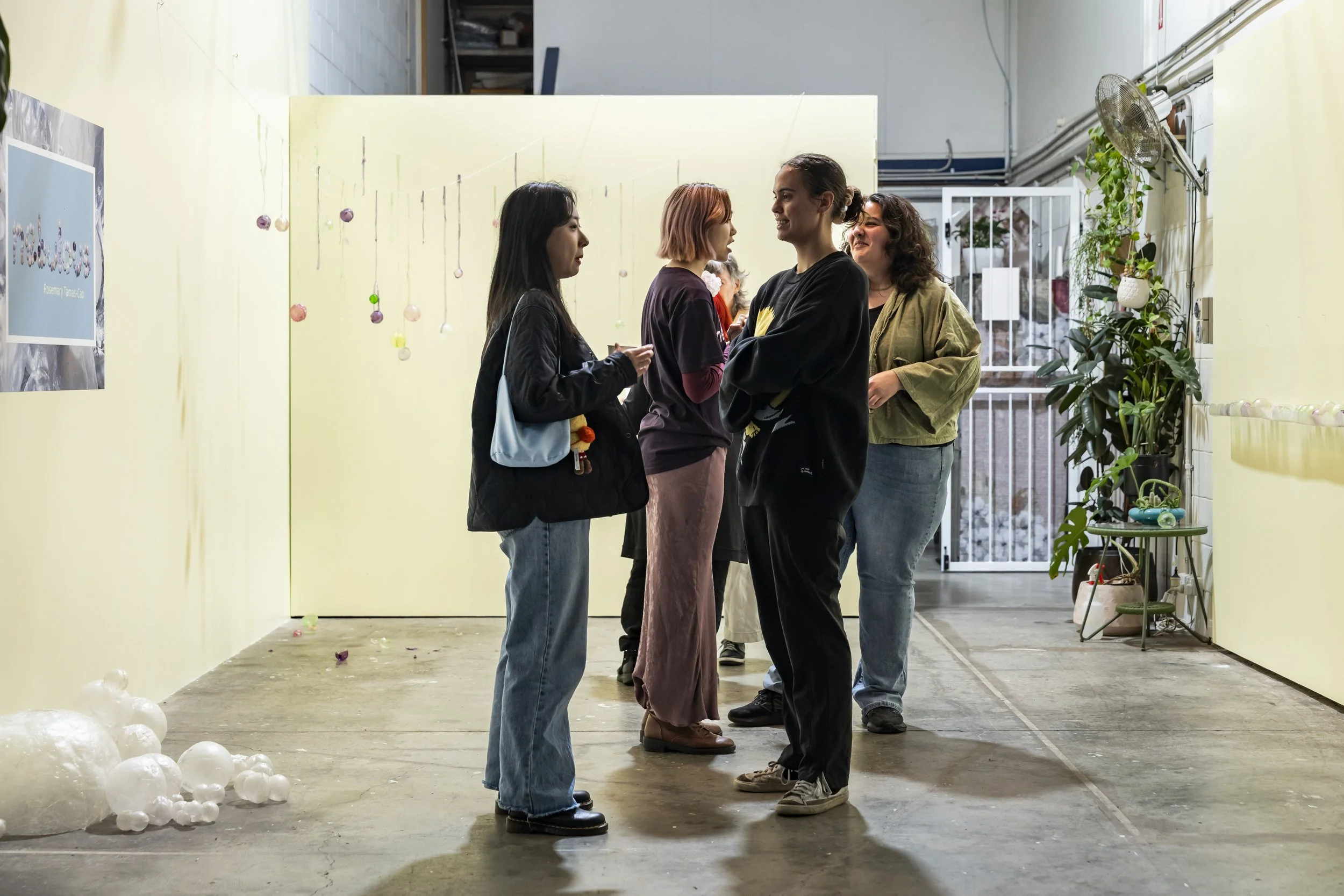
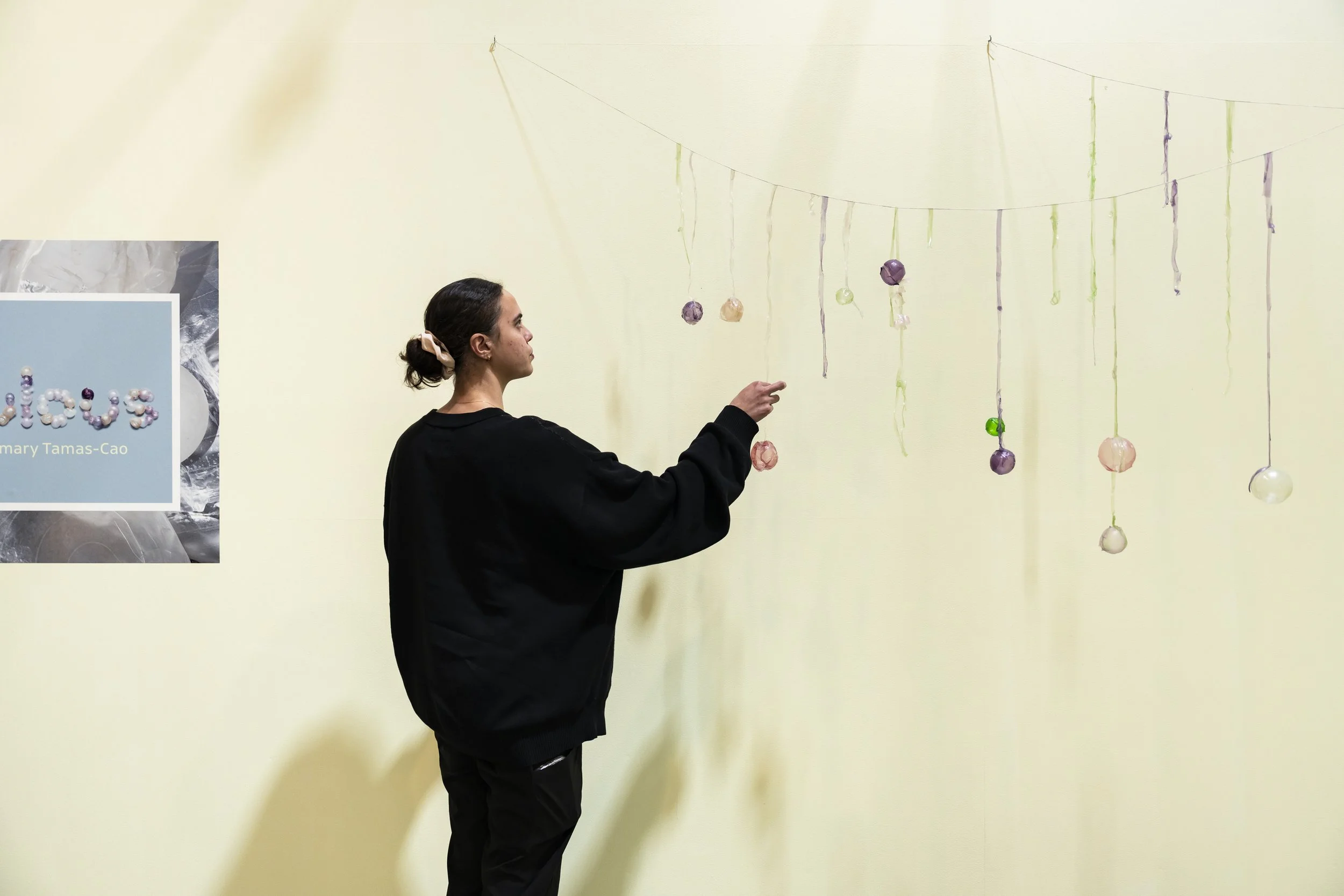
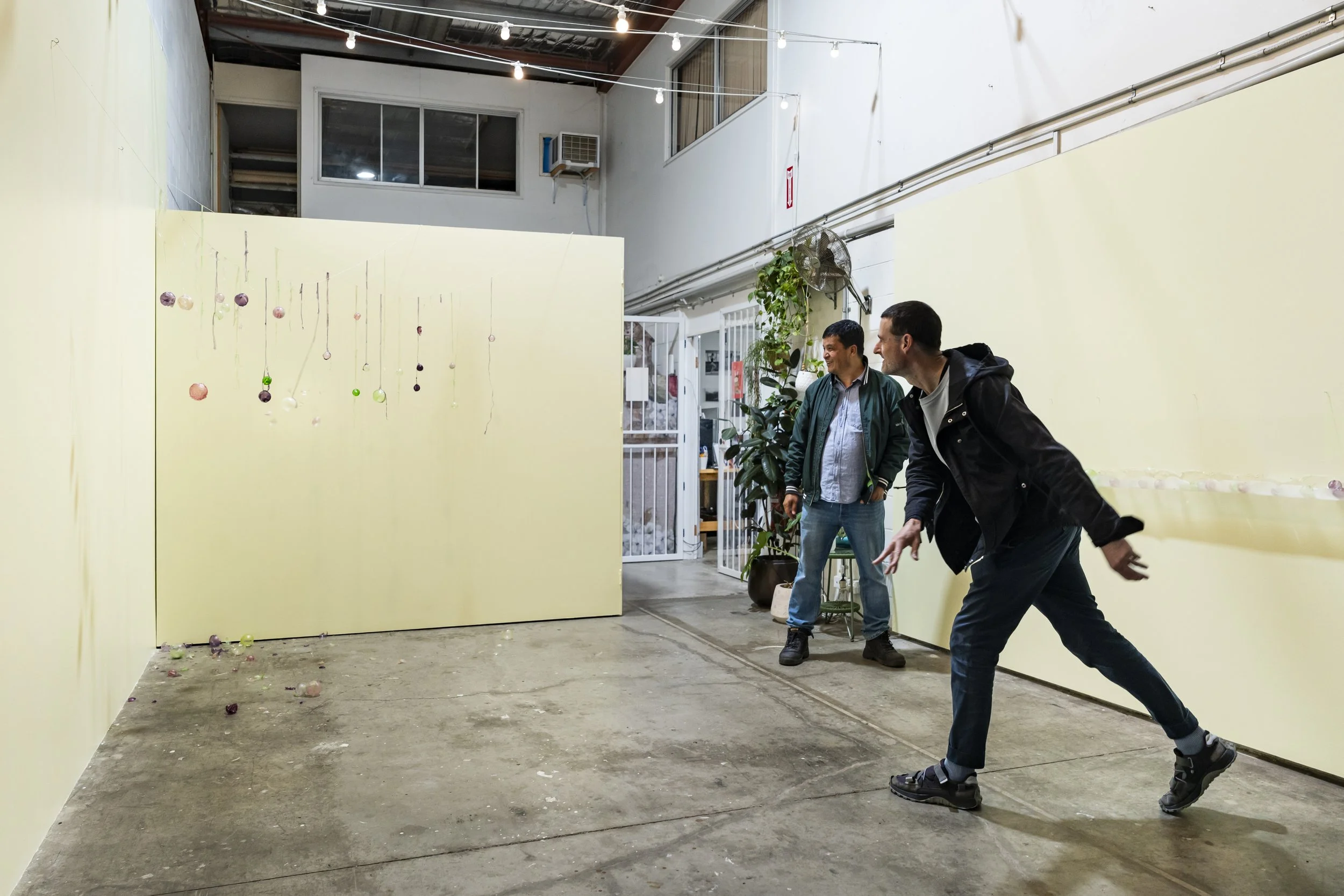
nebulous forms an event of material play through the activation of Vietnamese rice paper. Tamas-Cao’s participatory work Uplifting Tama invites audiences to adhere hollow rice paper spheres into a sticky suspended curtain of rehydrated rice paper. Exhibited alongside is Sud Den, which exists as a celestial cluster of colourless rice paper orbs in widely varied scales. The duality of these installations allow the wet and dry chemistry of rice paper to be both playfully and earnestly considered. The material’s endurance is emphasised just as much as the surrounding immaterial forces are.
nebulous extends Tamas-Cao’s poetic research, as she changes familiar words, ingredients and objects to re-evaluate understandings of materiality and hybrid heritage.
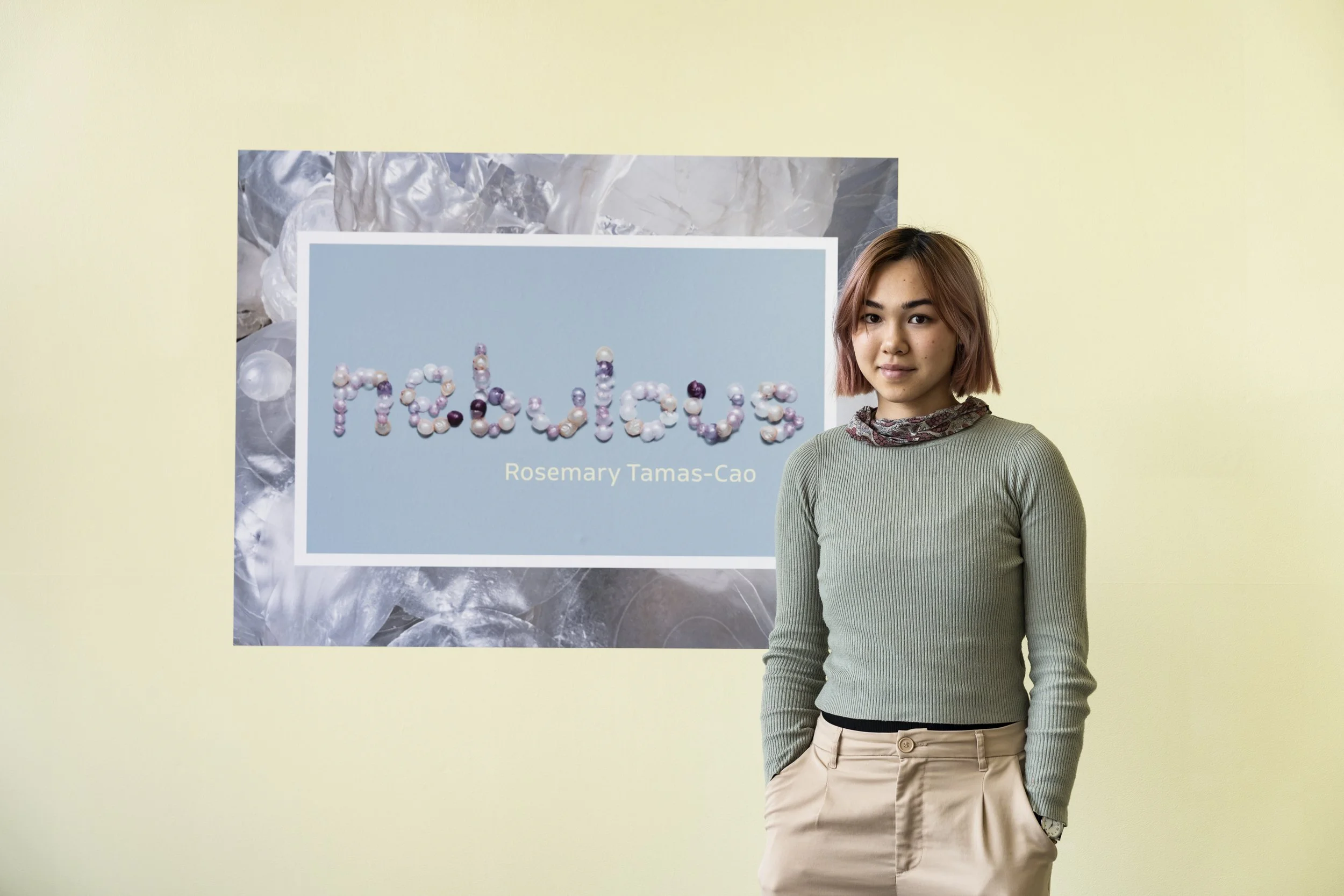
Rosemary Tamas-Cao is a Vietnamese-Romanian artist based in Meanjin/Brisbane. Her approach to sculpture, poetry and immersive art explores physical matter through a lens of sustenance, culture and fragility. She often works with ephemeral and inexpensive materials; currently her core artistic language is expressed through Vietnamese rice paper. Tamas-Cao responds to her blended identity as a way to navigate belonging and importantly celebrate food as connection, embodiment and innovation. Recently, she received the special commendation award for ‘the Churchie emerging art prize.’ She runs Artichoke Collective, highlighting the energy of food-themed poetry.
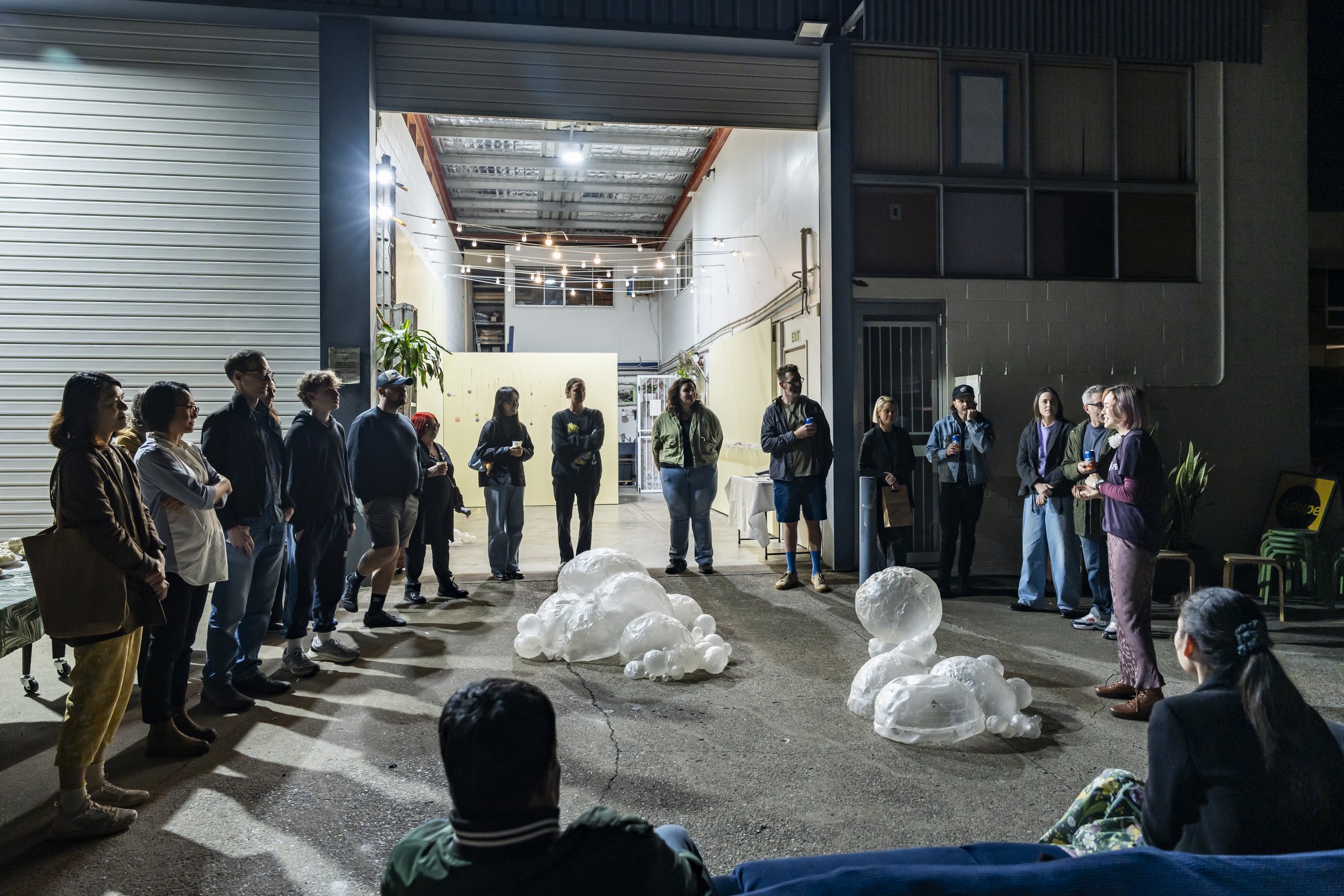
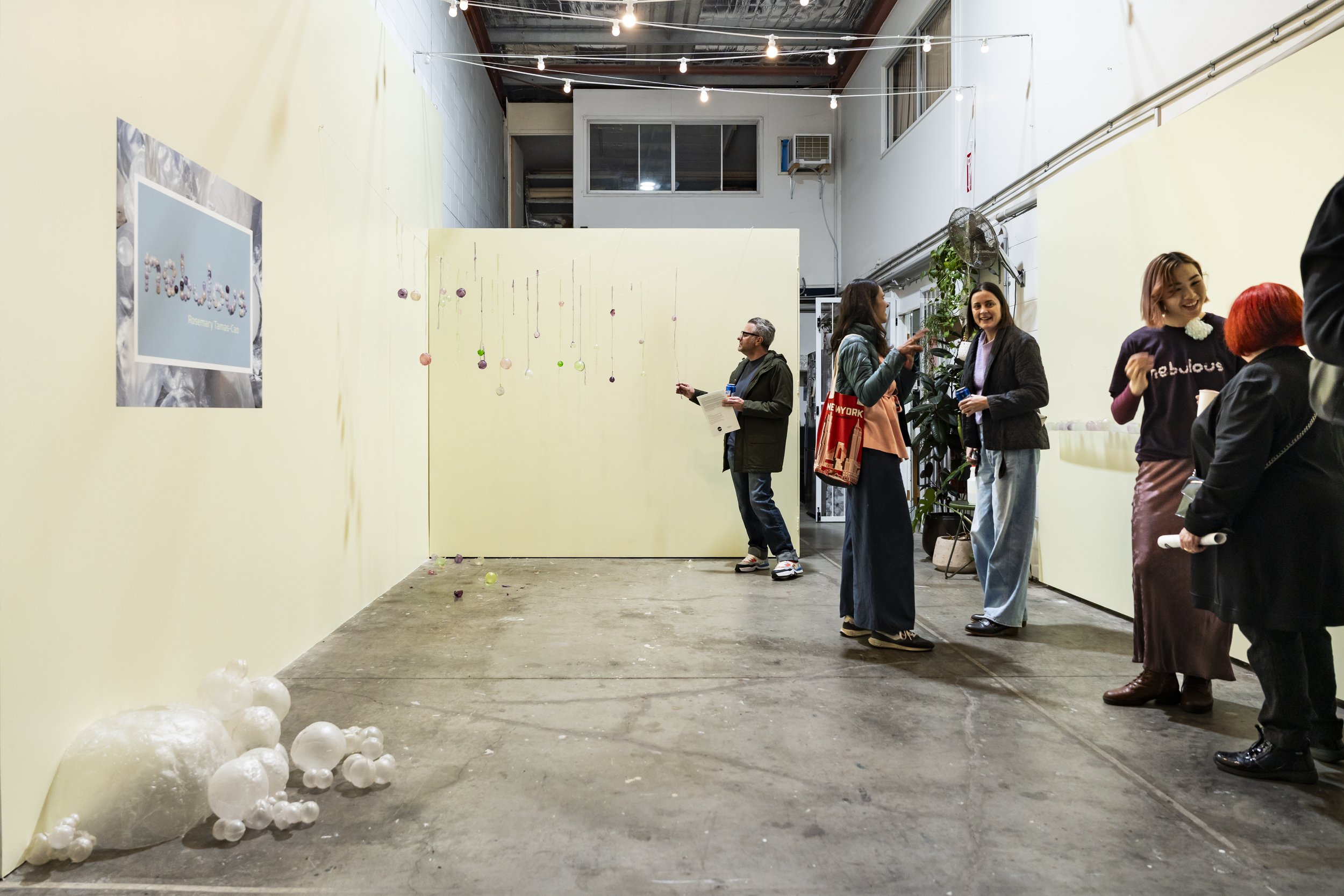
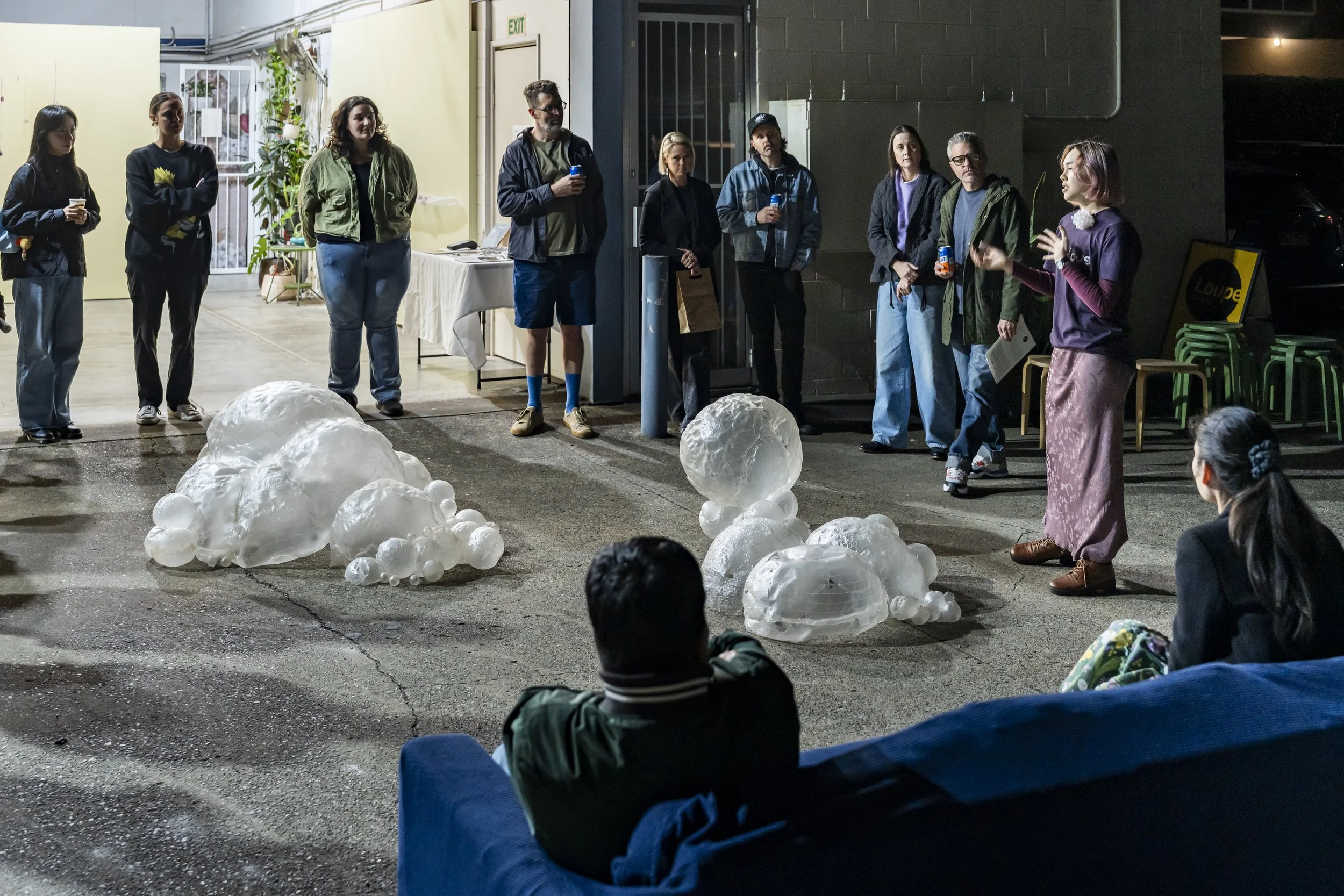
In-Conversation with Aria Targett
Rosemary (R): My current show is related to froth or foam and these ideas of collections of air. But instead of liquid boundaries, which is usually what suds or bubbles have - this is rice paper.
Aria (A): What do you think of the process of frothing and how it relates to your rice paper work? Because when I think of frothing, it’s something that makes lots of bubbles in a short amount of time. So there’s frothing, there’s steaming, there’s like a lot of it. And I was wondering how you think of frothing in terms of your bubbles, even though they are not necessarily frothing.
R: Yeah, it’s different. I’m not using heat or steam, like when you boil or simmer something. When I think of frothing, I think of eating sponge cake or something that is really light, like a prawn cracker. Even though the bubbles in those foods are immobilized–they’re solid–it’s still a food product incorporated with air, essentially, a foam. It’s fragile food. The foam within food products is hard to maintain. It usually needs extra stabilizers or ingredients to keep the foam going. So that temporal fragility, I think that sense of being really vulnerable, about to collapse, that’s how I relate to it.
A: I think something that’s very interesting is that you’re creating a lot of sensations which are these special words in food, like crispiness, froth, or softness. There’s all these sensations you get when you eat food. And making these rice paper tentacles, you’re giving this experience or sensation, on ways to experience rice paper, which is very interesting.
R: Yeah, because it’s sticky, it’s chewy, it’s elastic. The artwork evokes a lot of sensorial feeling, but the interesting thing with these works is that you can feel the weight. Like you mentioned before, they haven’t been created through a foaming process at all, rather they’ve been sculpted through a drying process.
A: It’s almost like a preservation of frothing.
R: Yes, and I think ephemeral experiences like washing your hands or cleaning the dishes where you’ve got bubbles left in the sink–eventually those bubbles will pop and fizzle away. But with this work, it’s kind of everlasting. I want to highlight those moments, highlight temporal bubbles that appear in everyday life. They’re in a lot of places and especially cooking. Air is incorporated, it’s used as a tool, like steam.
A: So the rice paper tentacles, you’re throwing orbs at them and then they catch the orbs. What do you think of how it looks once it dries? What do you like about it?
R: I like how the shape changes from the wet rice paper being straight down, and when you look closely, you can see the sticky gleam of it. Then when it dries, it becomes scraggly–the line starts to shape itself.
A: And shrivel.
R: Yeah, and shrink a bit. What do I like about the dried element? The fact that the air is forming it, like that air has an artistic agency or influence upon the material–like it’s sculpting it. And I think especially because the rice paper is so thin, that’s what causes parts of it to buckle and warp.
A: The air might play a part in it, but I actually think that the rice paper is what’s sculpting itself. Like, maybe with the starch elements, when it drips away or dries slowly, then it almost disappears into itself?
R: Oh, that’s beautiful. Yeah, because it’s like once the moisture leaves, the rice paper can do as it will.
A: Or like when you wet rice paper it expands doesn’t it? It’s like going back to its original shape. But it’s interesting how it goes upwards when it’s drying.
R: Yeah, almost like against gravity. And I think it just goes to show the versatility or variety of ways it can activate. And that’s always kind of what I wanted to look into–that rice paper has all these different abilities. I’ve been watching those trendy rice paper hacks. One of them was with Tteokbokki, chewy Korean rice cakes. There could be endless things that it could do! Rice paper can recreate certain other dishes like rice noodles. And it just seems so much easier to start from the paper. It’s convenient.
A: It can be cut up and fried. It’s not like rice by itself where it takes time to cook. Yeah, it’s a great material. What’s your favourite rice paper dish?
R: Ooh, that’s a great question... I’m obsessed with the pillows, the canape pillows.
A: It almost goes with the orbs, right?
R: Yeah, filled with cream.
A: Like mango cream? That would be delicious.
R: Mango is often used–green mango, sour mango...
A: Yeah. I think it’s not very common in the western world.
R: No, it’s more Southeast Asian. And green papaya too.
A: Oh yes. And it’s when the fruit is unripe. I think there’s quite a common taste for sour, salty food in Southeast Asia.
R: We love that flavour profile. And the saltiness of fish sauce as well, which I’m including in this show. Some of the orbs are infused with fish sauce. It’s the most pungent thing out there. Which ties into the sensory experience. The audience will also smell the sweet, vanilla-y, grassy pandan.
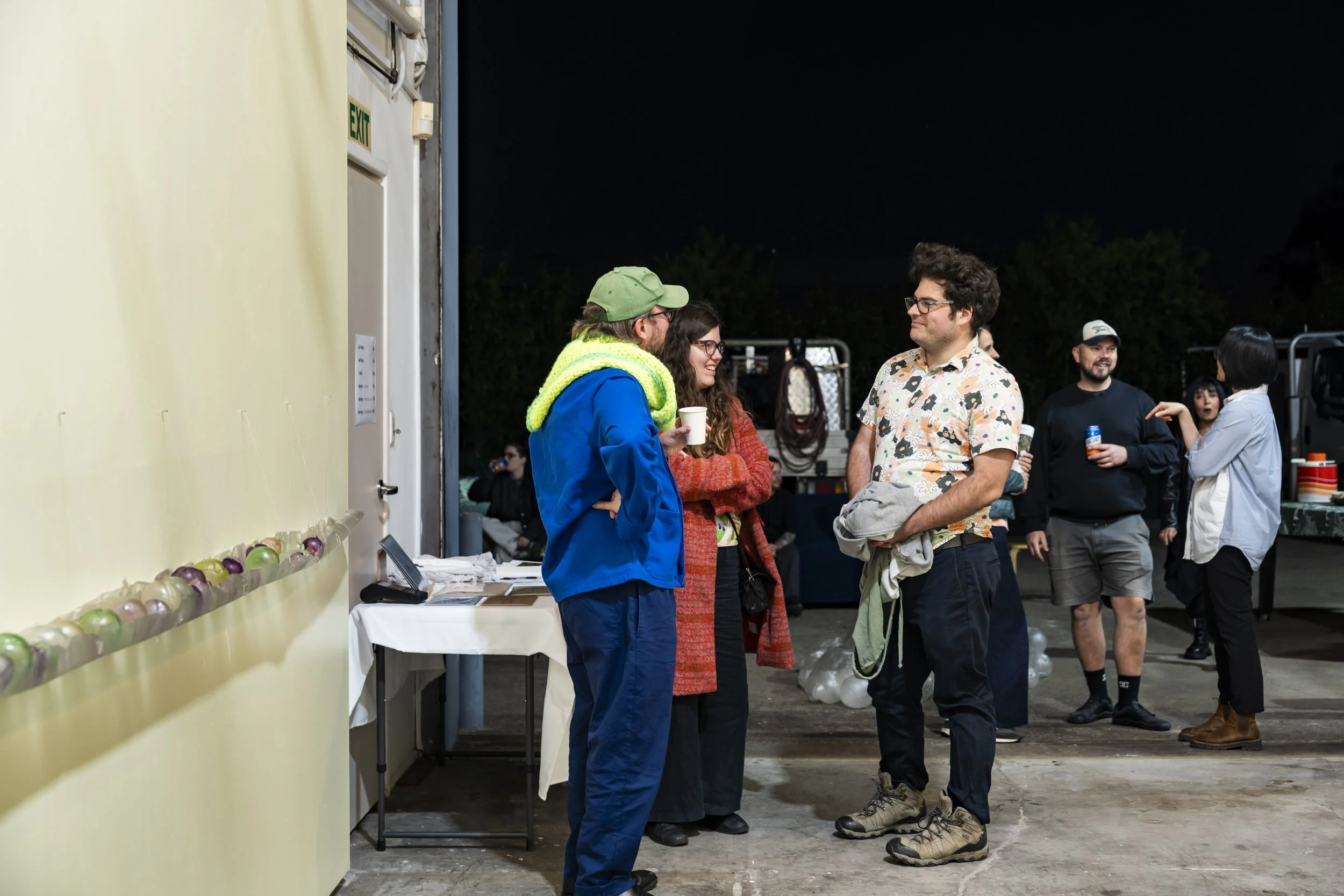
A: It’s a very distinct smell. And so you’re also making a gutter for these orbs. You’ve framed it as a way of loading the orbs for the user to throw, which I think is quite interesting. Kind of reminds me of a pinball machine.
R: I’ve been thinking about this work for maybe a year now and play is a huge part of this show; experimenting and just letting things happen quite naturally. I’m very keen to have the viewers touch it. People have come up to me and said, ‘I want to crush it.’ Like they just get this really big urge to feel it and to feel it break as well. Normally when you hold it, you’ve got to be really gentle; you can feel the air, you can feel how thin the rice paper is. But it’s different when you crush it. It’s like, envisioning your teeth.
A: Which is where the rice paper pillow canapes come in! I think play is very important in this exhibition. It’s a playful way of exploring your mixed heritage. And it’s healing in a way as well, which is quite nice to see.
R: Concoction making as cultural healing.