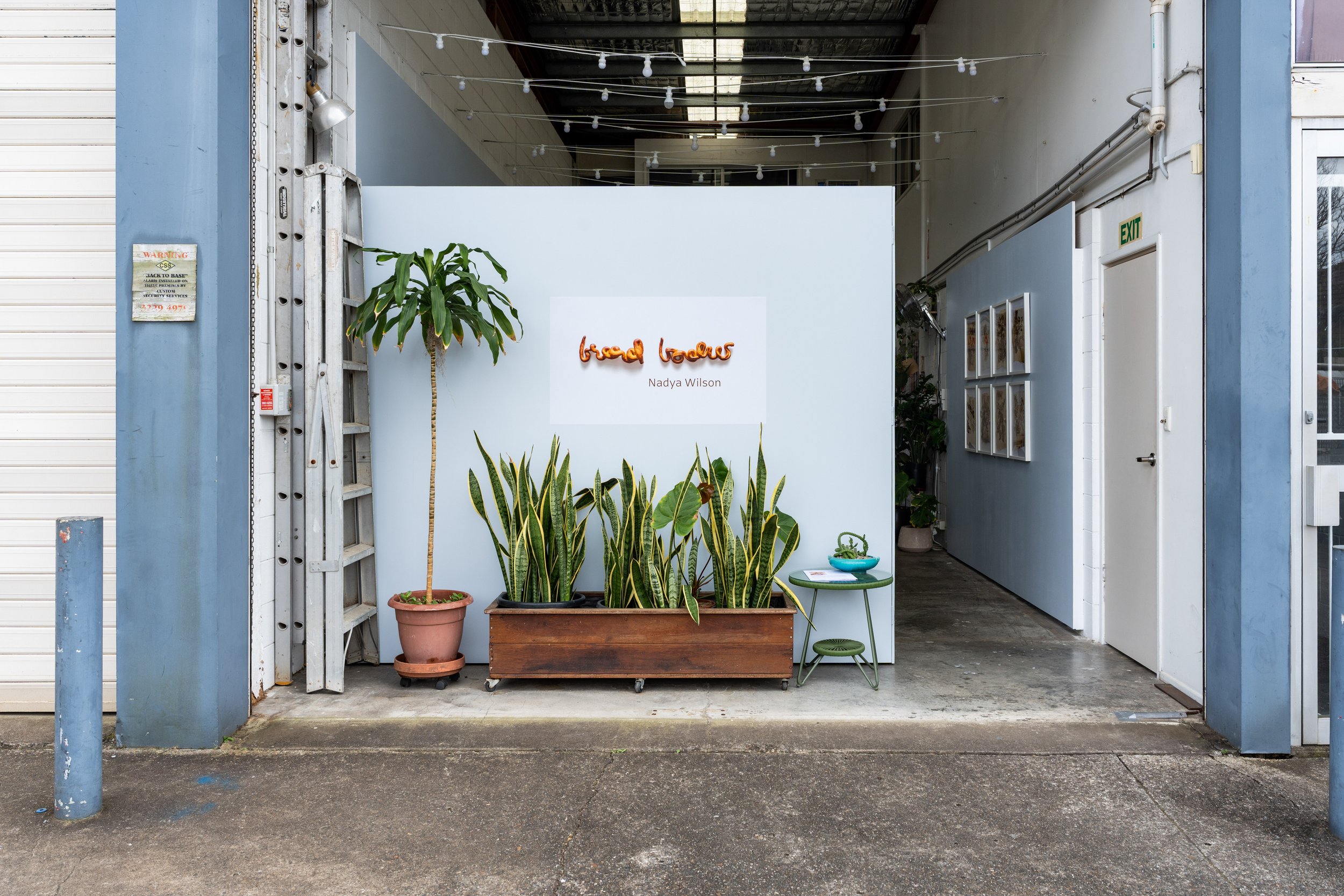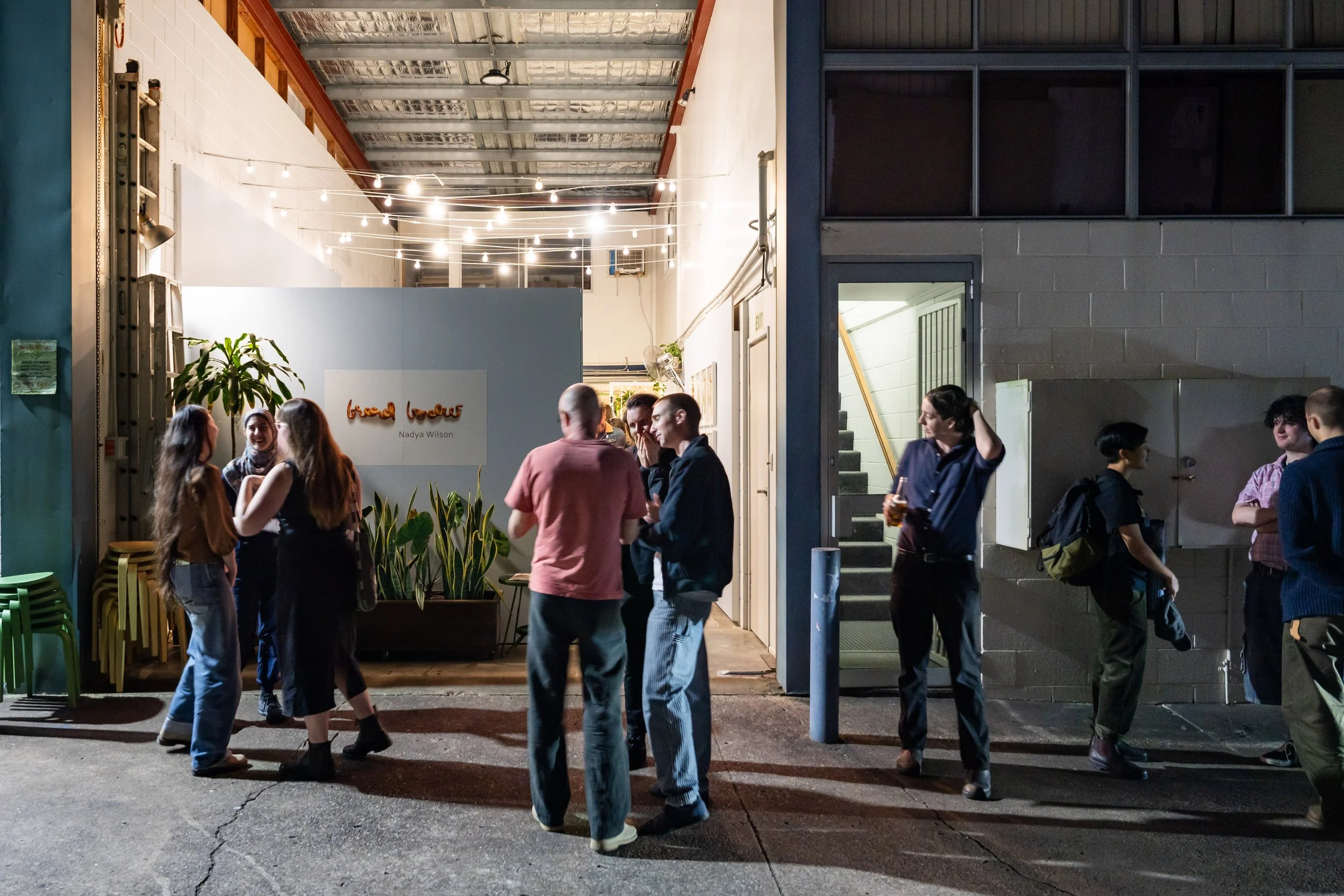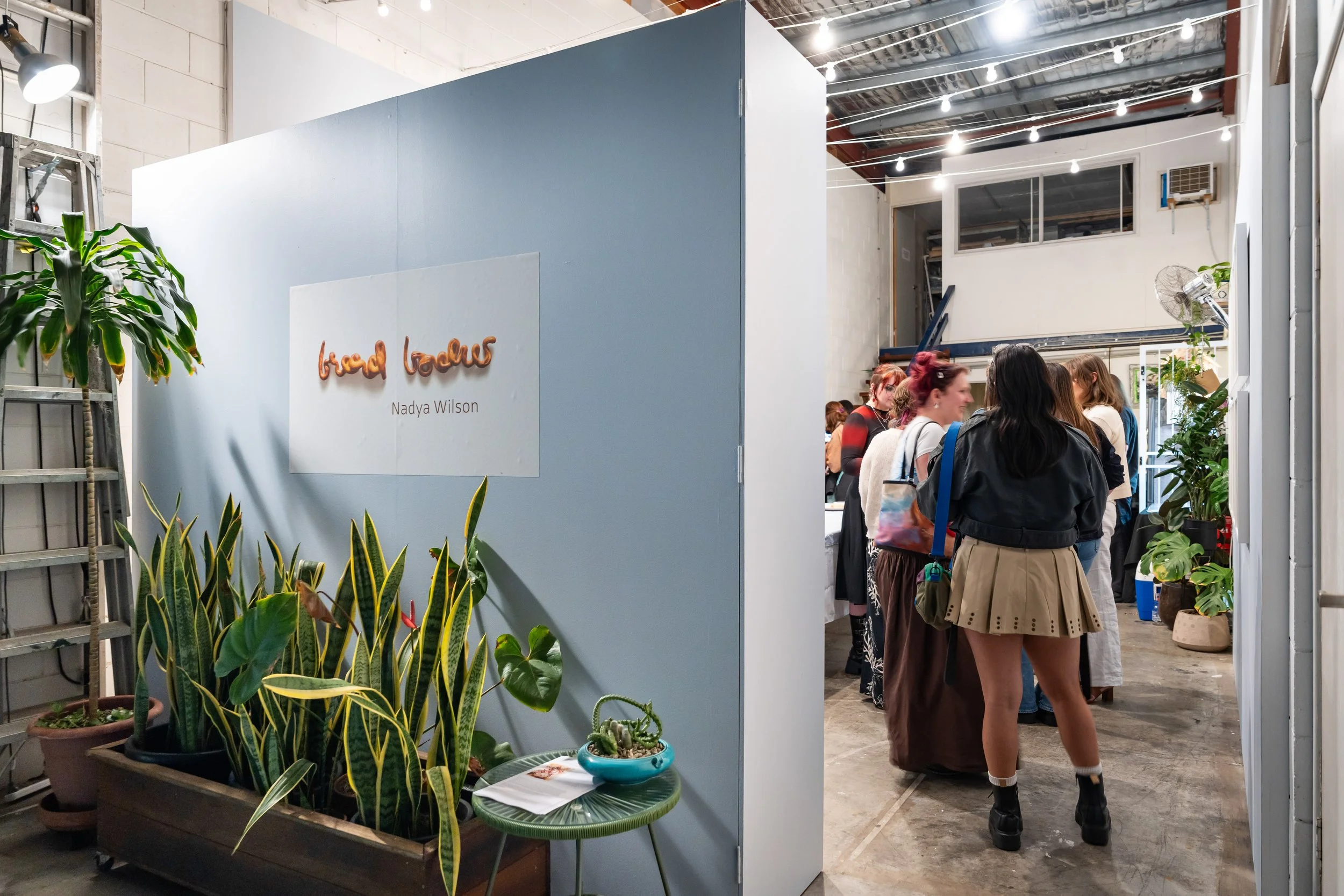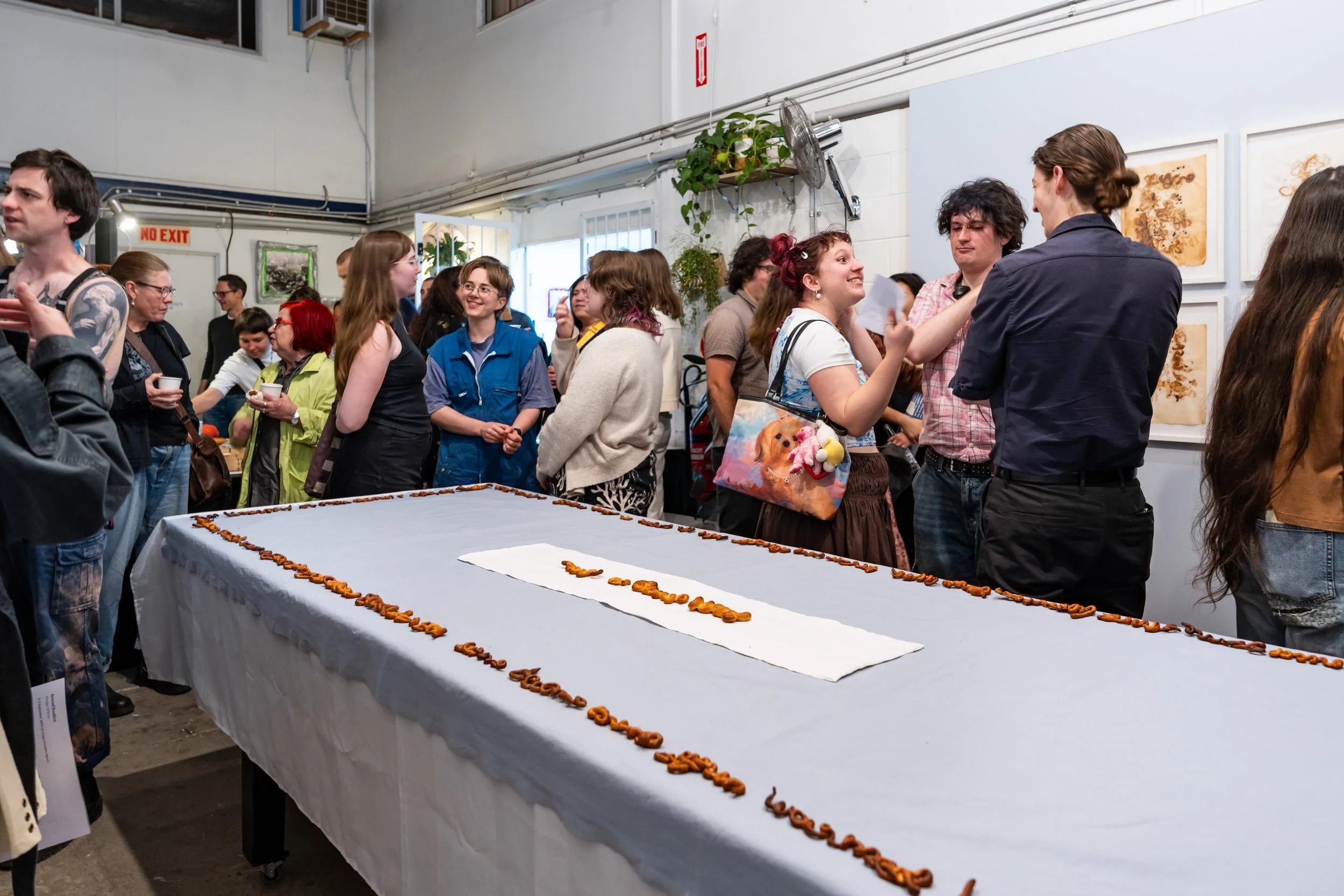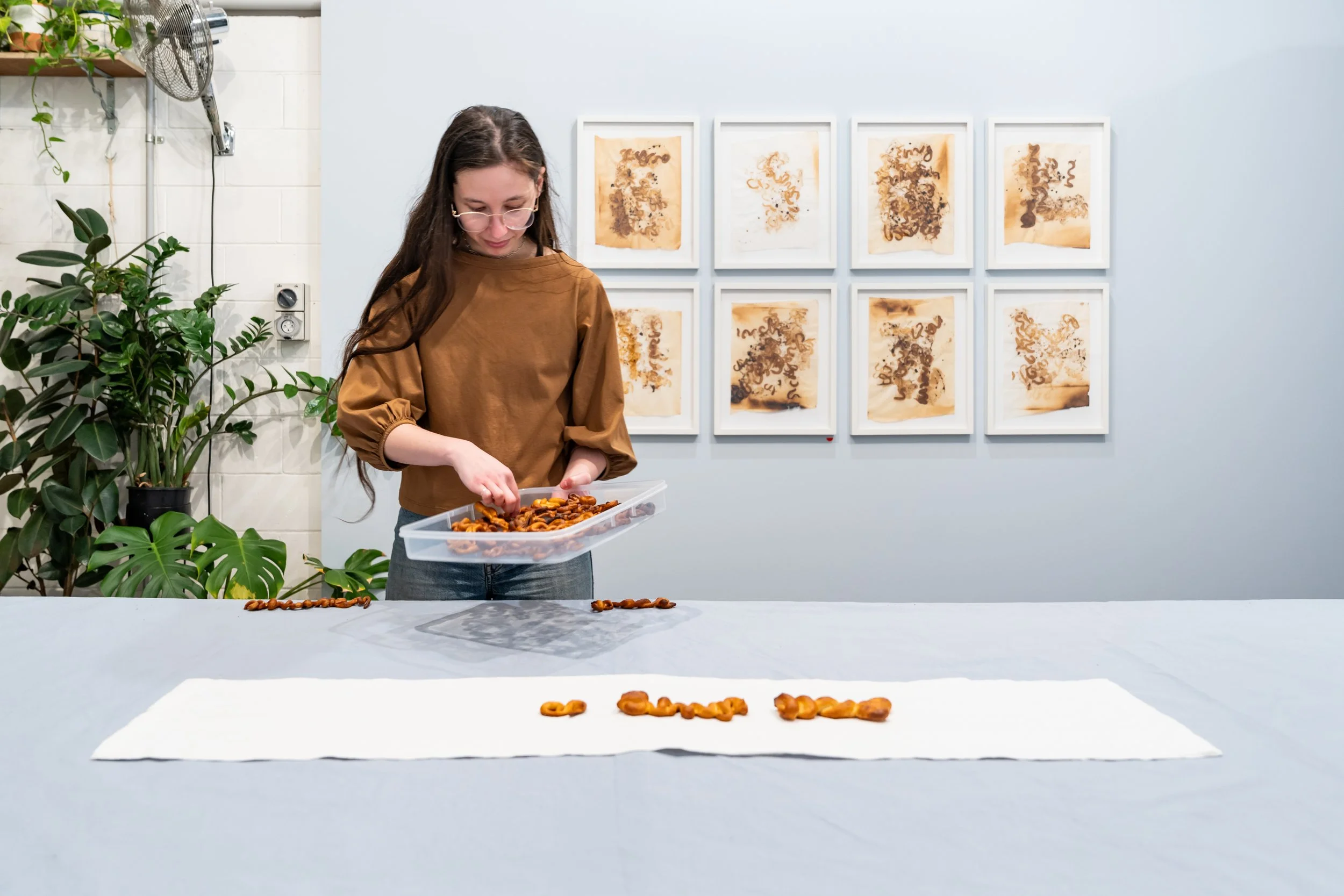
5-7 September 2025
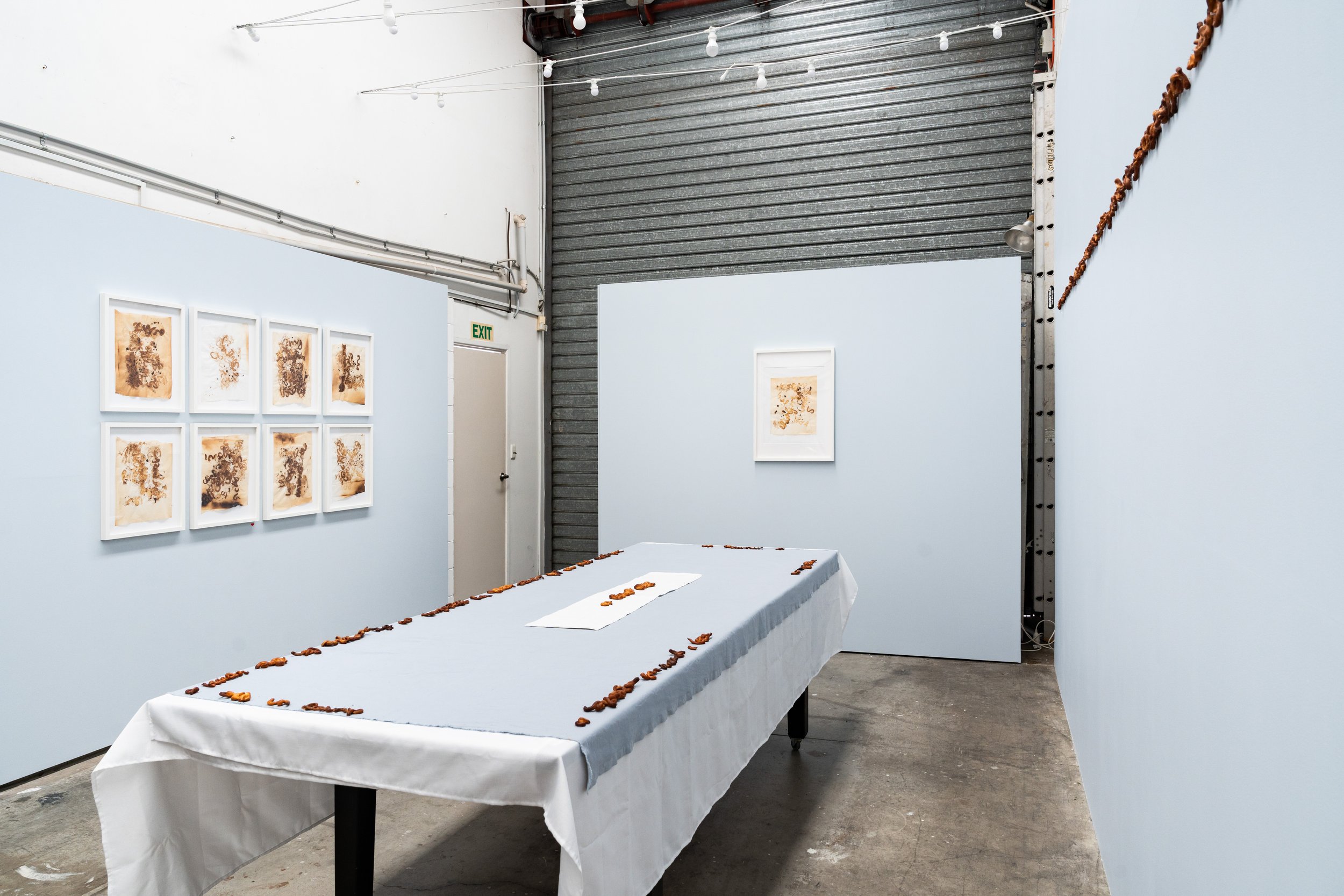
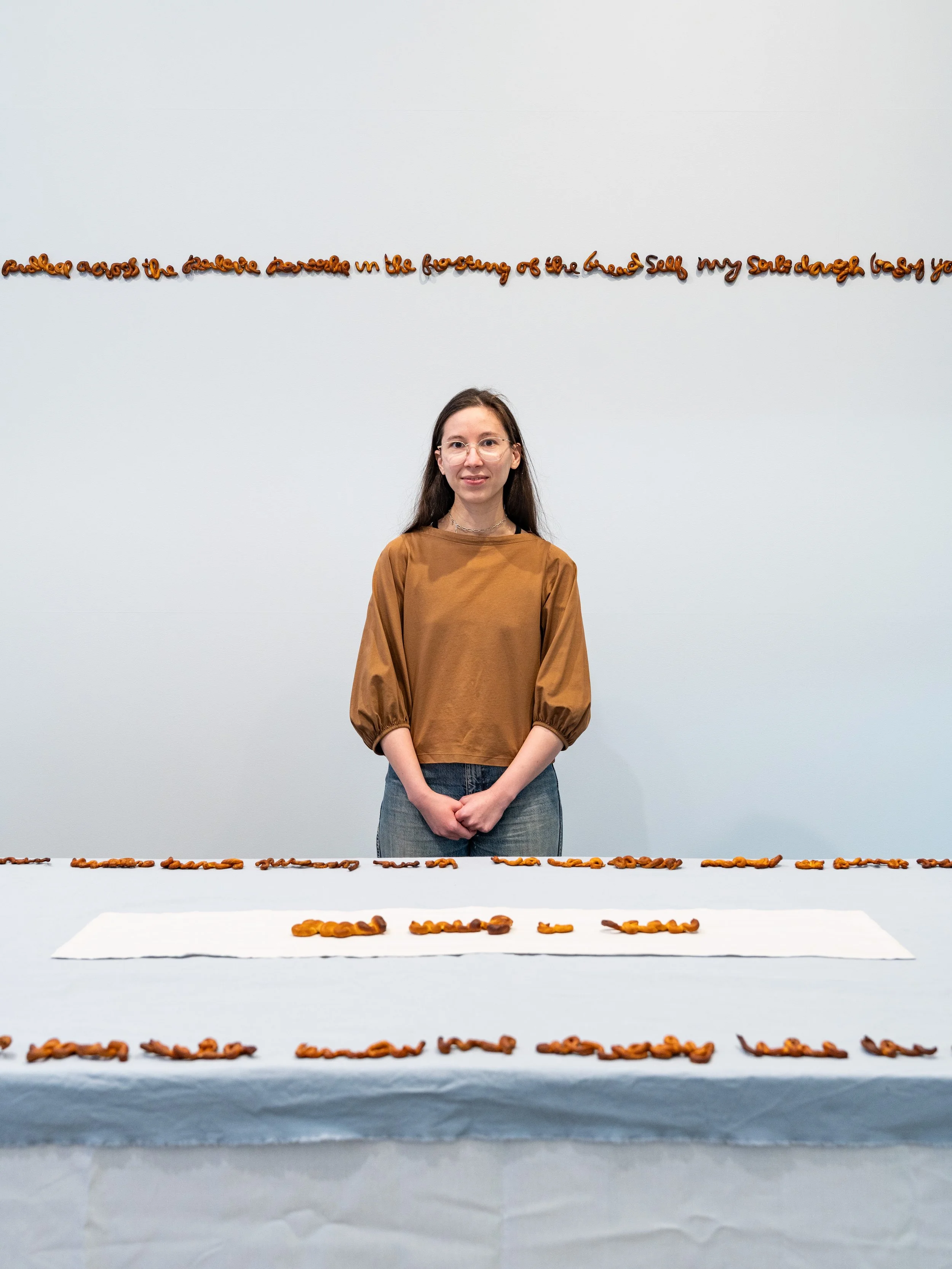
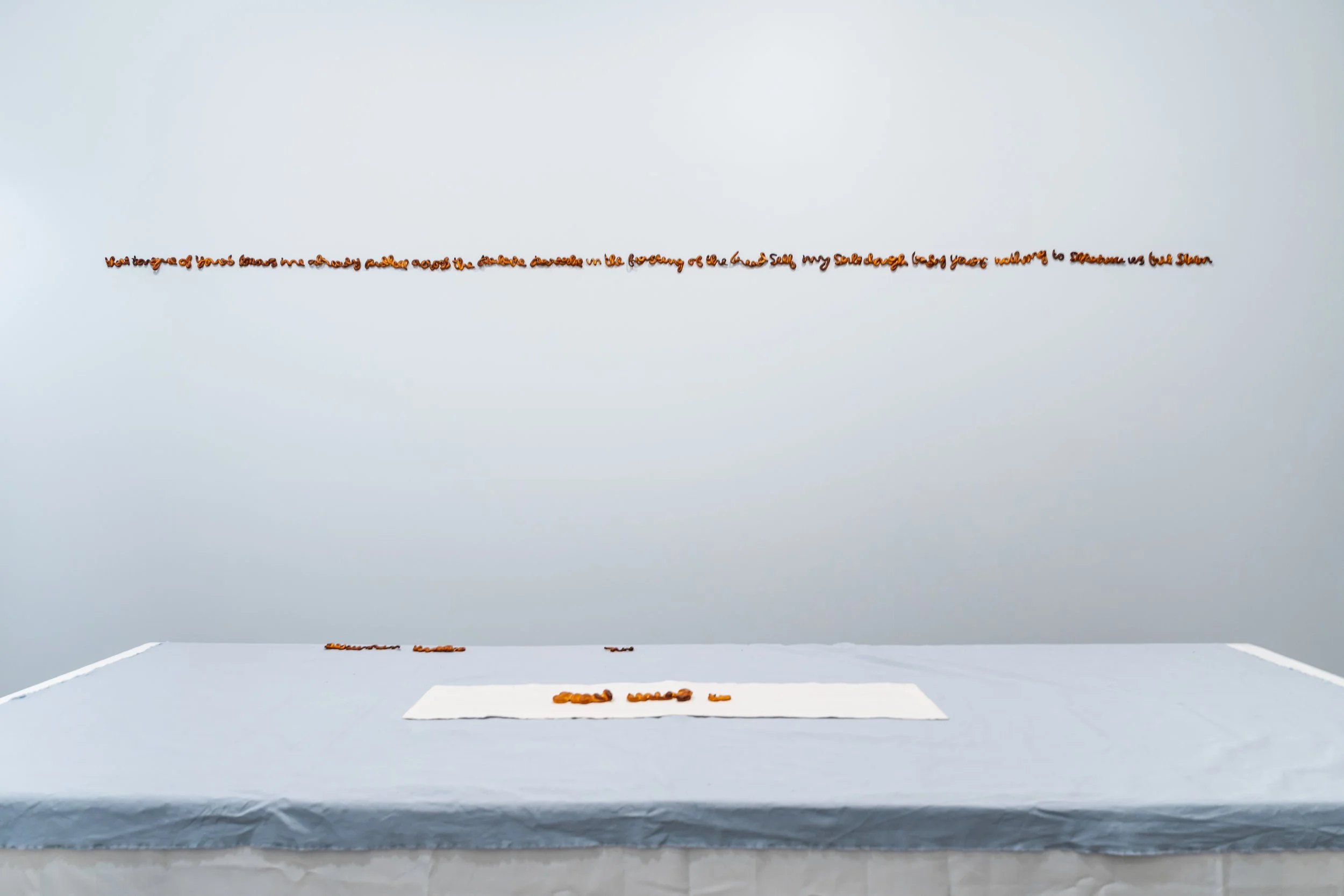
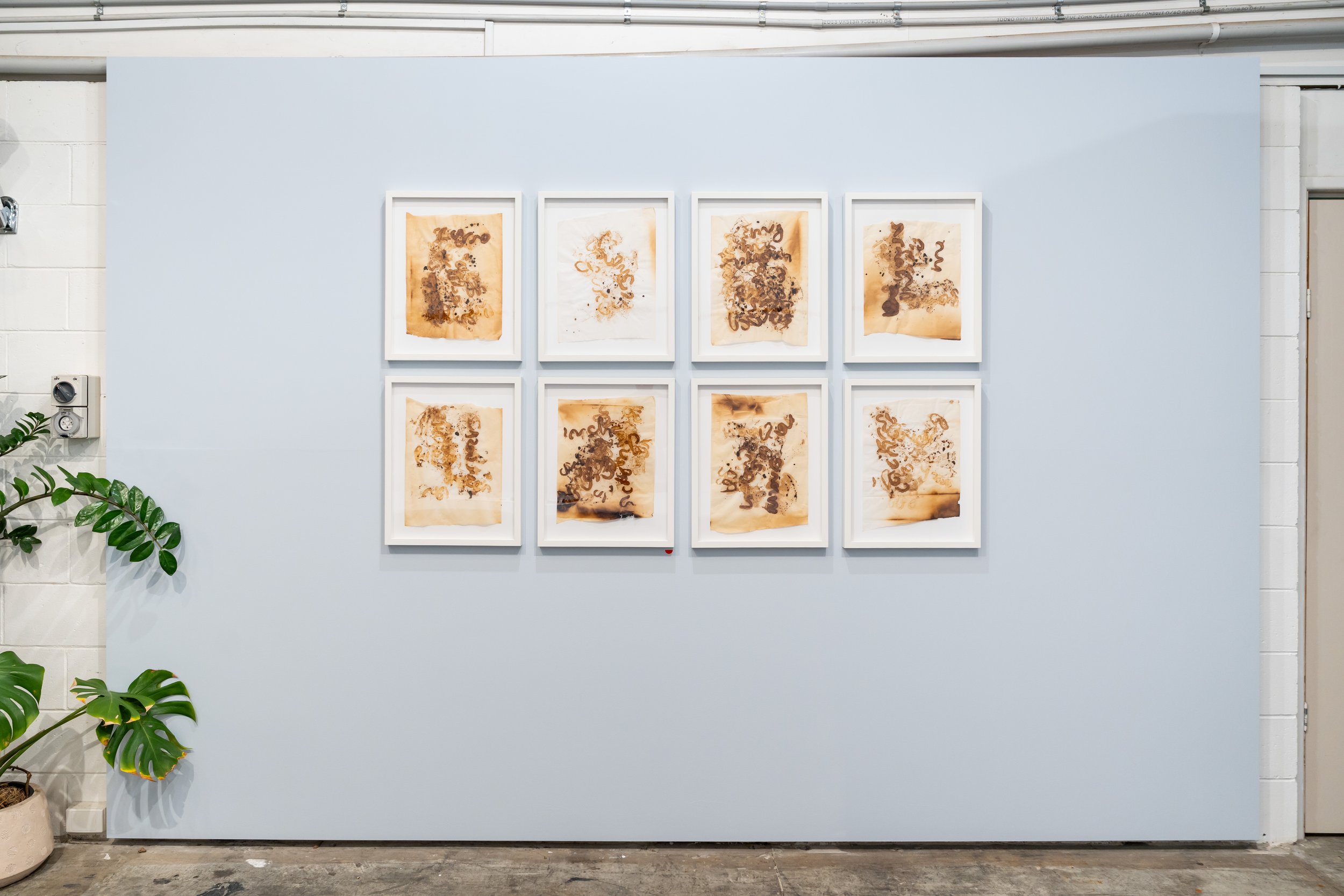
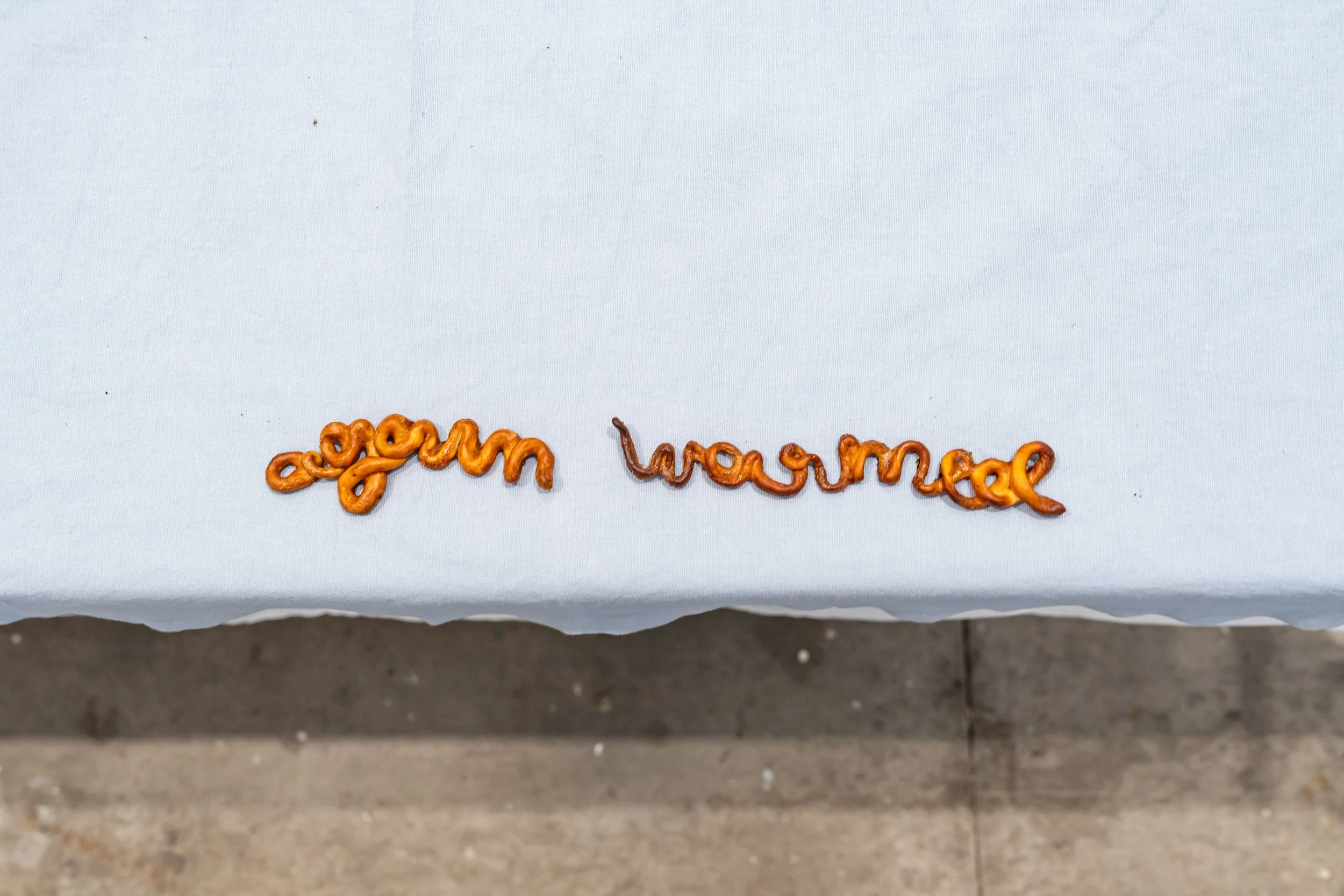
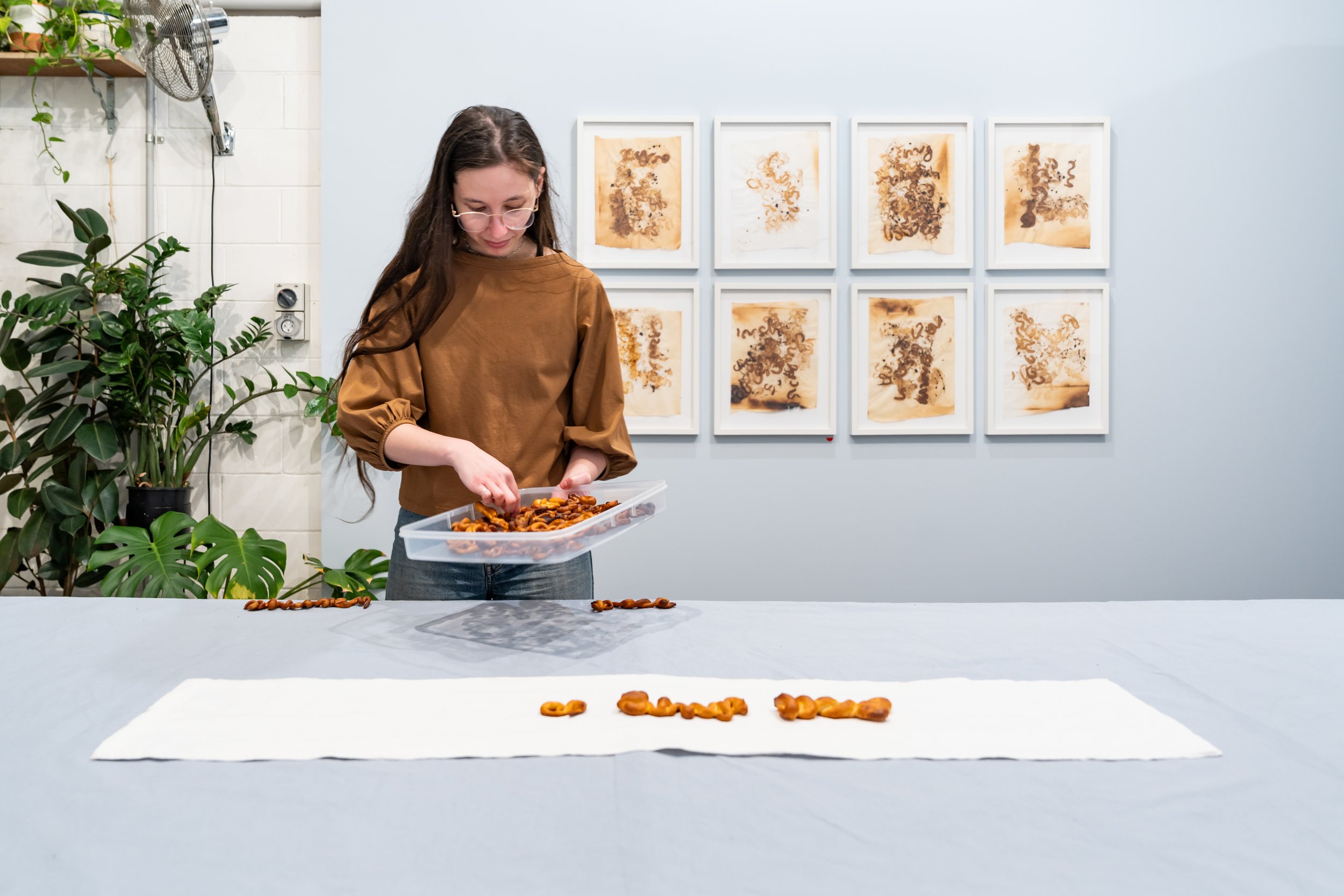
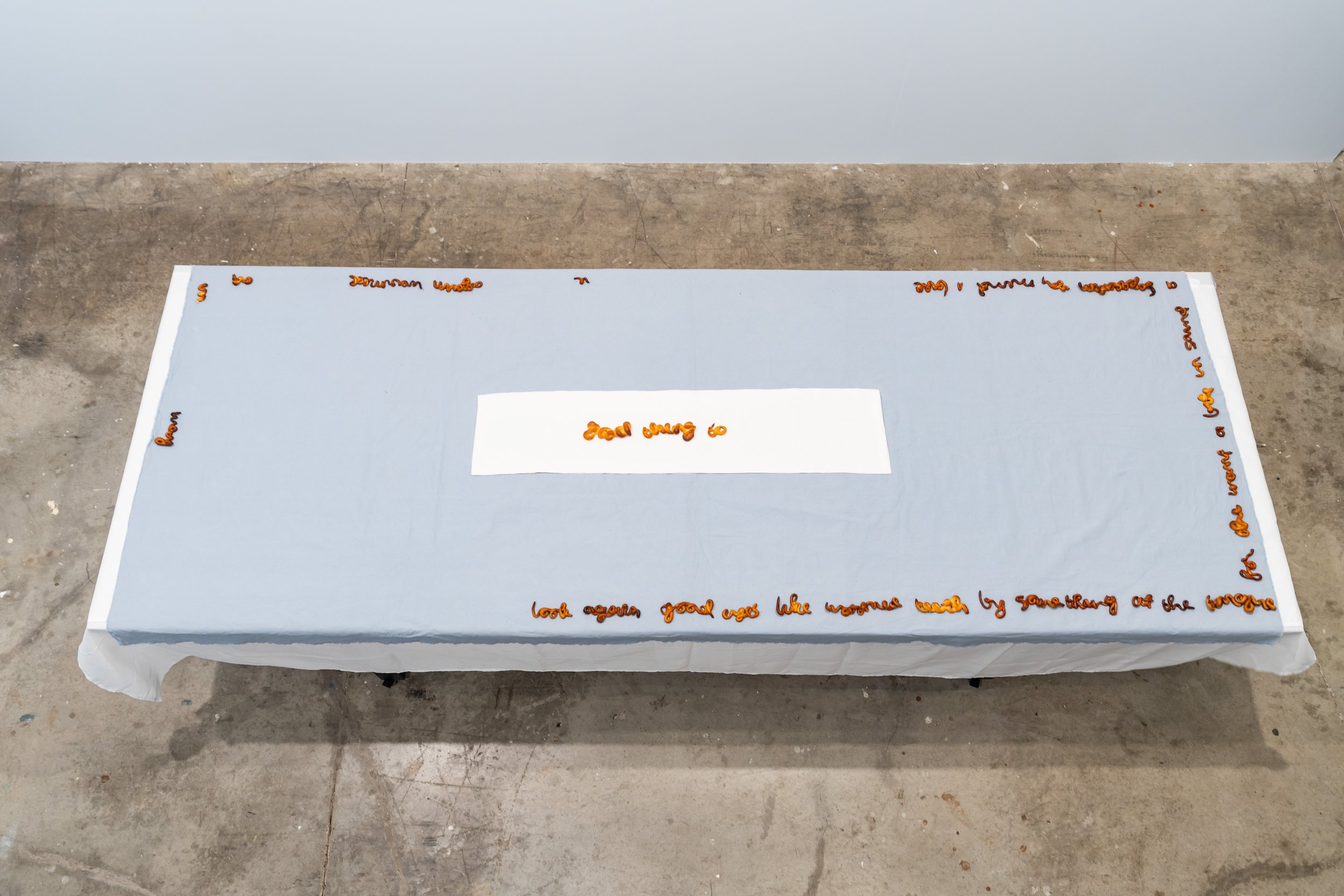
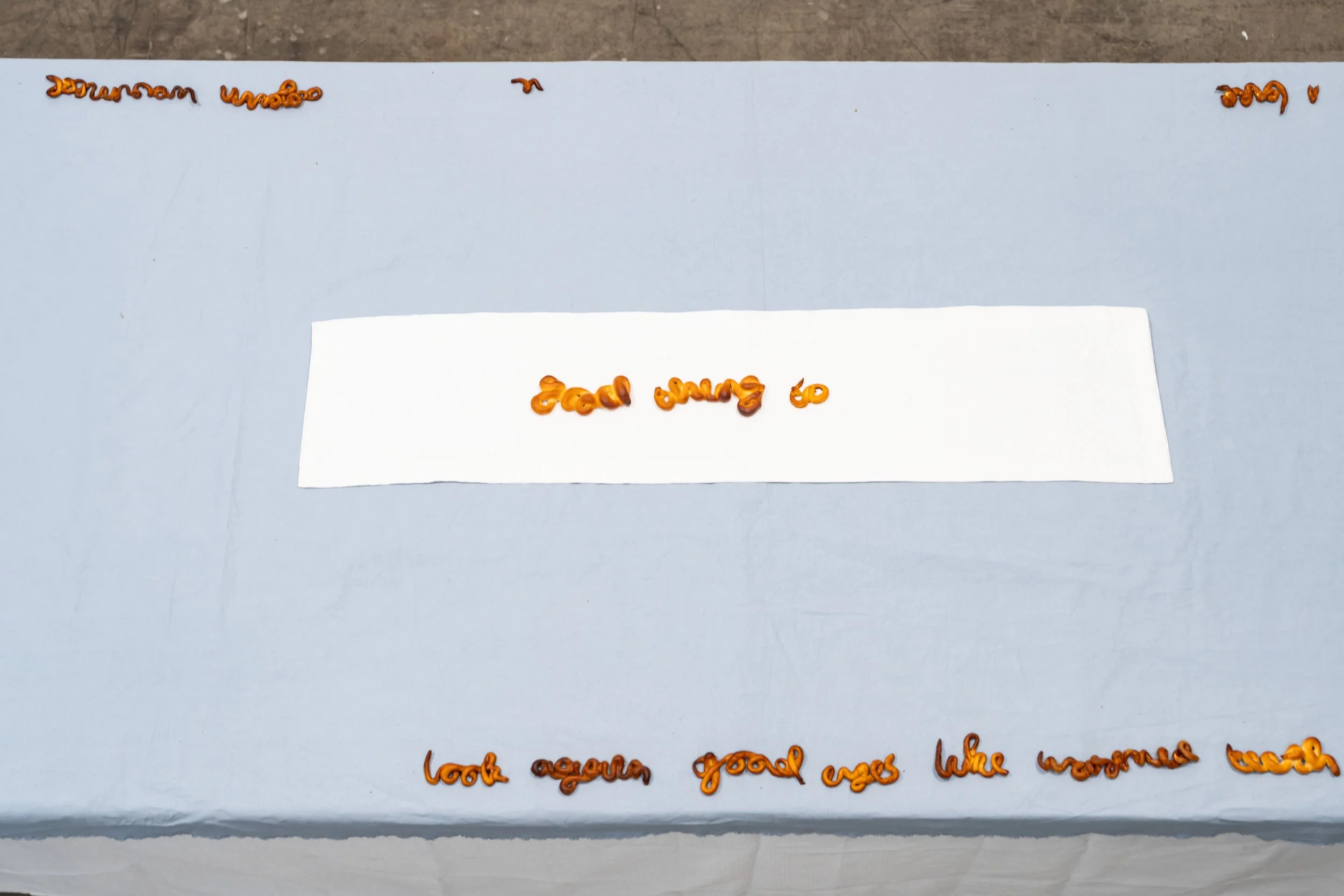
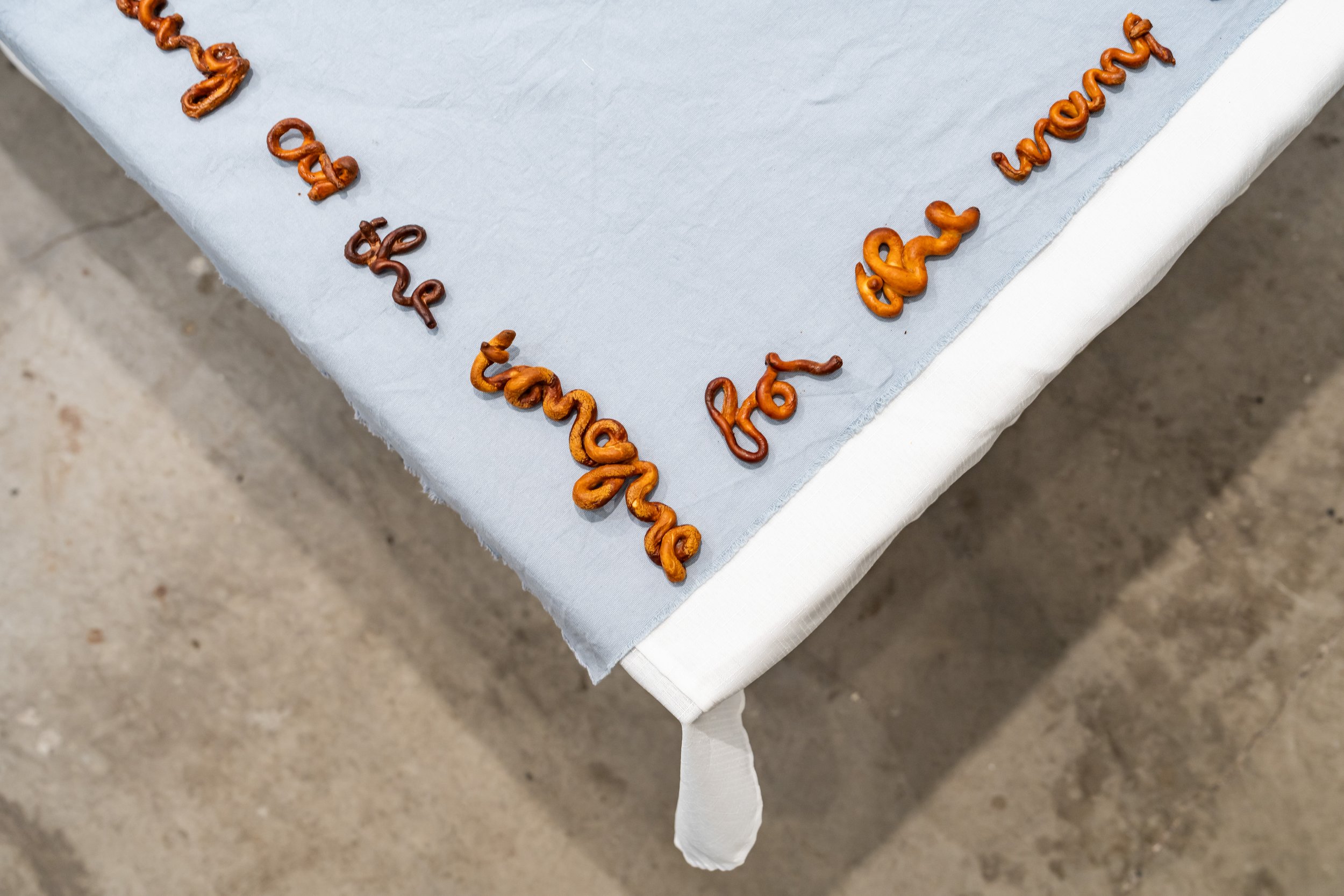
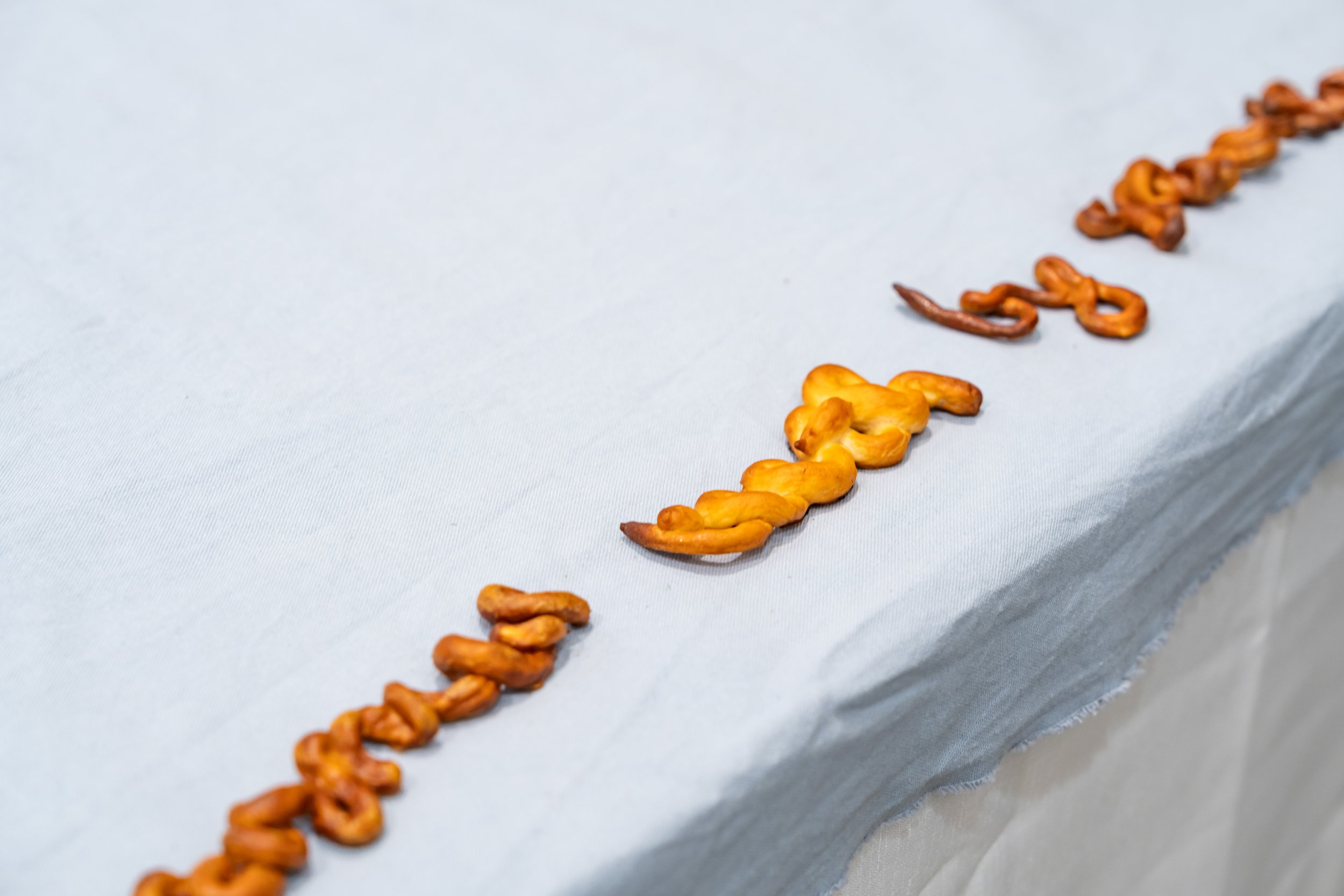
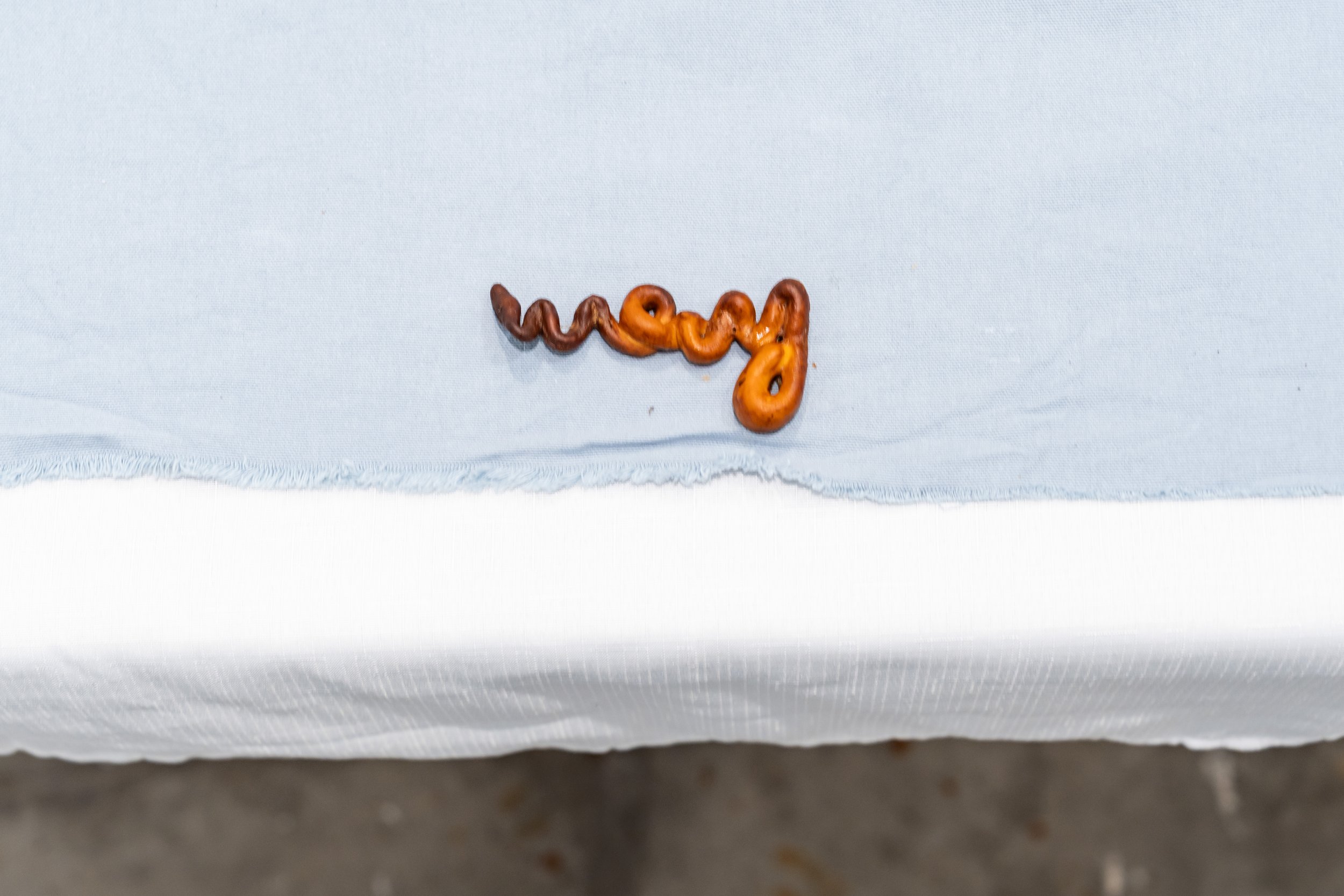
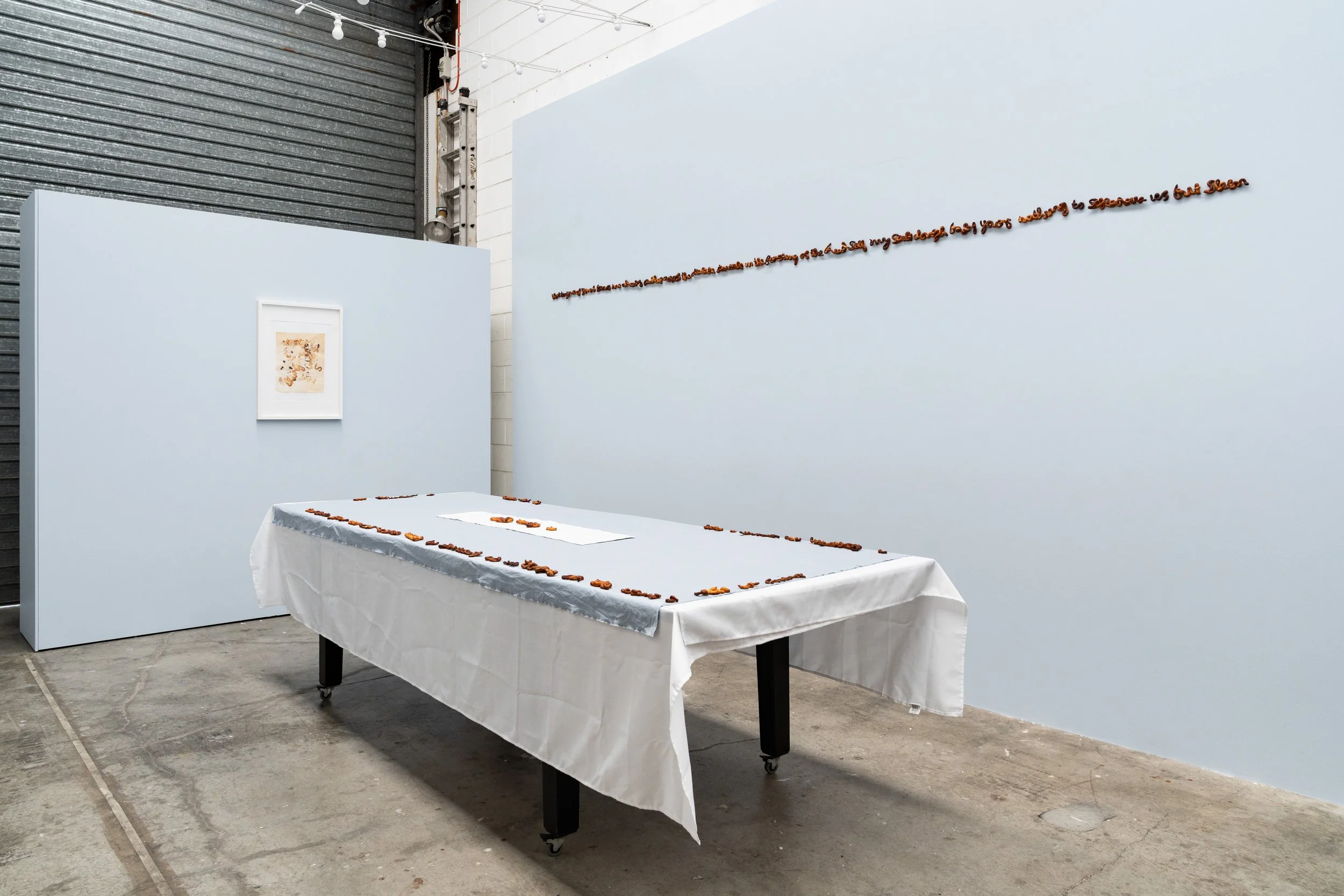
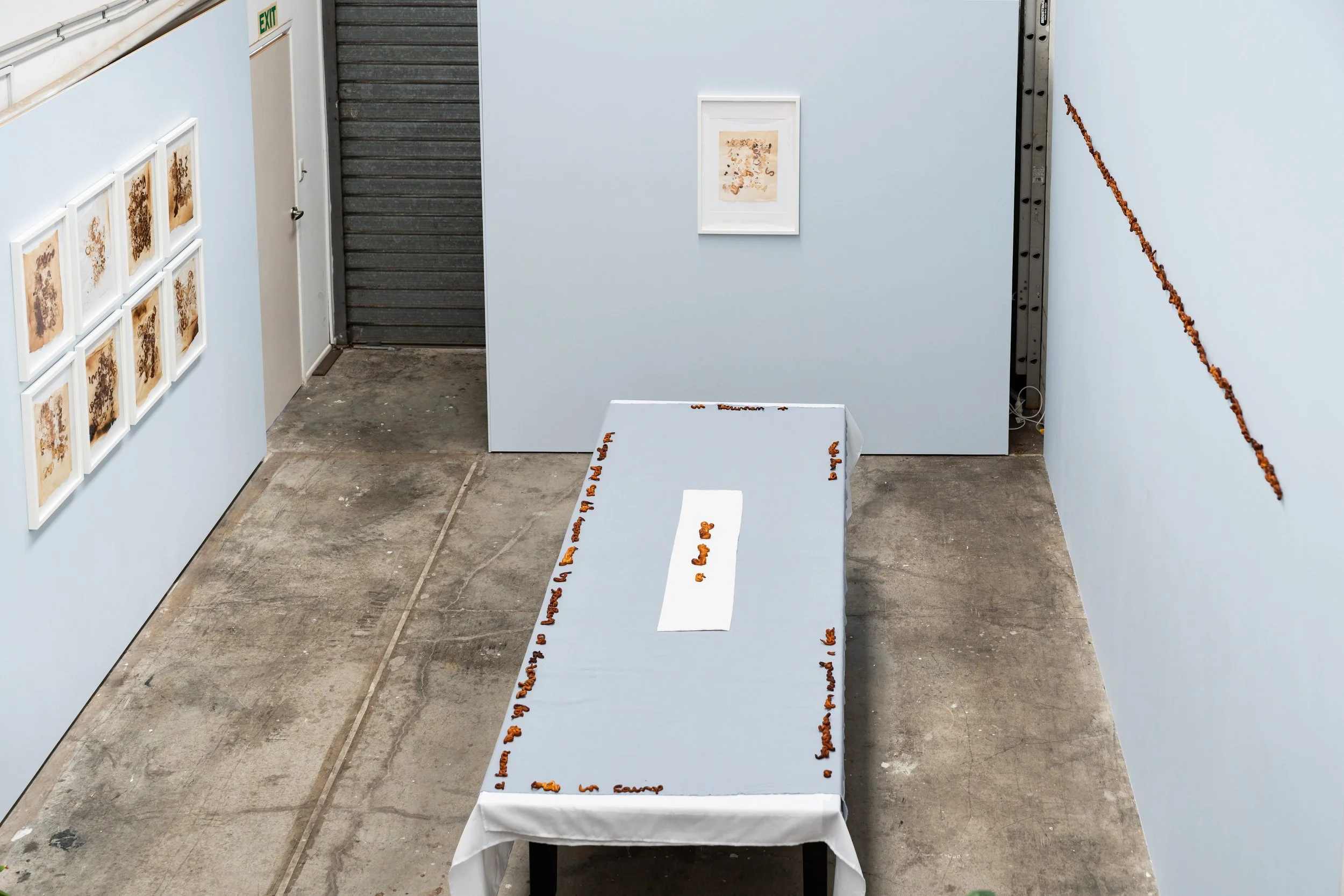
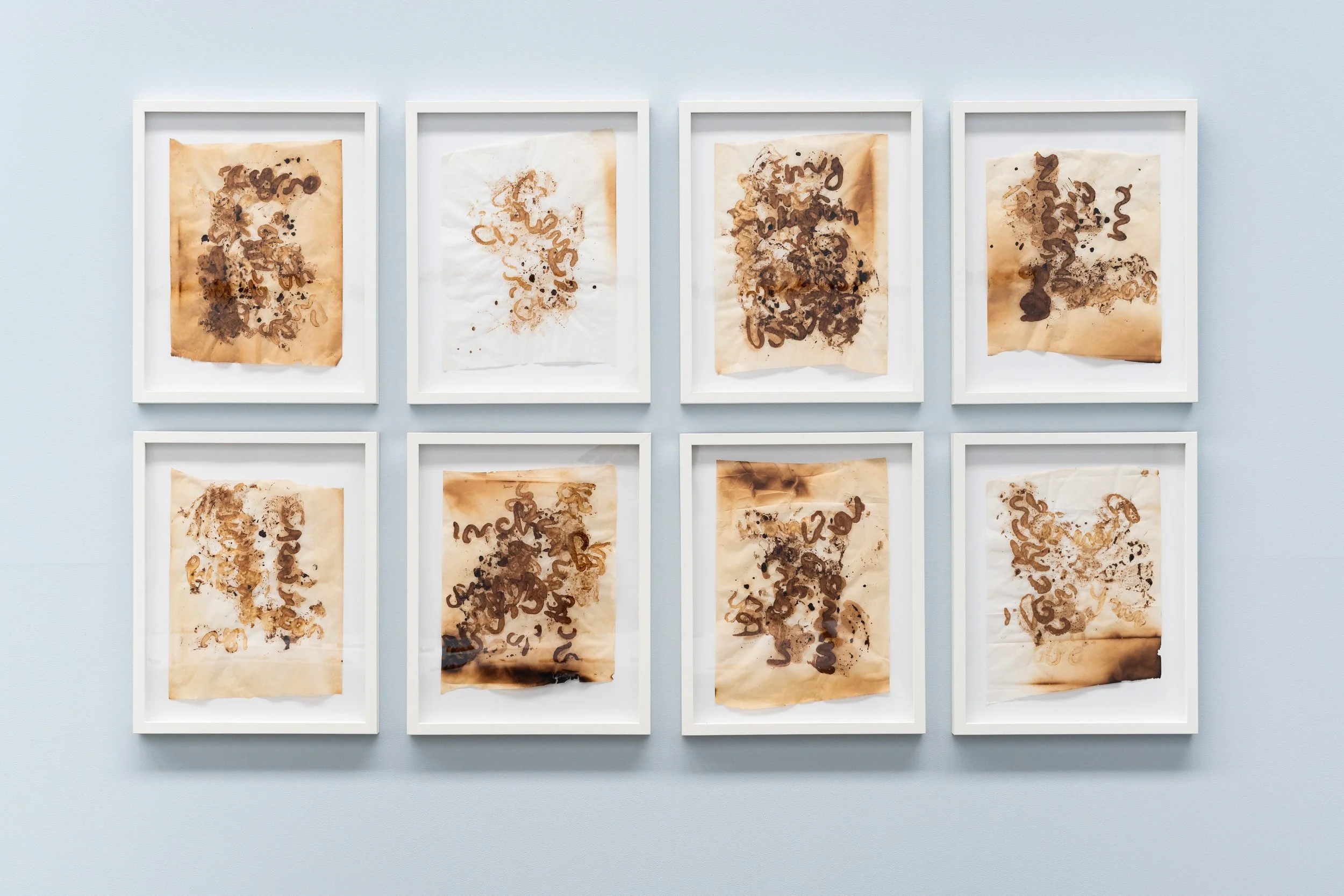
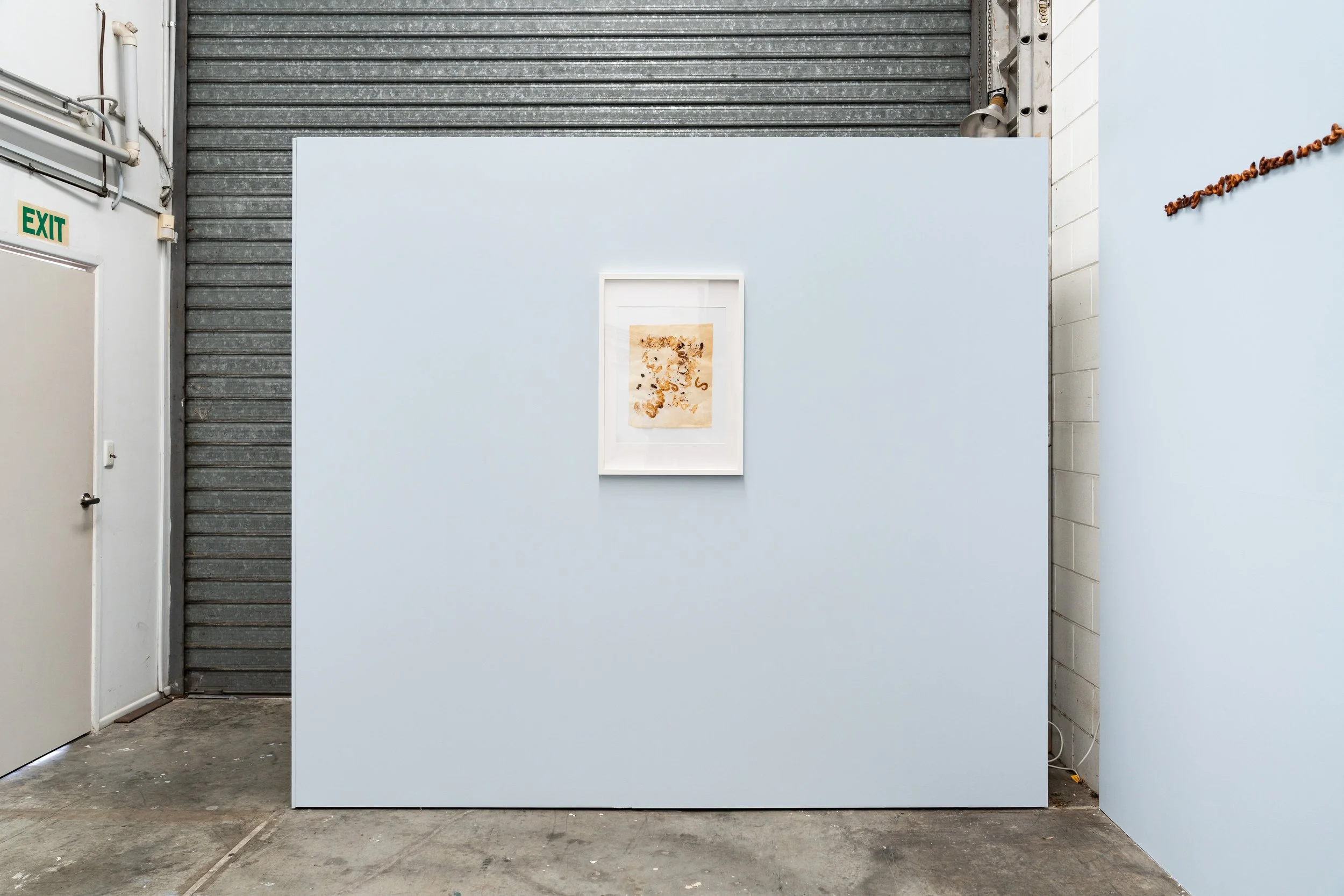
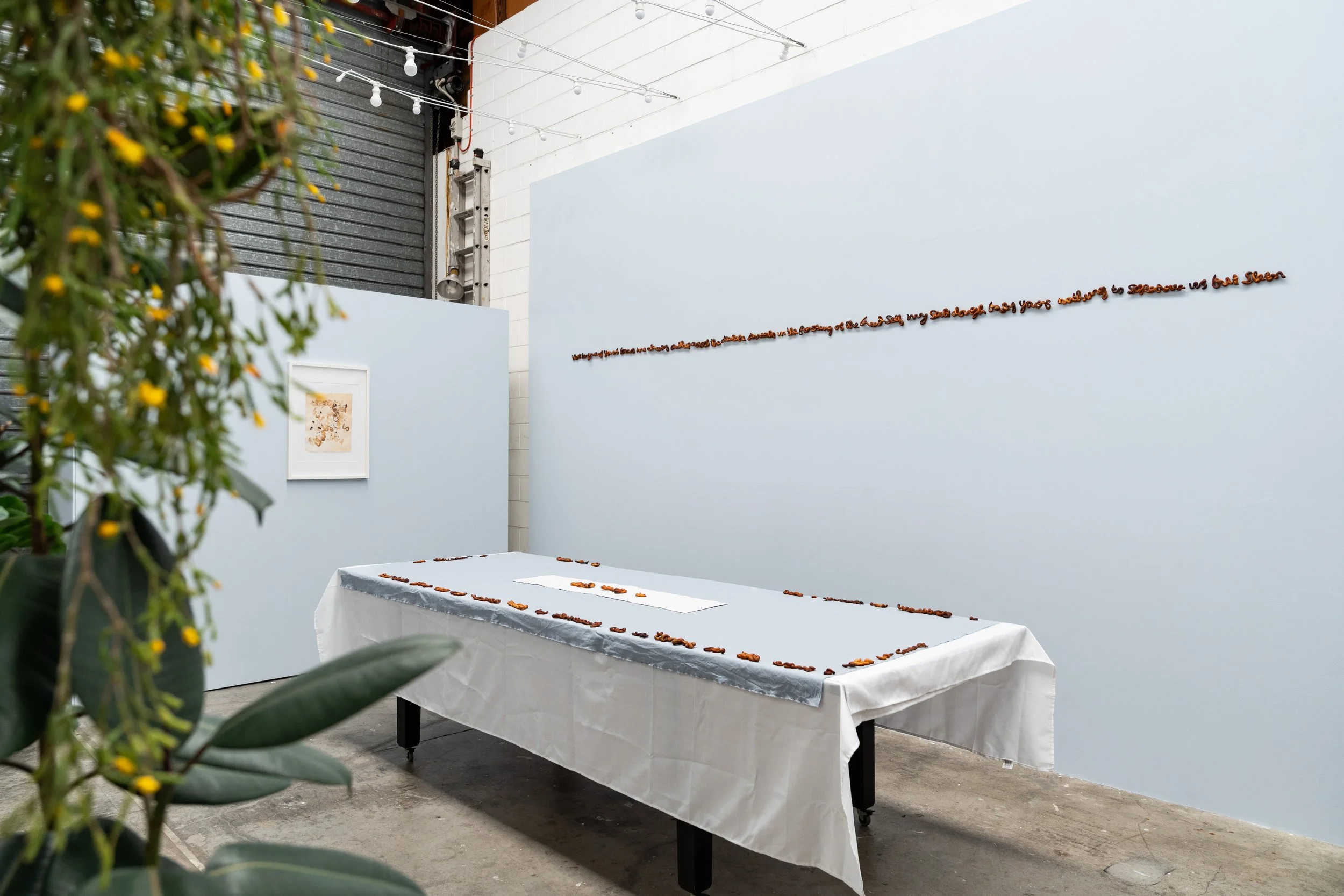
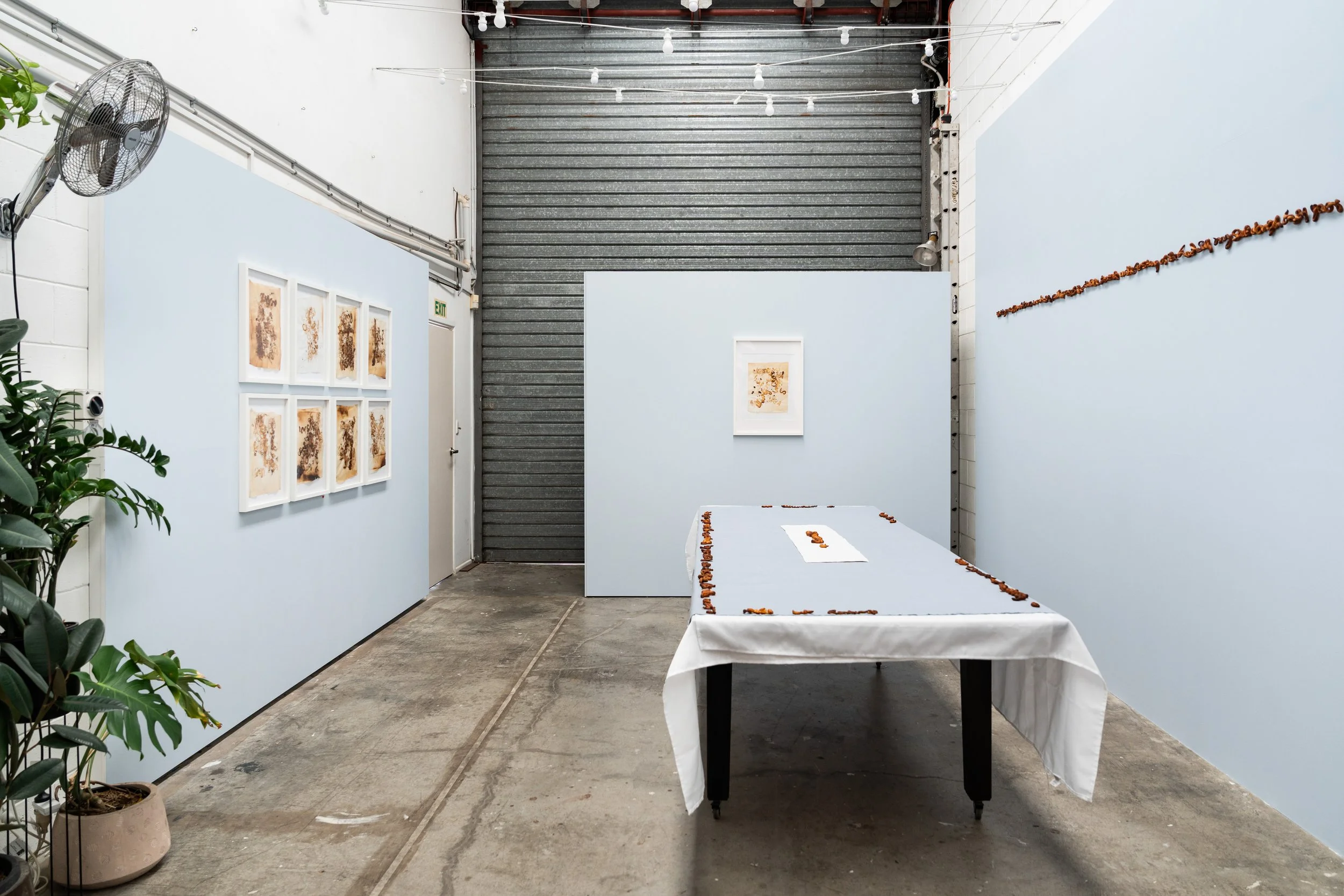
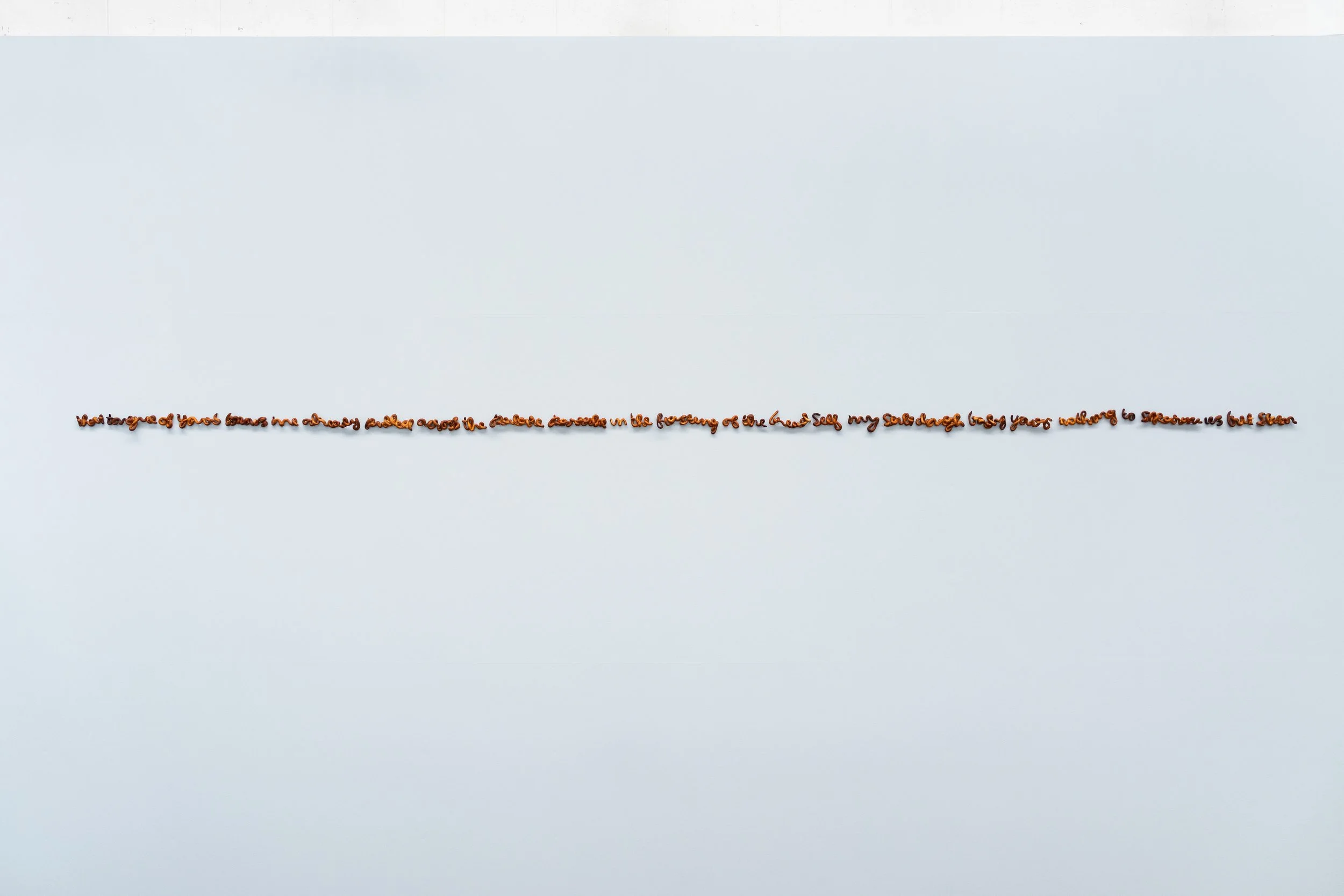
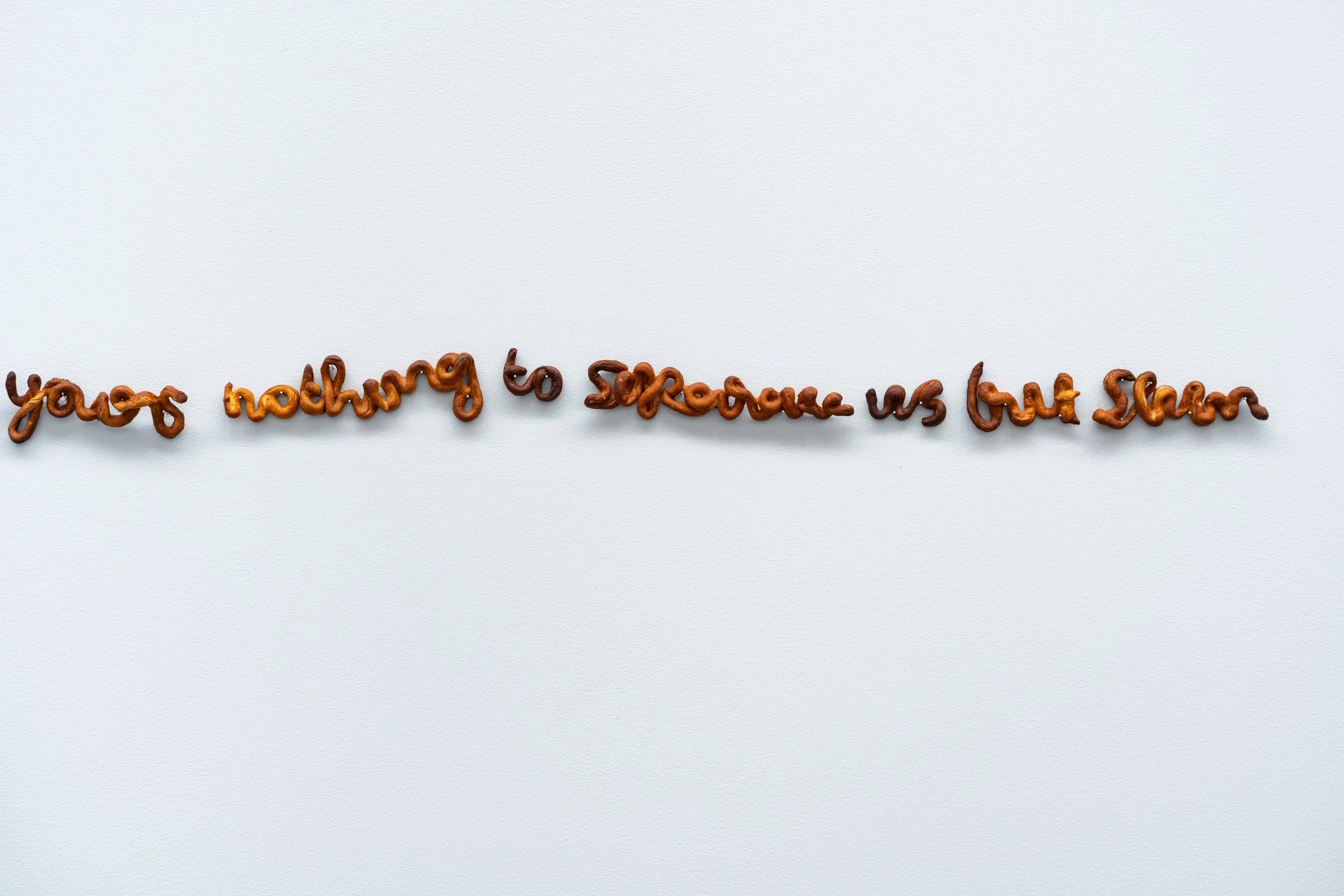
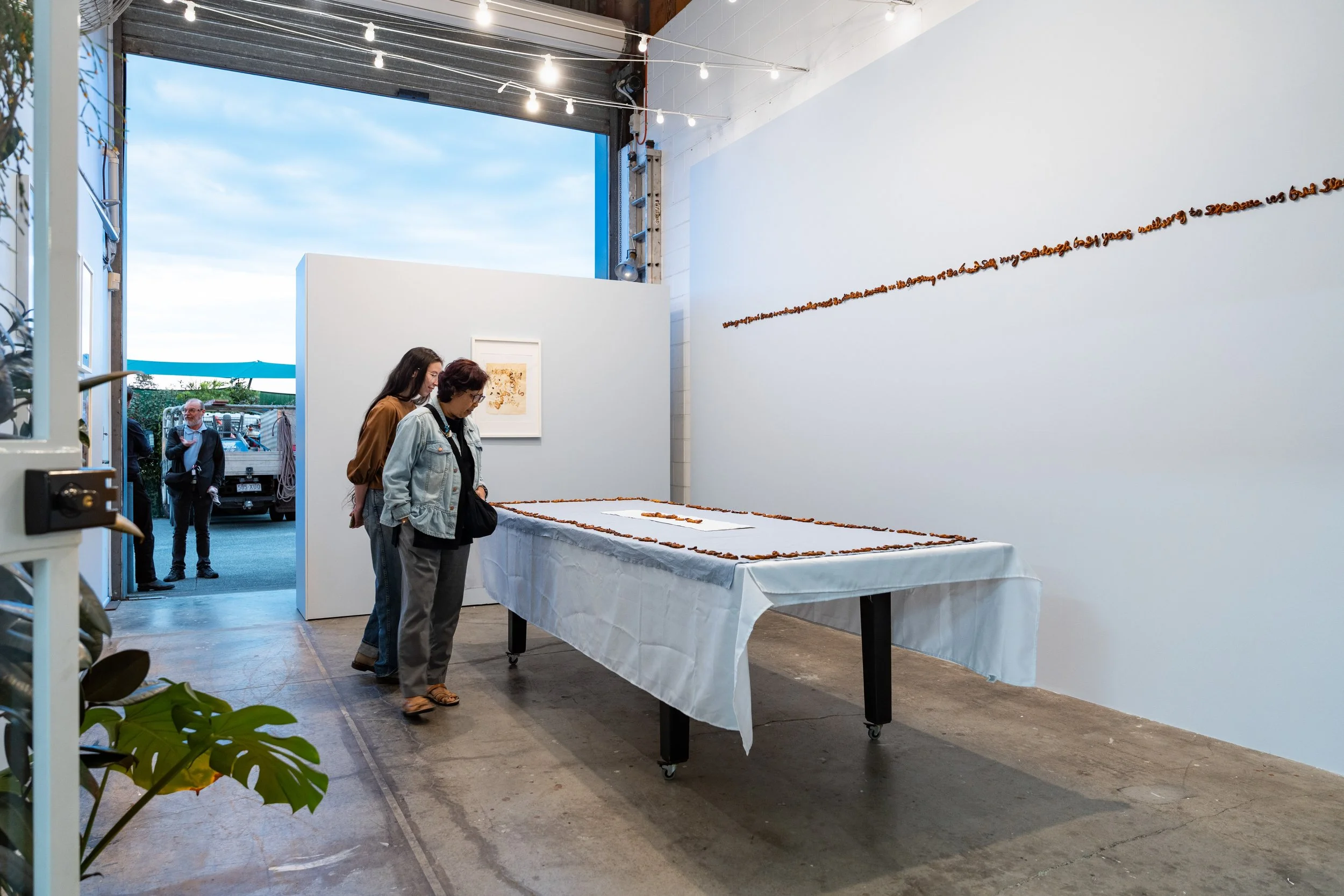
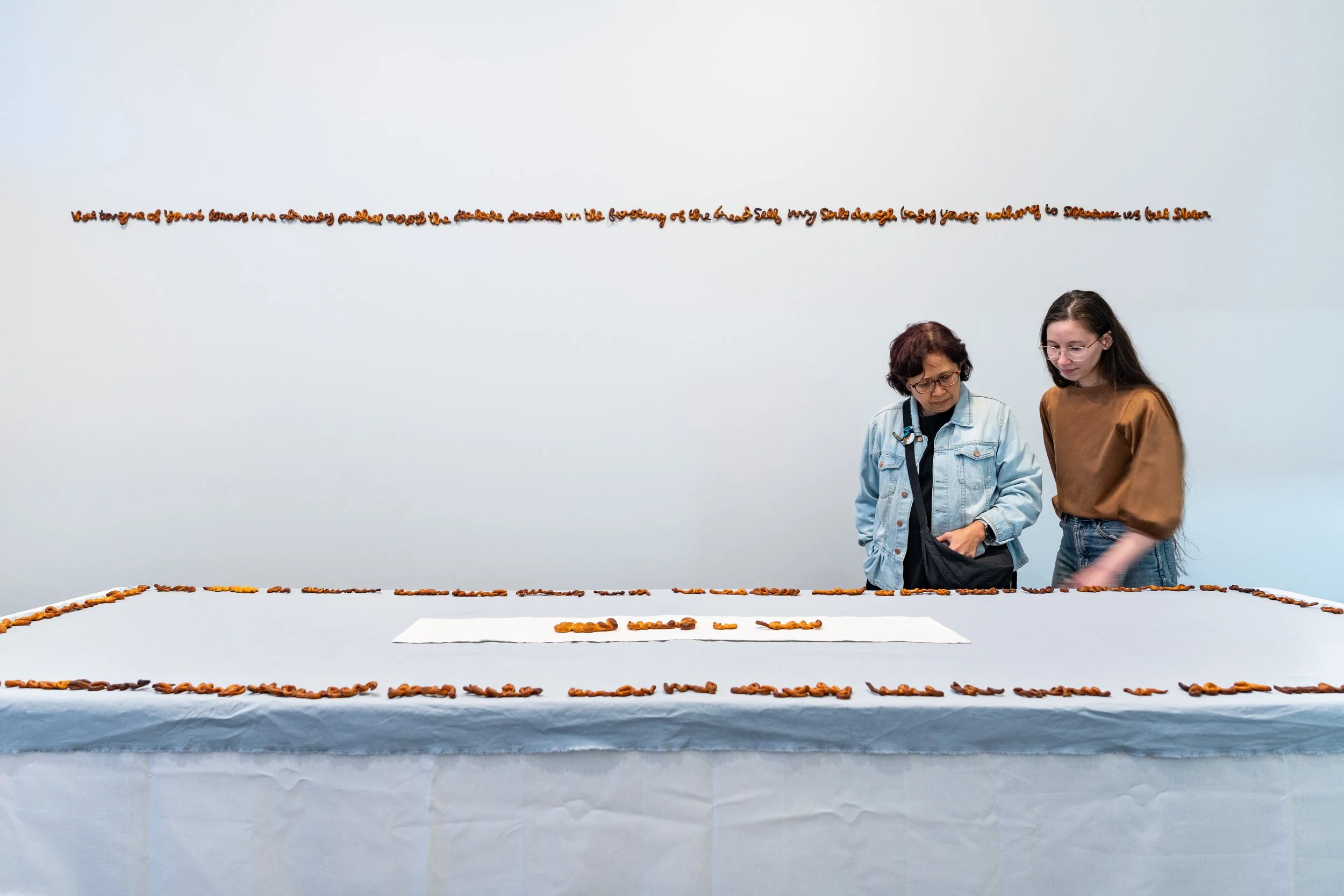
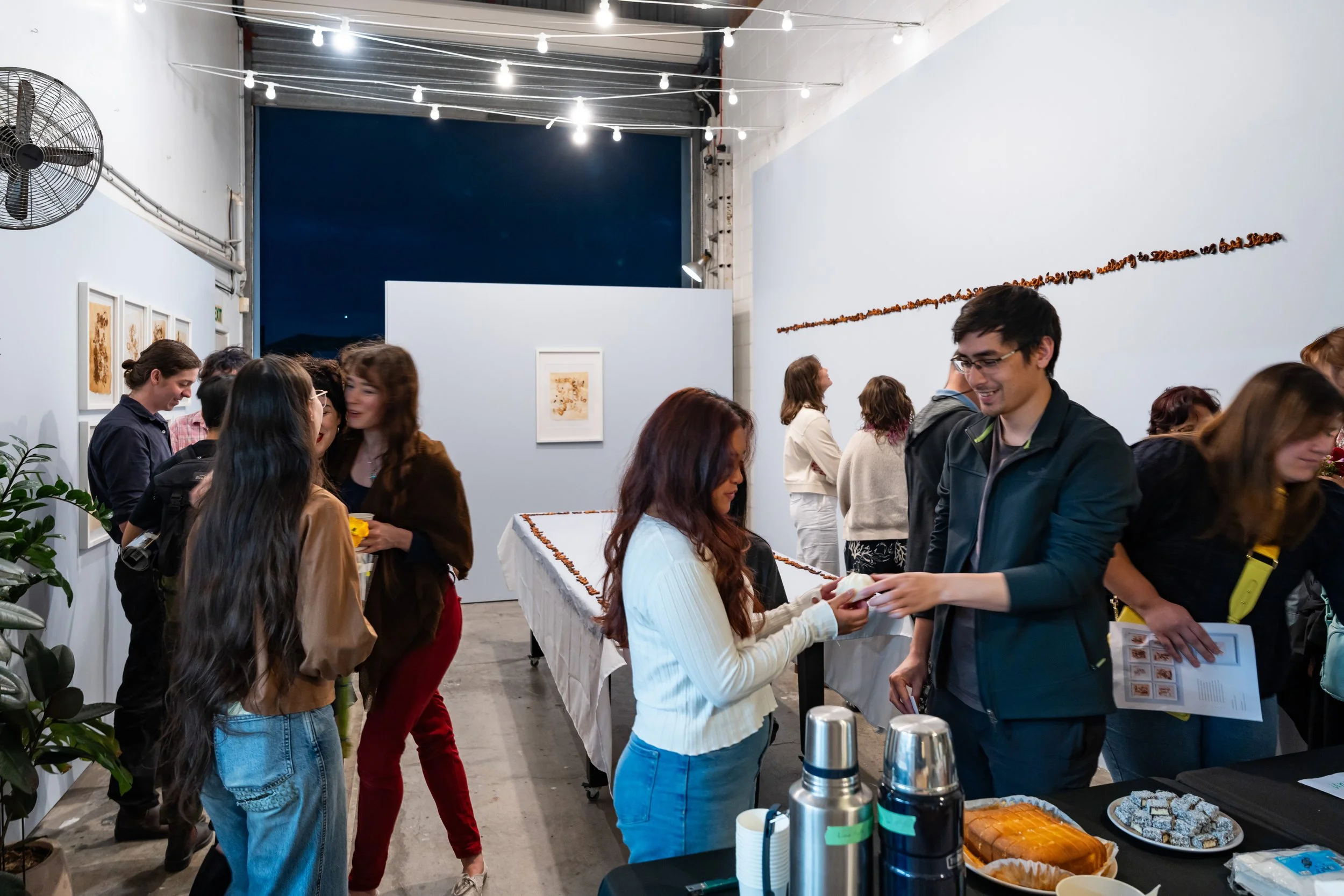
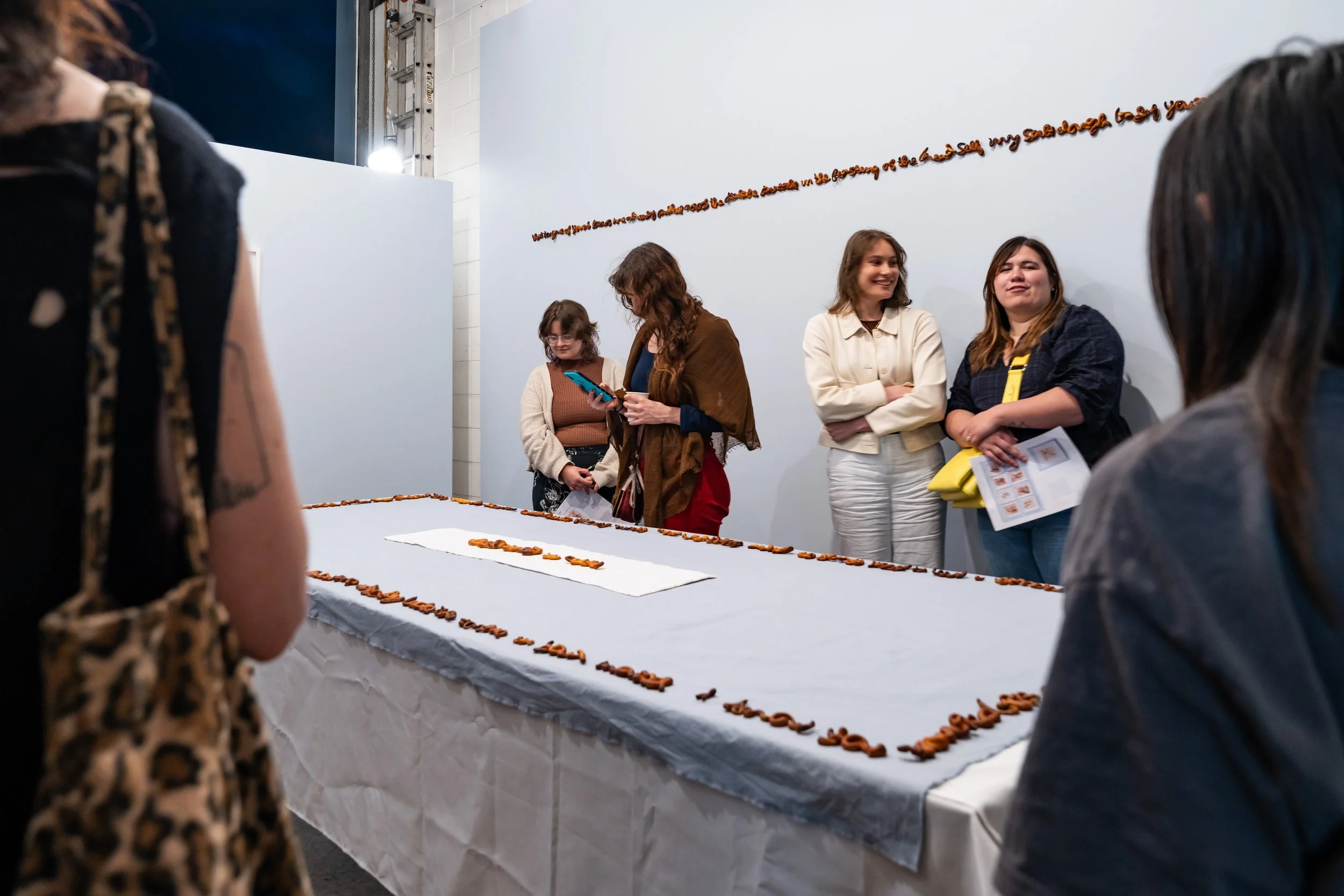
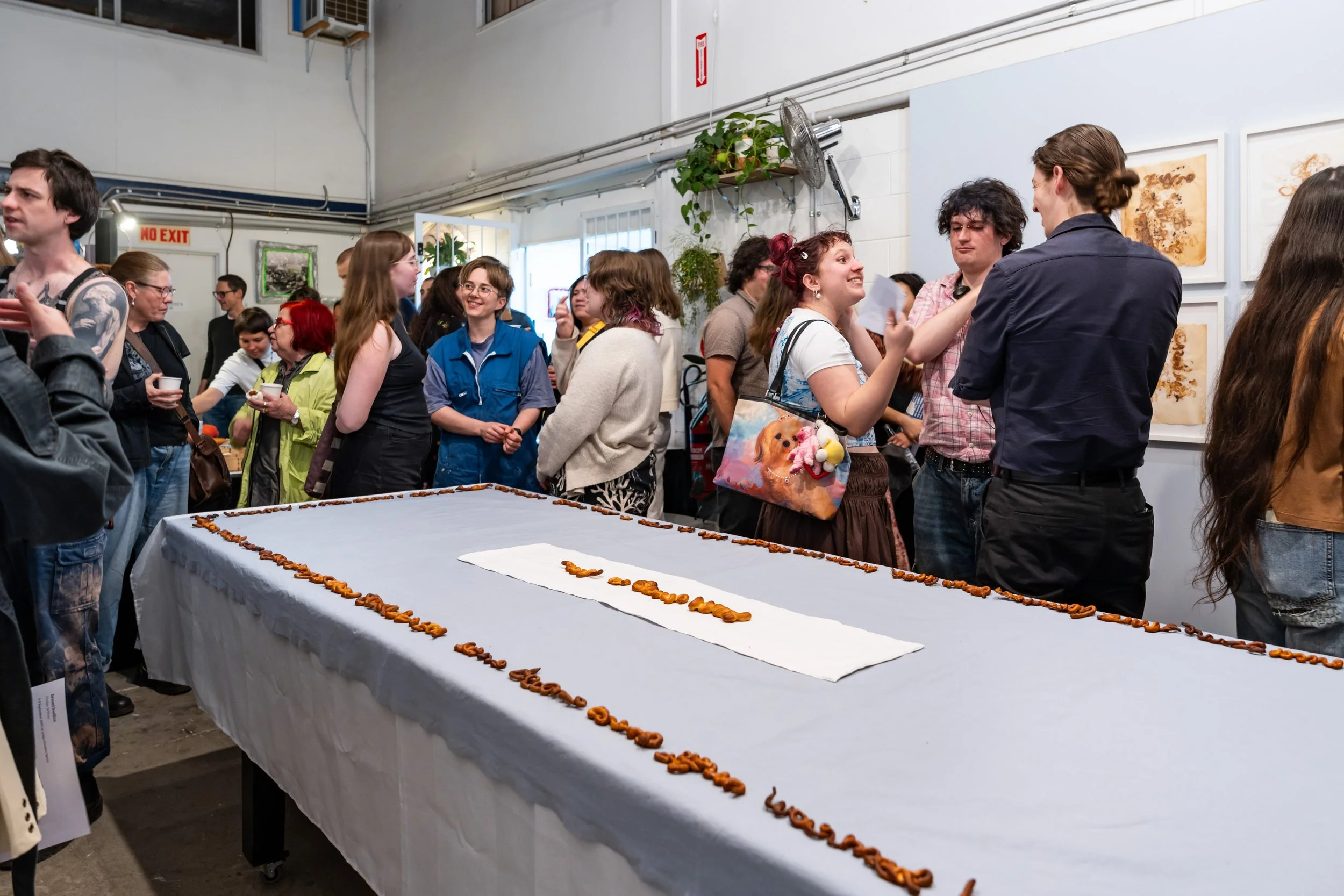
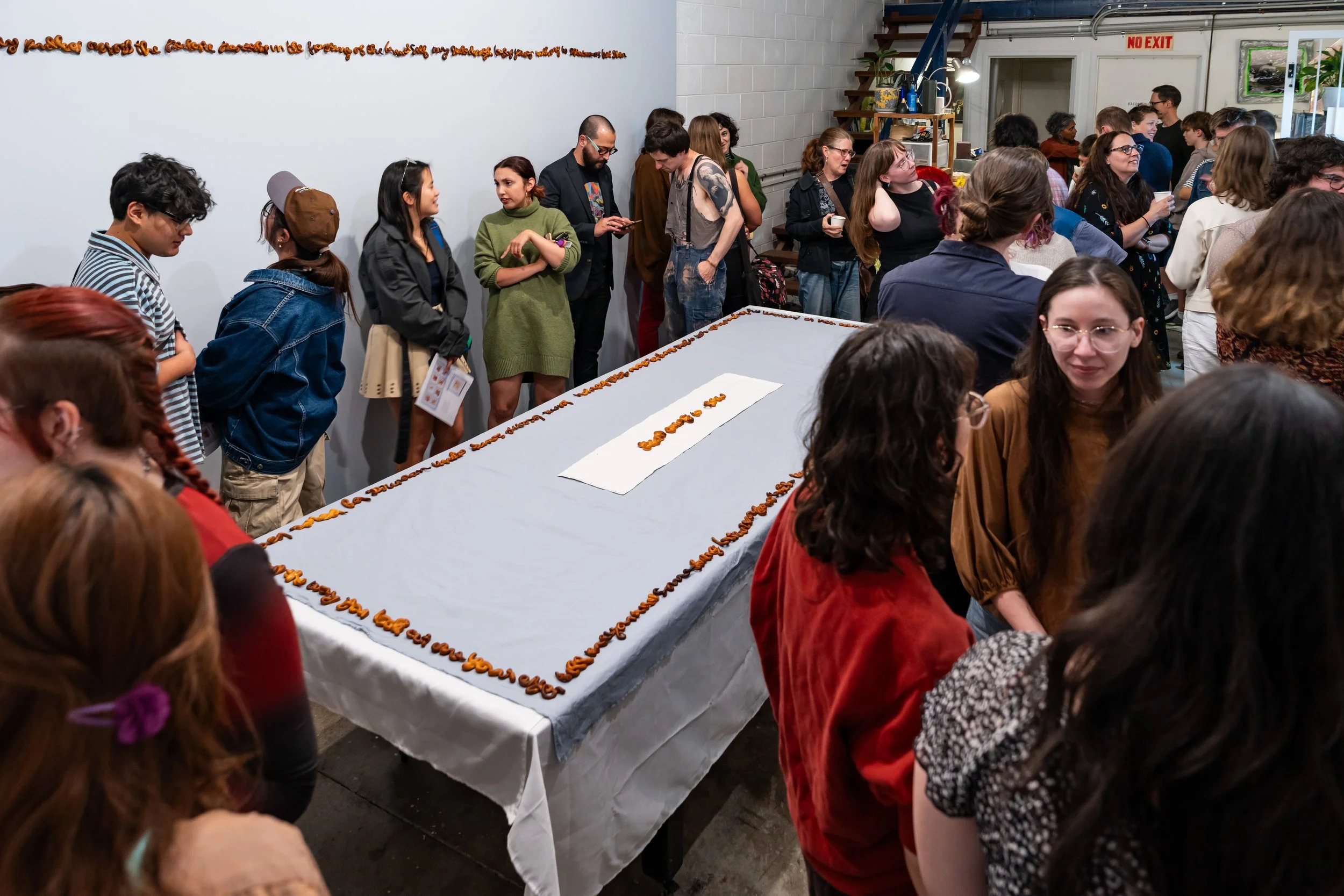
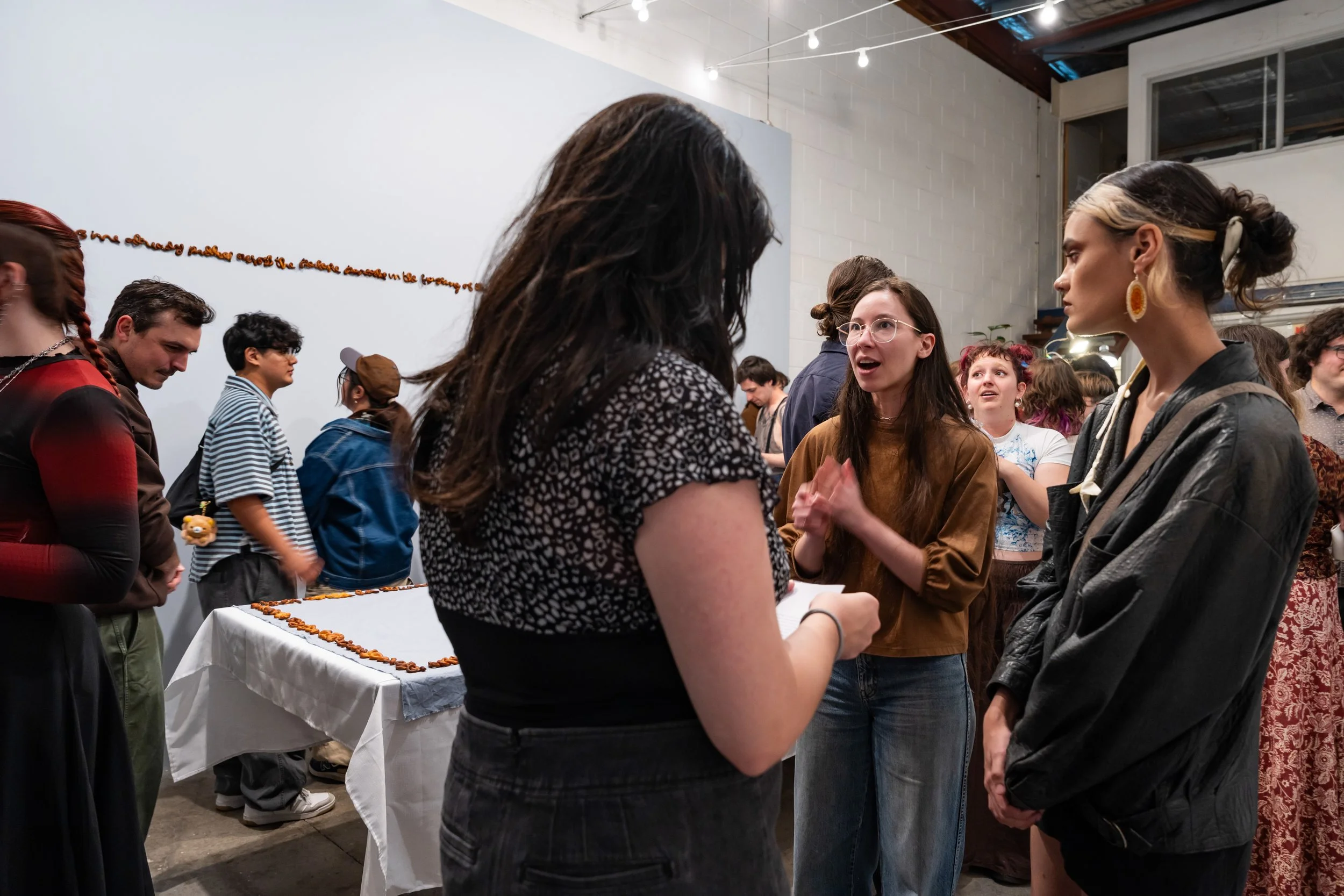
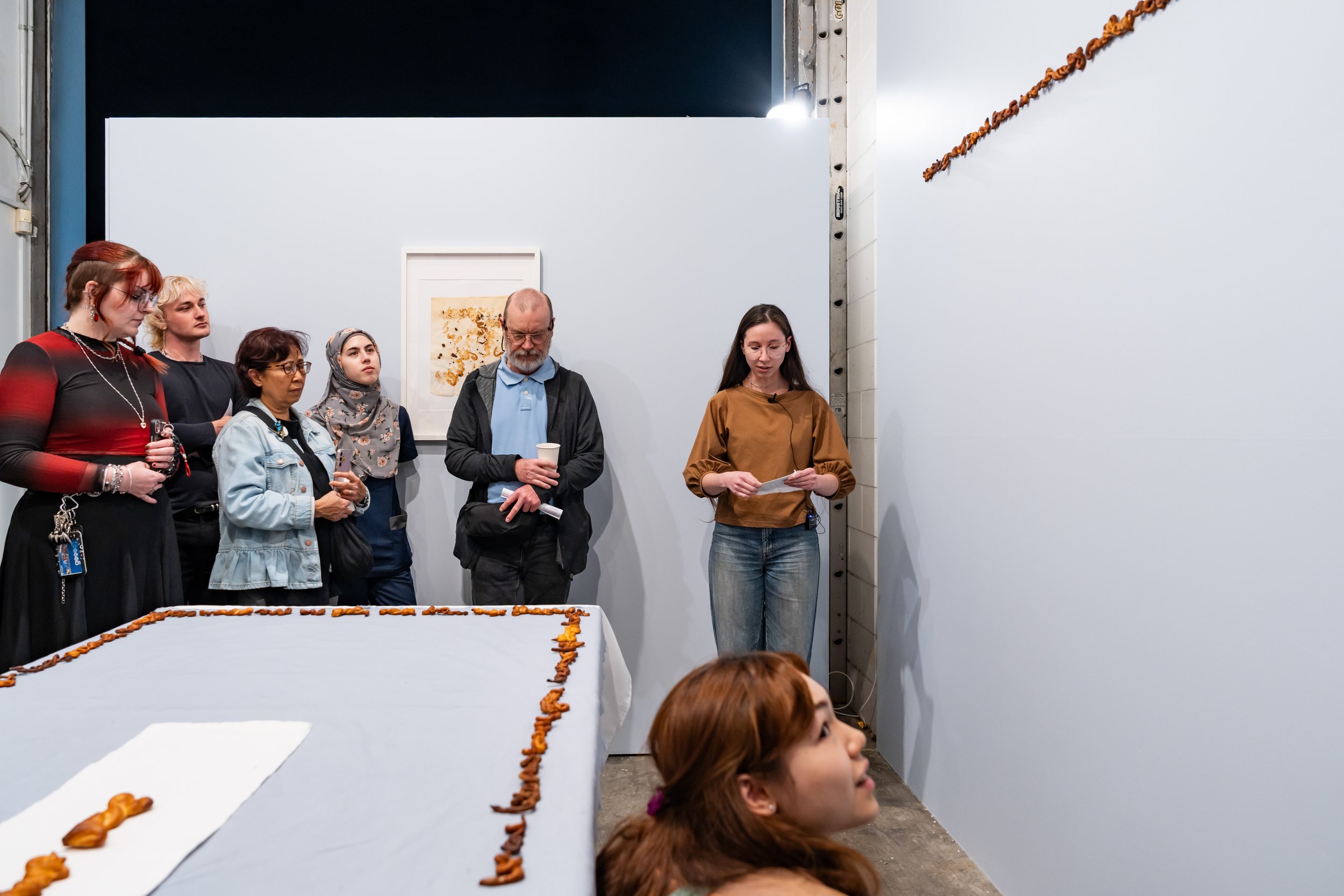
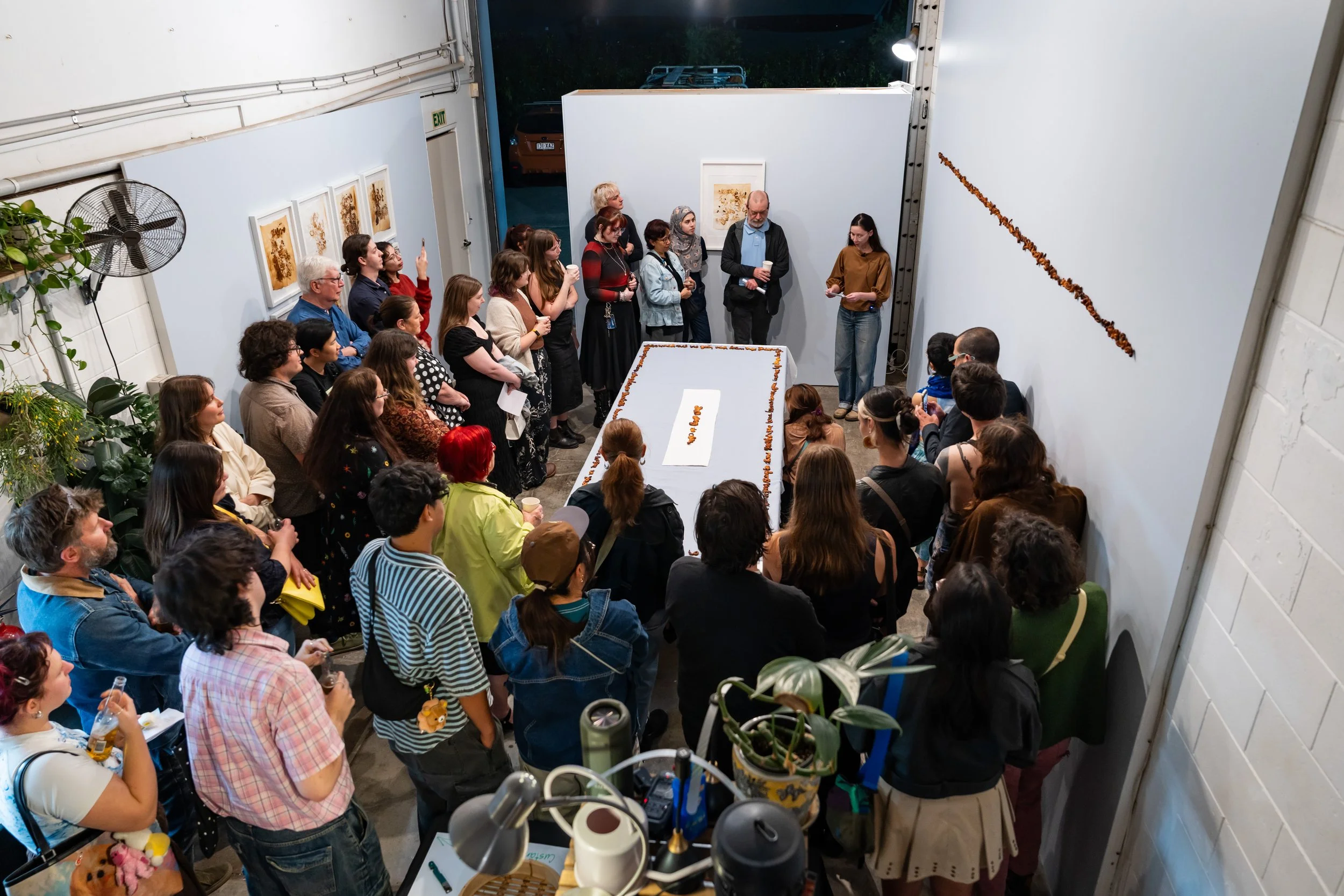
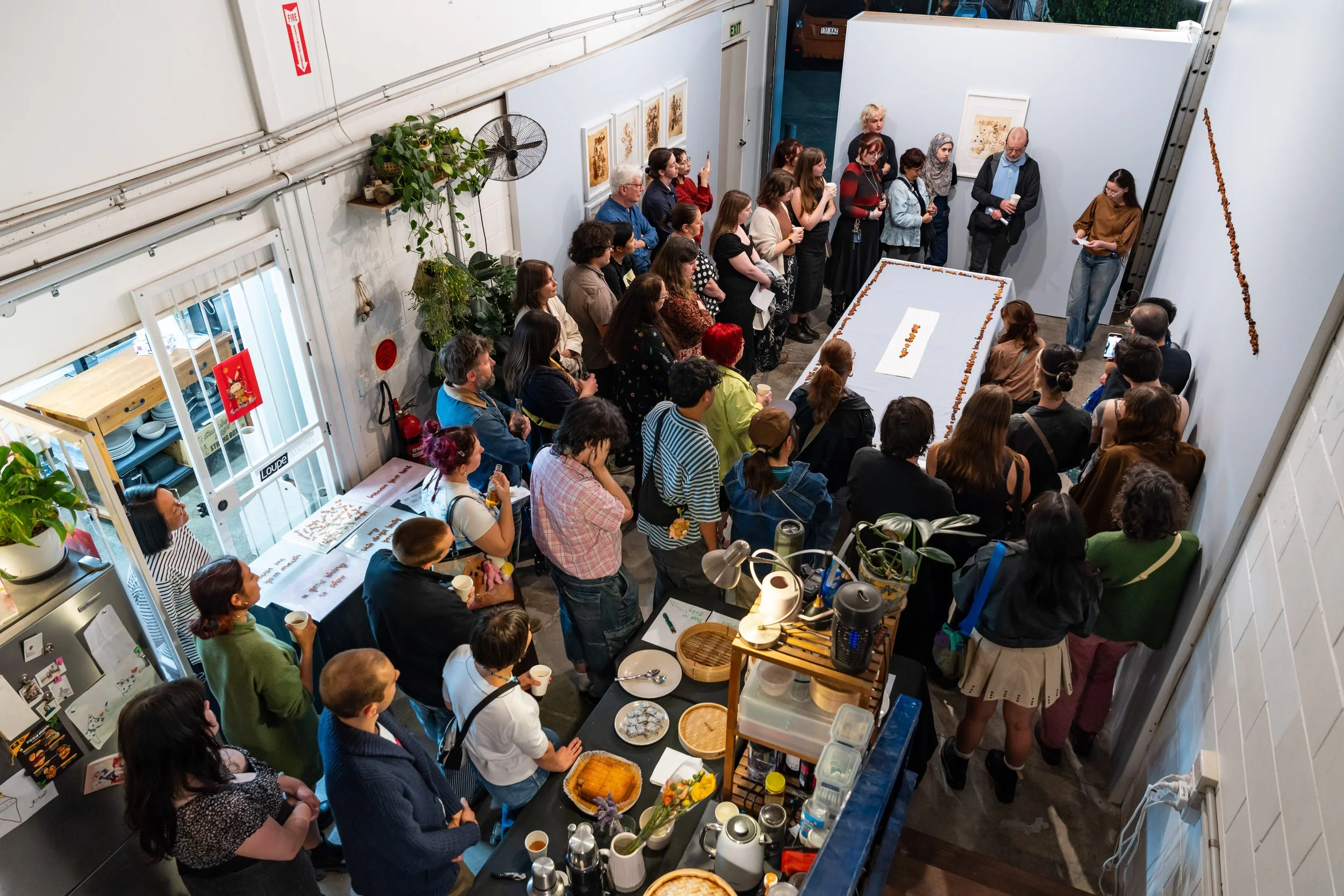
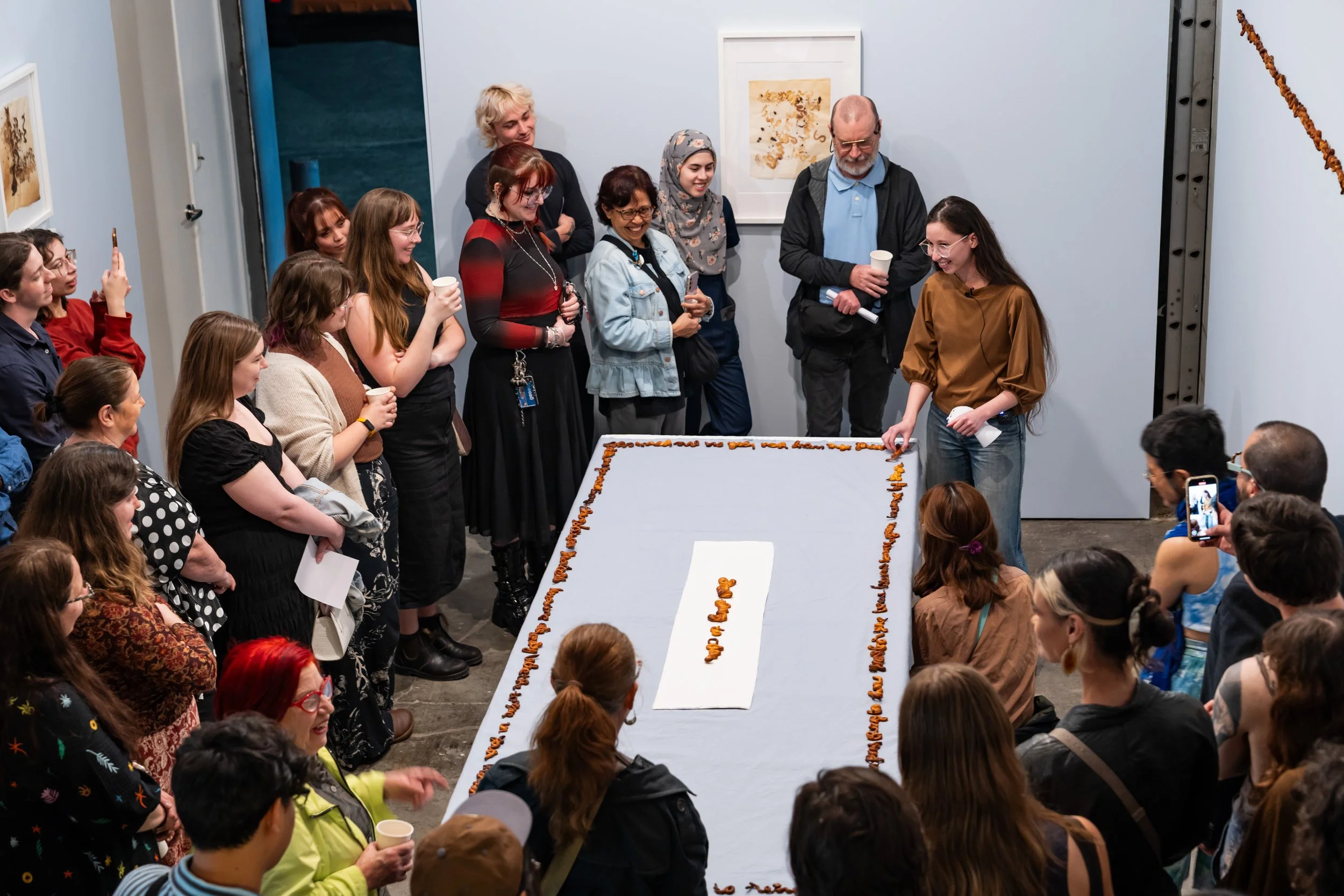
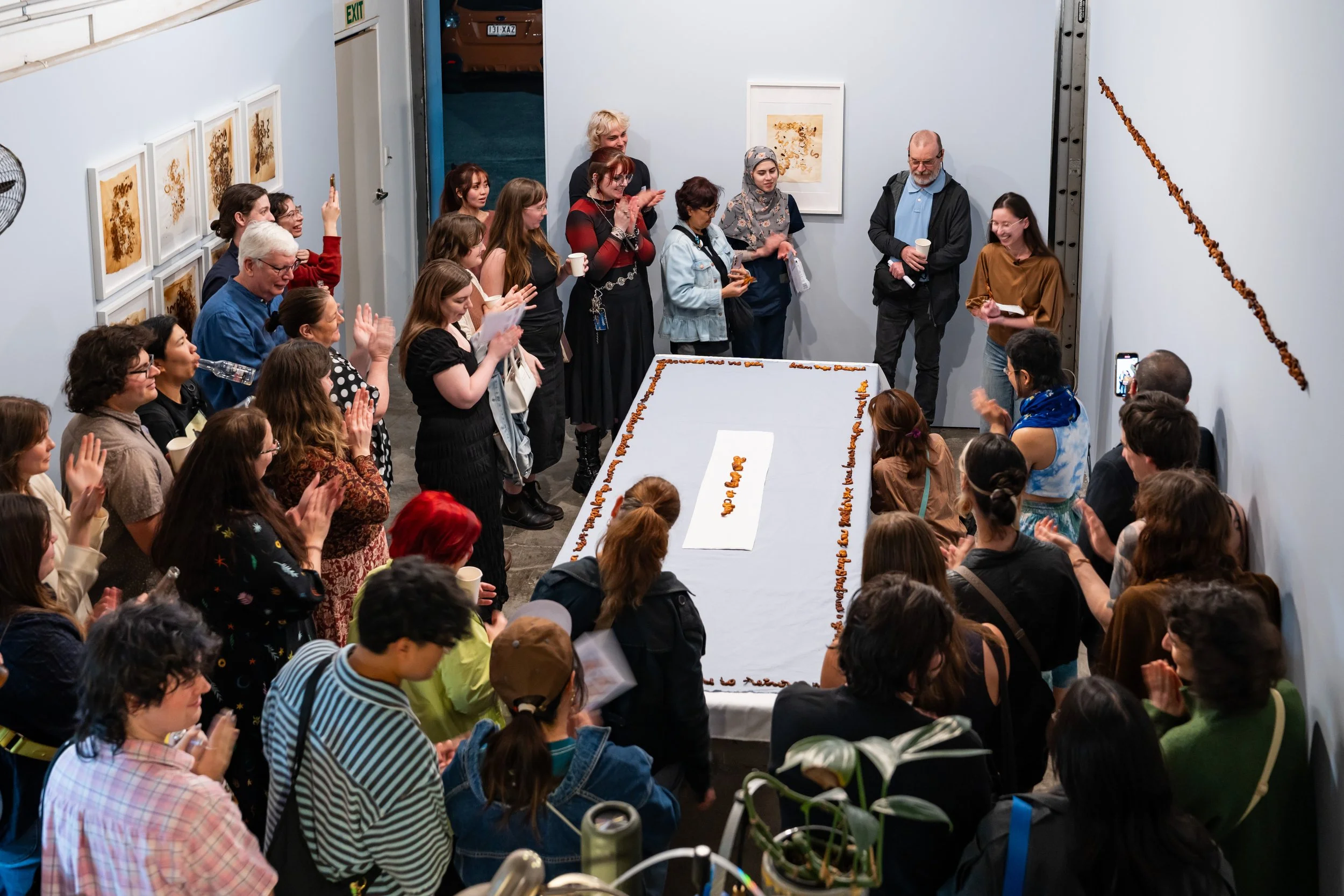
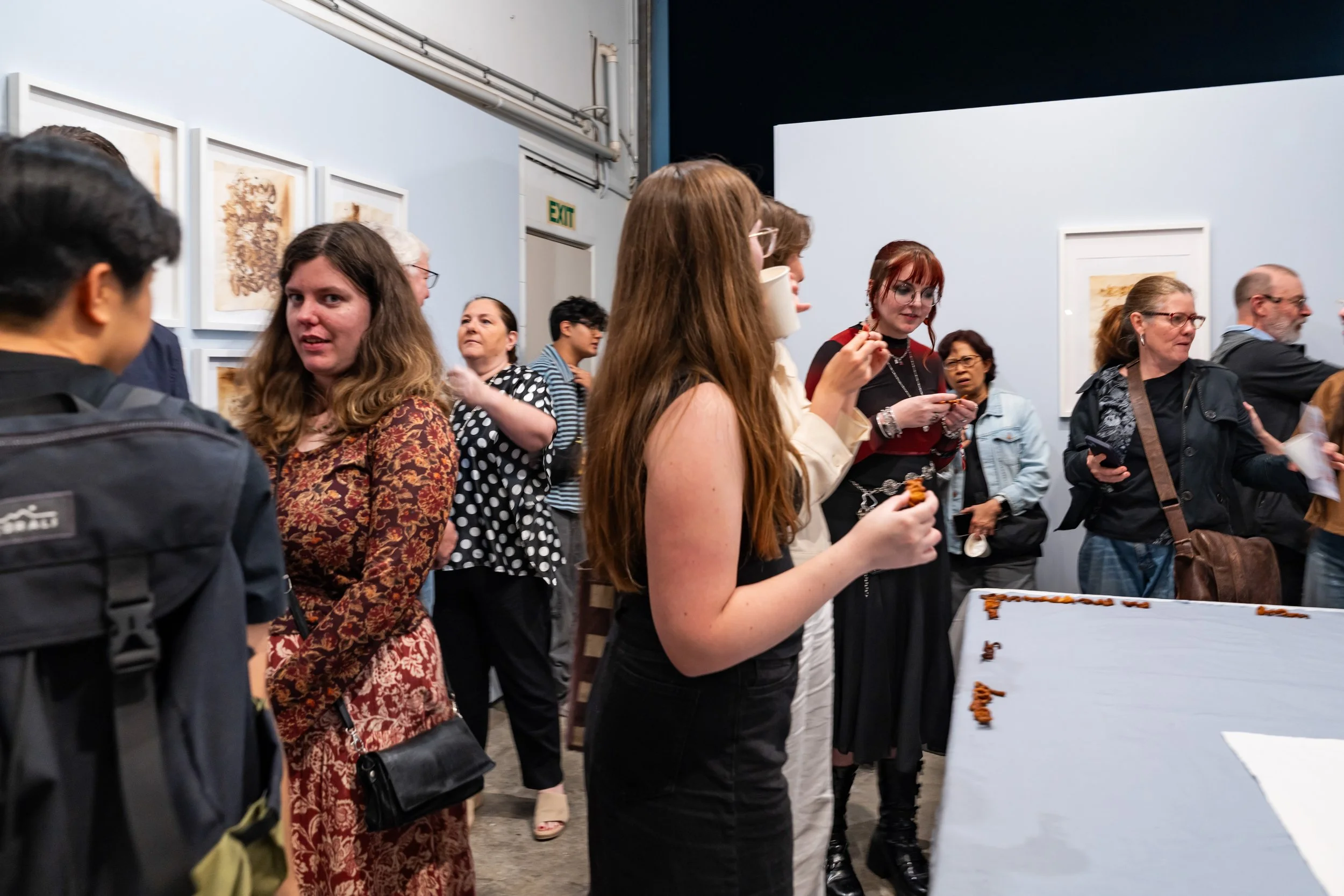
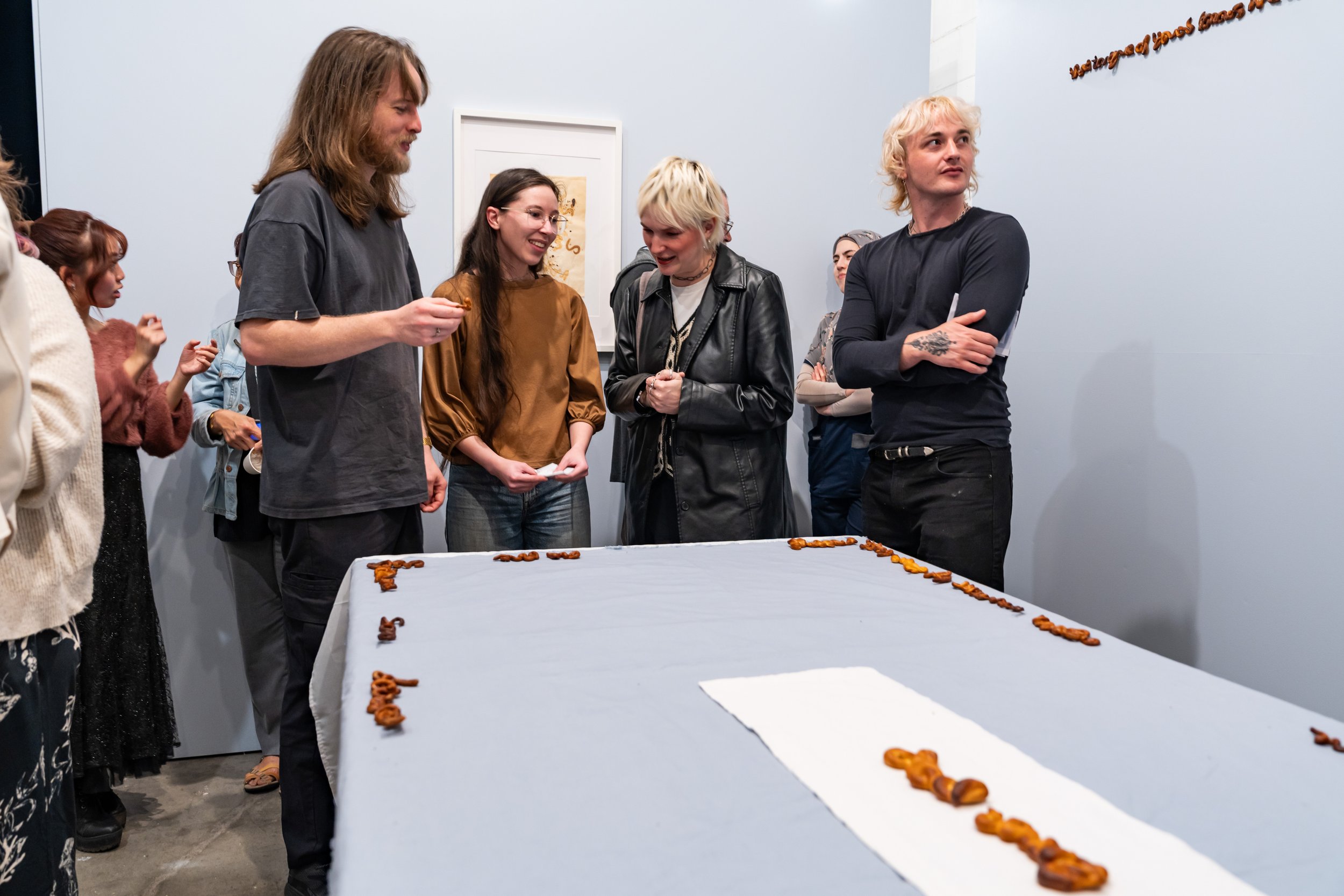
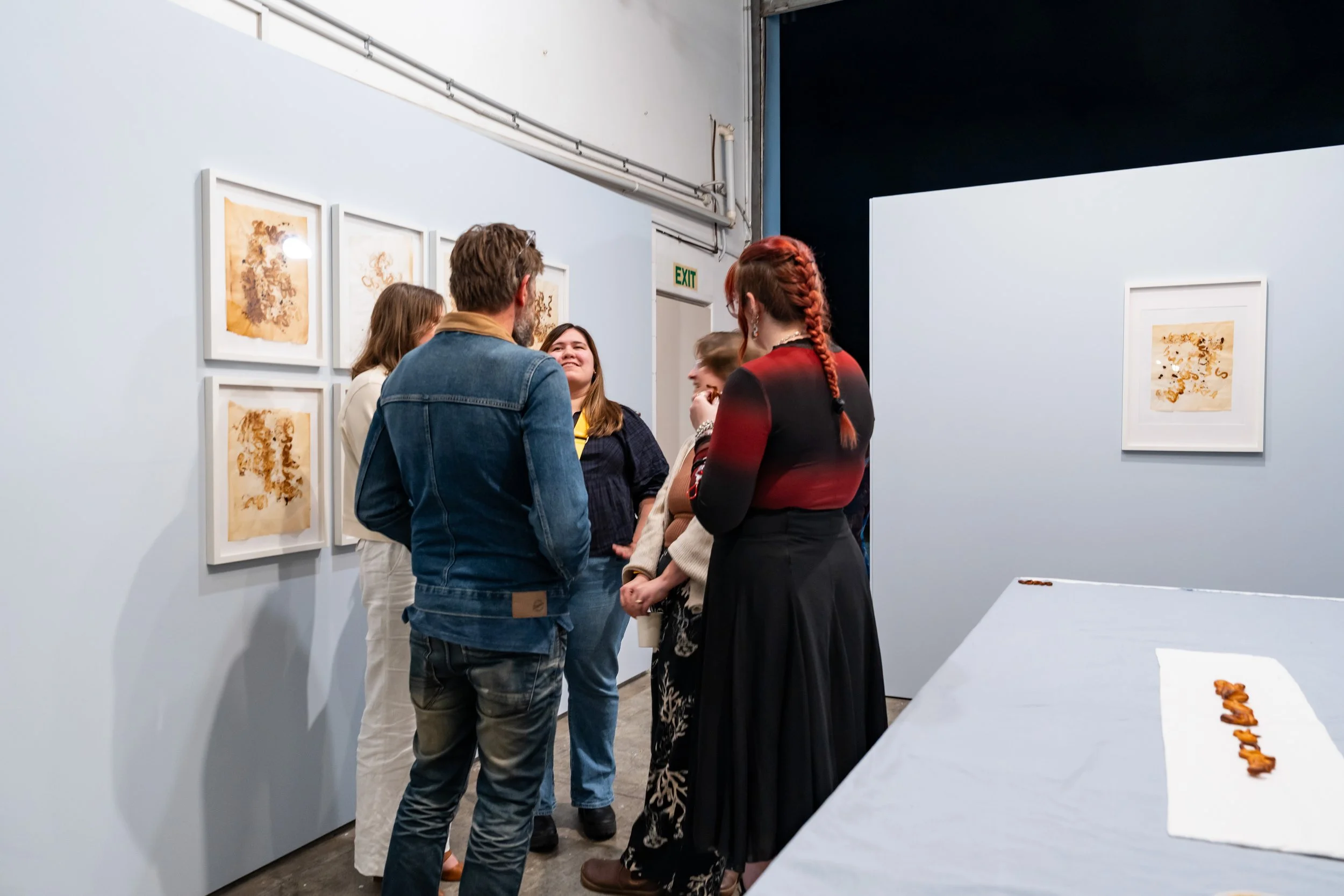
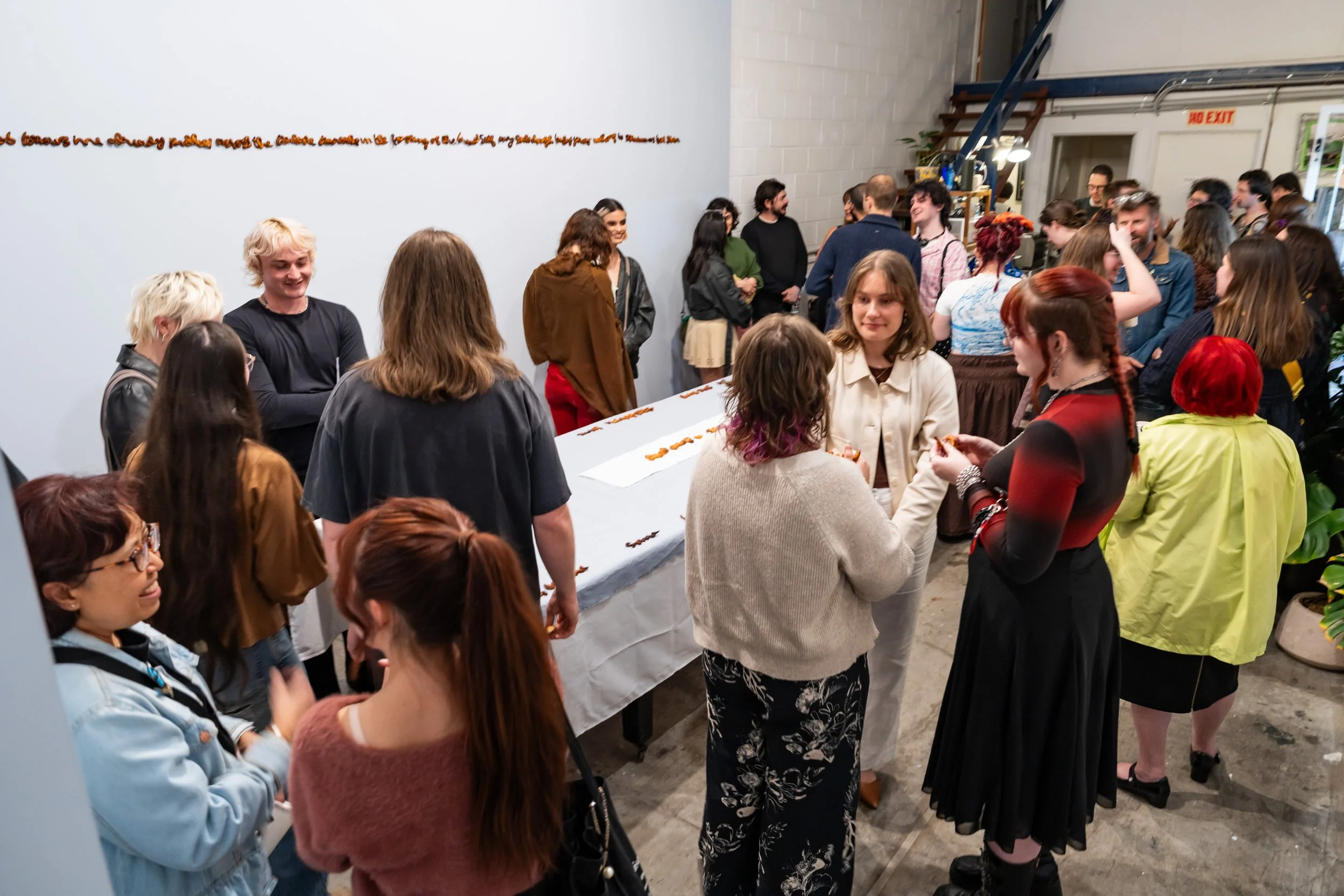
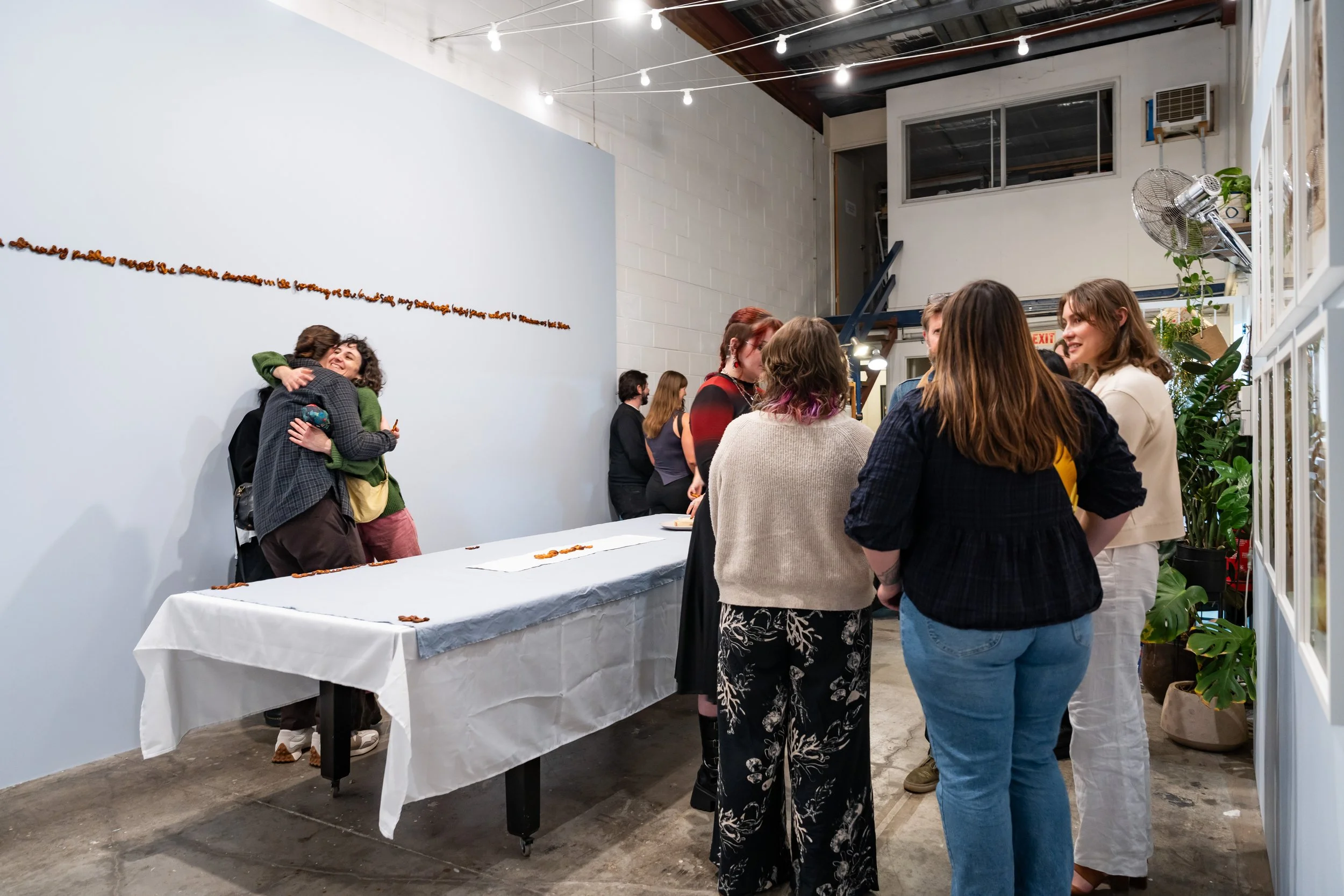
Nadya fuses her poetry with the material potential found in the bodily world of sculpture. She seeks to give these poems their own space – their own bodies – allowing these poems to take up room rather than being flat print on a page. In bread bodies, Nadya investigates the liminal limits of language, and the flavourful context a body can give to a poem. Through material, gesture and taste, these words engage the senses of the viewer, lifting the poetry from the page and snatching it from the air. The poem appeals to your hunger, with a body that begs to be tasted and consumed. These works invite us to contemplate the lifespan of the spoken word, its death, instant. In giving these poems bodies, we reflect on what it means for language to possess a body of bread rather than live as a fleeting vibration launched through the air.
Nadya’s fascination with the edible word is concerned with humanity. Through homo-sapien evolution, the ability to cook and communicate have been the leading factors in our unparalleled evolutionary development. The human condition is to have an insatiable appetite. The human body demands food and language. In bread bodies language is food.
by Raphael Atkins
Combine until a dough begins to form, until it pulls away from the sides of the bowl, pulls itself from between your fingers. Knead it, stretch it, over and over and into itself, until the light shines through the skin before it tears. It wants to be between your hands for longer than you think. Press into it softly. Notice how - like the flesh of yourself - it will slowly spring back. It breathes itself round. Breathes a little differently than you do. But it already knows the shape of your mouth, the shape of an inhale. What is the difference between an exhale and a name?
Call it quiet, call it hungry, call it what it asks. It asks to be understood, to be met at the mouth.
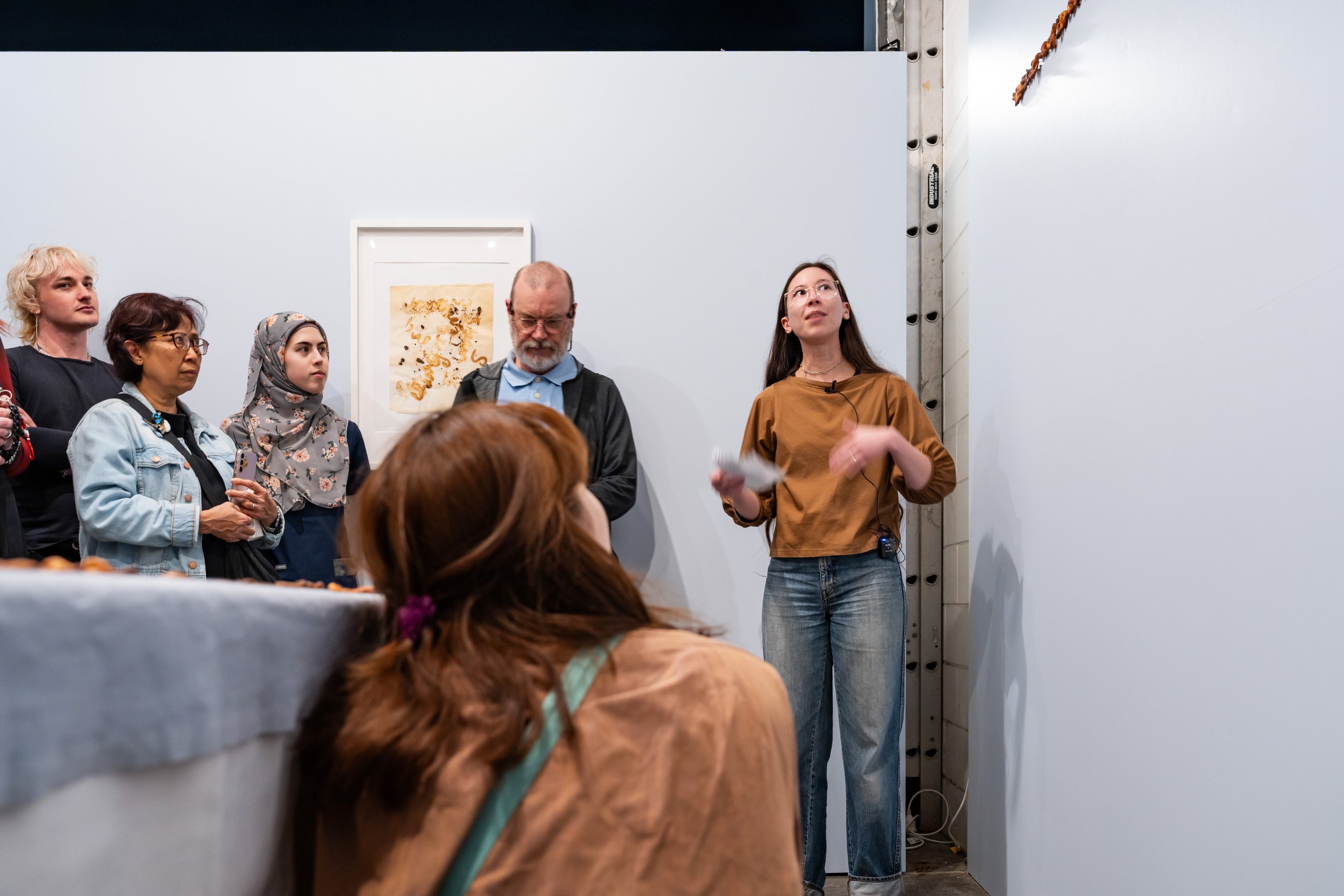
Nadya Wilson is an emerging artist based in Meanjin with a bias for text-based work. Invigorated by the potential of poetry and material association, much of her work investigates the relationships between bodies and language, as well as the ephemeral qualities that might evoke reflection, motion or sensation. Recently leaning into the realm of the edible, she hopes that you may consider how words come from and return to the body.